If your child has come home from Mori no Ike singing Japanese songs and asking when they can go back, or if you are deciding whether to send them next summer, you are probably asking the practical questions: what is Mori no Ike, how old does my child have to be, is it any good for a beginner, and what do we do with the other fifty weeks of the year?
We run an online Japanese school for children growing up outside Japan, and many of the families we talk to in the United States know the Language Villages well. In September 2026 we read Concordia Language Villages’ own pages, the village’s own site and the published history of the programme, rather than repeating what other blogs say. Here is the honest picture, including one thing about the village’s website that trips up a lot of parents.
What Mori no Ike is, in one paragraph
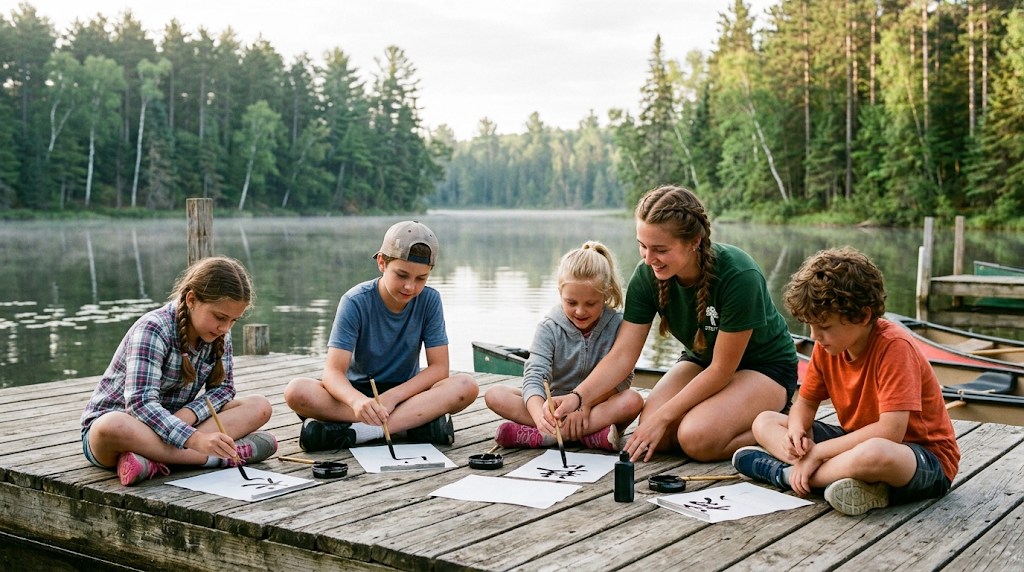
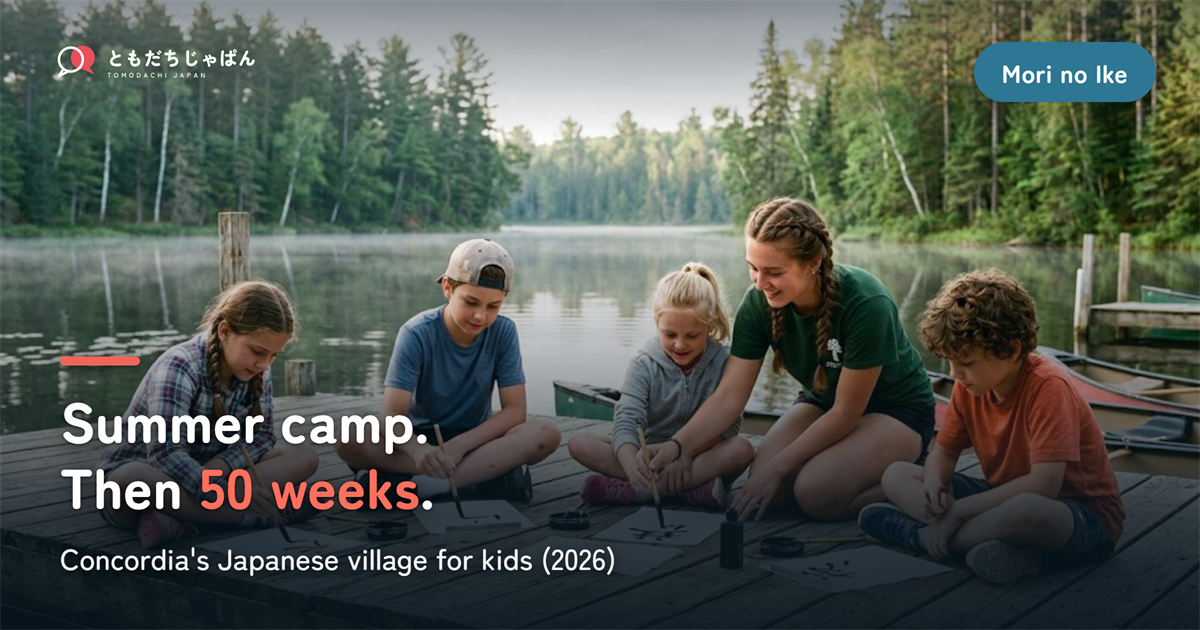
Mori no Ike (森の池, “forest pond”) is the Japanese Language Village of Concordia Language Villages, a programme of Concordia College in Moorhead, Minnesota. Concordia runs villages in fourteen languages in the Minnesota Northwoods; the organisation dates from 1961 and the Japanese village opened in 1988. It is a summer camp first and foremost — children live in the village, take a Japanese name, and spend the day in Japanese through classes, songs, cooking, crafts and games — with a smaller set of weekend and credit programmes around it.
- Who it is for: Concordia’s youth overnight camps are listed for ages 7 to 18. The village’s own site describes its youth programmes as aimed at ages 8 to 18.
- Beginners are welcome. Concordia states that Japanese learners of all ages and levels are welcome, and you do not need any Japanese to start.
- Session lengths: one-week, two-week and four-week overnight sessions in summer. The four-week session is the high school credit programme.
- Where: Minnesota. For summer 2026 Concordia listed the Japanese village at two sites — near Bemidji for the first half of the summer and Hackensack for the second — so check the site for your session rather than assuming.
- What they do: Concordia lists taiko drumming, shodo calligraphy, martial arts, tea ceremony, pottery, origami and cooking udon, soba and tempura, alongside lake and outdoor activities.
Loved camp? Keep the Japanese going until next summer.
TOMODACHI JAPAN is an online Japanese school for children growing up outside Japan. They talk with peers their own age in Japan every day, taught by teachers working at Japanese schools, in small classes of 8.
🎁 Register and we’ll email you our School Guide (PDF, in English) straight away. You’ll also be first to hear about tuition, scholarships and opening dates.
Free · takes about 30 seconds
The website problem most parents run into
There are two websites for Mori no Ike, and they do not agree. The village’s own site, morinoike.org, was still describing the 2023 summer when we read it in September 2026 — a Cass Lake site, 2023 virtual weeks, and a note that family and school weekends were on pause. Concordia’s main site, concordialanguagevillages.org, is where the current sessions, sites and dates are published.
That matters because searching for the village’s name tends to land you on the older site first. If you are comparing sessions, locations or the virtual option, treat the Concordia site as the source of truth and phone the Villages office if the two disagree. It is an easy mistake, and not a sign that anything is wrong with the programme.
What Mori no Ike does brilliantly
We want to be clear about this before we say anything else, because it is true: a residential immersion camp gives a child something no weekly class can.
- Japanese all day, not one hour a week. A week in the village is more hours of Japanese than many children get in a term.
- Japanese as a place, not a subject. Passports, a village bank, a Japanese name, meals and songs — children experience the language as something you live in. That is exactly the feeling that makes them want to keep going.
- Culture you do with your hands. Taiko, calligraphy and cooking stay with children long after the vocabulary list has faded.
- Other children who chose Japanese too. For a child who is the only one in their school learning it, meeting a cabin full of them is quietly powerful.
- Nearly forty years of practice. The village has run since 1988, and Concordia has been running immersion villages since 1961. This is not an experiment.
If your child can go, and wants to go, we think it is a wonderful thing to do.
The honest limit: it is summer, and it is Minnesota
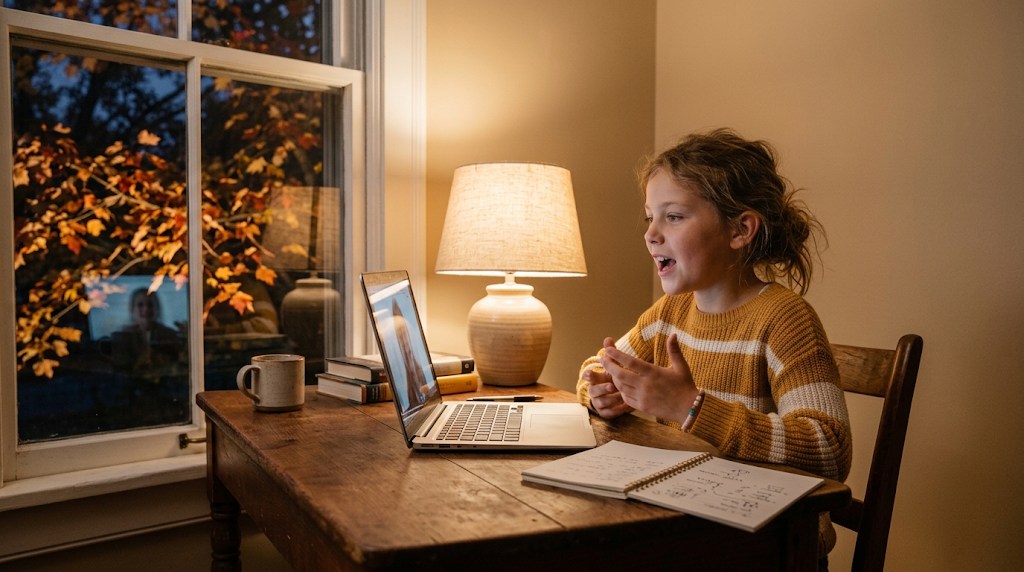
The limit is not quality. It is time and distance, and every parent who has sent a child to camp knows the pattern.
- One to four weeks, then nothing for months. Children come home fired up. By October, most of the new words have gone quiet, because there is nobody at home to use them with. Language kept alive in bursts tends to fade between the bursts.
- The people are in the village, not at home. The counsellors and cabin-mates who made Japanese feel real live all over the country. The friendships usually survive; the Japanese conversations usually do not.
- It is a trip. For families outside the upper Midwest, a residential camp means flights or long drives. For families outside the United States, it is a major journey.
- The year-round options are thinner. Concordia runs adult and family weekends — in 2026 there was a Japanese Adult and Family Weekend in October near Bemidji — and has offered one-week virtual summer weeks and an academic-year virtual credit course for high schoolers in some years. What is on offer changes by year, so check the current listings. There is no weekly, year-round class for younger children.
None of this is a criticism. A summer camp is meant to be a summer camp. It simply means that the question after Mori no Ike is not whether it worked, but what carries it through to next summer.
How the options compare
| Option | How often | Who your child speaks Japanese with | Best for |
|---|---|---|---|
| Mori no Ike (residential) | 1, 2 or 4 weeks in summer | Counsellors and campers, all day | A burst of full immersion and motivation |
| Japanese Saturday school (hoshuko) | Weekly, in term time | Classmates, mostly from Japanese-speaking homes | Children already close to grade level in Japanese |
| Apps (Duolingo, LingoDeer and others) | Daily, a few minutes | Nobody — solo practice | Vocabulary and habit between lessons |
| Private tutor | Weekly or more | One adult | Targeted help with reading or exams |
| TOMODACHI JAPAN | Weekly, all year, online | Same-age friends in Japan and a teacher, in a class of 8 | Keeping the Japanese alive between summers |
We deliberately do not quote camp fees here. Concordia publishes its own rates and financial aid information, fees change by year and by session length, and a number we print today would be out of date by next summer.
Camp and a weekly class work best together
We would not frame this as Mori no Ike versus a school. The families we see do best treat them as two halves of the same year.
- Summer lights the fire. A week or two of living in Japanese is the best motivation money can buy.
- The rest of the year keeps it burning. A regular class with the same friends and the same teacher gives your child somewhere to use what they brought home — every week, not every July.
- And the next summer goes further. A child who has kept speaking arrives at camp able to do more, and gets more out of the same week.
What TOMODACHI JAPAN does
TOMODACHI JAPAN is an online Japanese school for children growing up outside Japan. It is built for exactly the gap a summer camp leaves.
- Same-age friends in Japan. Your child speaks with peers their own age who live in Japan — the camp feeling, without the flight.
- Teachers who work in Japanese schools. Current-standard teaching from people whose job is children’s progress.
- Small classes of 8. Small enough that a shy child cannot disappear.
- Live lessons on a fixed schedule, all year. Something that lands in the week, in term time and in winter, rather than once a summer.
If your child loves Mori no Ike, keep sending them. Add the part a camp cannot do: Japanese friends to talk to in November.
Frequently asked questions
What age do you have to be for Mori no Ike?
Concordia lists its youth overnight camps for ages 7 to 18. Its Adventure Day Camps (ages 6 to 11) are run for selected languages only, so check whether Japanese is among them in your year. The village’s own site describes its youth programmes as for ages 8 to 18. Specific sessions can have narrower age bands, so check the session you are looking at. Adults and families can join separate weekend programmes.
Does my child need to know Japanese before going?
No. Concordia welcomes Japanese learners of all levels, including complete beginners.
Is there an online version of Mori no Ike?
In some years, yes: the village has offered one-week virtual summer programmes over Zoom and an academic-year virtual high school credit course. Availability changes by year, so check Concordia’s current session list. There is no weekly, year-round Japanese class for younger children.
Can my child earn high school credit at Mori no Ike?
Concordia offers high school credit programmes that it describes as accredited by Cognia, including a four-week residential option. Confirm with your child’s high school that it will accept the credit before you enrol.
Where is Mori no Ike?
In northern Minnesota. The Language Villages’ main site is near Bemidji on Turtle River Lake, and in summer 2026 the Japanese village also used a second site at Hackensack for the second half of the season. Check the location for your specific session.
In short
- Mori no Ike is Concordia Language Villages’ Japanese village in Minnesota, running since 1988
- Youth camps are for roughly ages 7 to 18, in one-, two- and four-week summer sessions, and beginners are welcome
- Use concordialanguagevillages.org for current details — the village’s own site still showed 2023 information in September 2026
- It gives a child a burst of full immersion that no weekly class can match
- Its limit is time and distance: the Japanese needs somewhere to live between summers
Related reading
- Japanese immersion school: where they are and how families get in
- Japanese classes for kids near me: how to judge one
- Outschool Japanese classes: what parents should check first
- Japanese learning apps for kids: which ones actually teach Japanese
- Japanese homeschool curriculum: what actually works for kids