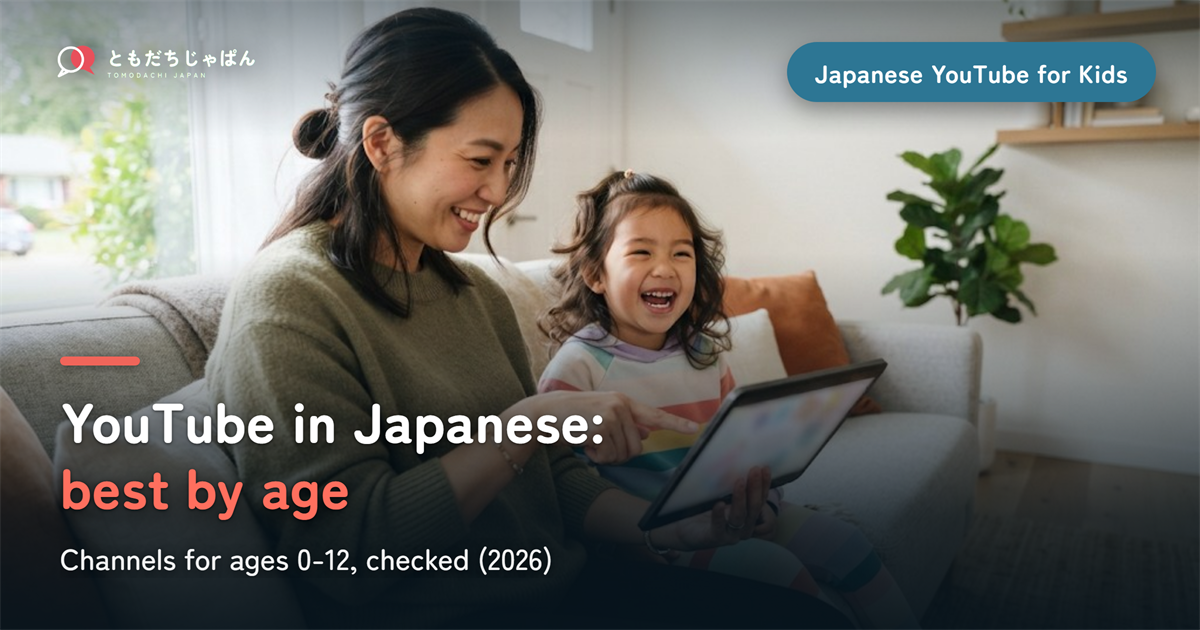
If you are raising a child with Japanese outside Japan, sooner or later you search for the best Japanese YouTube channels for kids. Free, in the living room, in real Japanese. The trouble is that most lists online are years old, written for adult learners, or mix toy-unboxing vlogs with genuinely useful shows. Parents want three answers: which channels are made for children, which age each one fits, and what YouTube alone cannot do.
We run an online Japanese school for children growing up outside Japan, and our teachers get this question every term. In November 2026 we checked who actually runs each channel below, who it is made for, and what changed recently. We sorted them by age, because a channel that is perfect for a two-year-old will bore a nine-year-old within a week.
The short answer: best Japanese YouTube channels for kids by age
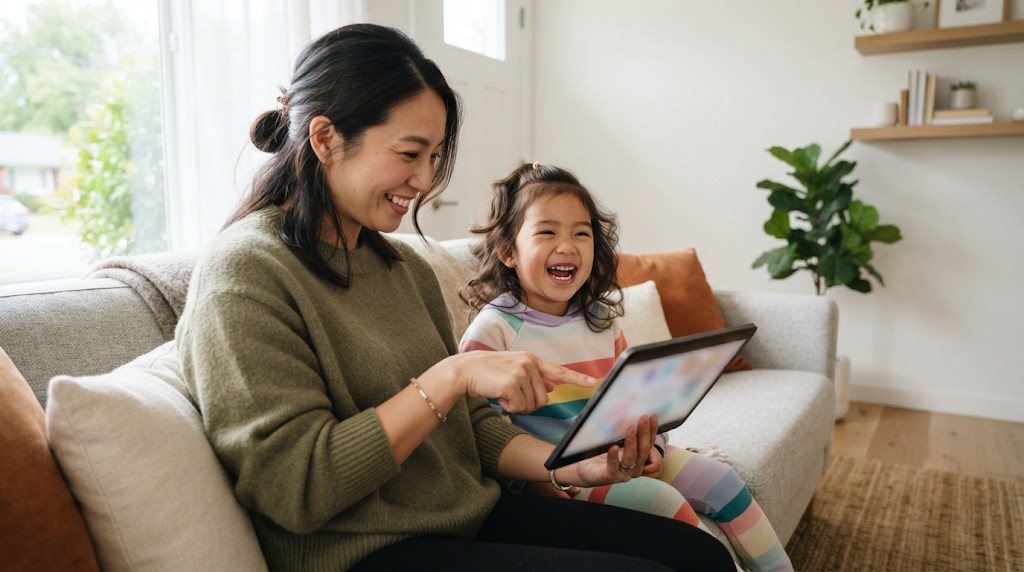
- Ages 0 to 3: Shinapushu (TV Tokyo’s baby show, with a global channel called PushBaby since October 2024), the official Anpanman anime channel, and Shimajiro’s official channel from Benesse.
- Ages 4 to 8: Shimajiro and Anpanman still work, plus NHK for School clips on NHK’s own website. If your child is a beginner whose home language is not Japanese, Bocchi & Pocchi explains basic Japanese in English.
- Ages 8 to 12 and up: NHK for School subject clips (science, social studies, Japanese), and comprehensible input channels made for learners, which use slow, visual Japanese.
- What none of them can do: answer your child, correct them, or become their friend. YouTube is excellent input. Speaking needs a real person on the other side.
Want your child to speak, not just listen?
TOMODACHI JAPAN is an online Japanese school for children growing up outside Japan. They talk with peers their own age in Japan every day, taught by teachers working at Japanese schools, in small classes of 8.
🎁 Register and we’ll email you our School Guide (PDF, in English) straight away. You’ll also be first to hear about tuition, scholarships and opening dates.
Free · takes about 30 seconds
Ages 0 to 3: songs, faces and repetition
For toddlers, the goal is not to teach words on purpose. It is to let your child hear natural Japanese rhythm, songs and greetings every day, ideally with you sitting next to them and repeating the words.
Shinapushu (シナぷしゅ) and PushBaby
Shinapushu is a TV Tokyo programme made for babies and toddlers, with the main target of 0 to 2 years old. Its official YouTube channel in Japan is called Shinapushu ch. In October 2024 TV Tokyo opened a second official channel, PushBaby, specifically to distribute the show worldwide. For families abroad that is the important detail: the global channel was built for you, so you do not need workarounds.
Anpanman official anime channel
Almost every Japanese preschooler knows Anpanman. The official channel, run by TMS Entertainment, opened in February 2021 and posts songs and episodes. The language is simple, polite and full of everyday greetings, which makes it a gentle first anime. We go deeper on Anpanman and other shows in our teacher’s list of anime for learning Japanese.
Shimajiro official channel (Benesse)
Shimajiro is the tiger mascot of Kodomo Challenge, Benesse’s at-home learning programme for young children in Japan. The official channel posts children’s songs, episodes of the TV show and short excerpts of the programme’s videos. Be aware that the full versions of some programme videos are for members inside the Shimajiro app. The free YouTube part is still plenty for daily songs.
Ages 4 to 8: stories, school life and first lessons
From around four, children start to follow stories and like to see kids of their own age. This is also the age when many heritage children quietly start answering in English. Video can keep Japanese feeling normal at home, as long as it is not the only Japanese they hear.
NHK for School
NHK for School is the educational video library of Japan’s public broadcaster, made for Japanese classrooms from primary school upward. Its official app describes about 9,000 clips across Japanese, maths, science, social studies, music and more. It lives mainly on NHK’s own website and apps rather than on one YouTube channel. One caution for families abroad: the official app description notes that some videos are distributed only inside Japan, so a few clips may not play where you live. We do not recommend VPN workarounds. Use what is available, which is still a lot.
Bocchi & Pocchi (for beginners)
Bocchi & Pocchi is a small learner channel run by a Japanese teacher and children’s book author, with two friendly sock characters teaching greetings, numbers and animals. Explanations are in English. It is a good fit if Japanese is not spoken at home and your child is starting from zero. For a heritage child who already understands Japanese, it will feel too easy.
Ages 8 to 12 and up: real content in Japanese
Older children want content that does not feel babyish. Two routes work well.
- NHK for School subject clips. Short science and social studies videos made for Japanese pupils of the same age. For a heritage child, this is the closest thing to sitting in a Japanese classroom: grade-level vocabulary, clear narration, in short clips as well as full programmes.
- Comprehensible input channels. Channels such as Comprehensible Japanese use slow speech, drawings and gestures so that learners understand without subtitles. They were made mainly for adult learners, but the beginner videos suit curious children aged 10 and up. Channel names in this space have changed recently, so check the current official site before you subscribe.
Many older kids also learn through anime and games. That is fine as motivation, but the language is often slang or rough speech. A teacher can help them tell which phrases are safe to use with adults in Japan.
Japanese YouTube channels for kids compared
| Channel | Best age | Who runs it | Language level | Watch out for |
|---|---|---|---|---|
| Shinapushu / PushBaby | 0 to 3 | TV Tokyo | Sounds, songs, single words | Very young target; outgrown quickly |
| Anpanman official | 1 to 6 | TMS Entertainment | Simple, polite everyday Japanese | Mostly songs and short clips |
| Shimajiro official | 1 to 6 | Benesse | Songs, routines, greetings | Full programme videos are member-only |
| NHK for School | 6 to 15 | NHK | Grade-level school Japanese | Some clips are Japan-only |
| Bocchi & Pocchi | 4 to 10, beginners | Independent teacher | Absolute beginner, English explanations | Too easy for heritage speakers |
| Comprehensible input channels | 10 and up | Independent teachers | Beginner to intermediate | Made for adults; names have changed |
What YouTube cannot do for your child’s Japanese
These channels are genuinely good, and we recommend several of them to our own families. But it helps to be honest about the limits.
- It is input only. Children who watch a lot of Japanese often understand well but answer in English. Understanding and speaking are different skills, and speaking only grows when someone waits for your child’s answer.
- Nobody corrects them. A video cannot notice that your child mixes up particles or uses casual speech with a teacher.
- There is no friend on the other side. The strongest reason a child keeps Japanese is a person they want to talk to. A screen character cannot be that person.
- Autoplay drifts. Recommendations slide from educational shows to toy vlogs fast. Use YouTube Kids or a supervised account, turn off autoplay, and keep a short list of approved channels.
How to use Japanese YouTube well at home
- Short and daily beats long and weekly. Fifteen minutes a day of one familiar channel is better than a two-hour weekend binge.
- Watch together when you can. Pause and ask one question in Japanese: what happened, who is this, what will happen next.
- Repeat the same videos. Children learn songs and phrases through repetition. Re-watching is not wasted time.
- Turn one phrase into real use. If Anpanman says いただきます, say it at dinner that night.
- Pair input with a speaking routine. Video for listening, plus a weekly time when your child must speak Japanese to someone outside the family.
For reading, our guides to Japanese books for kids and Japanese worksheets for kids fill the gap that video leaves. For apps, see which Japanese learning apps actually teach Japanese.
Where TOMODACHI JAPAN fits next to YouTube
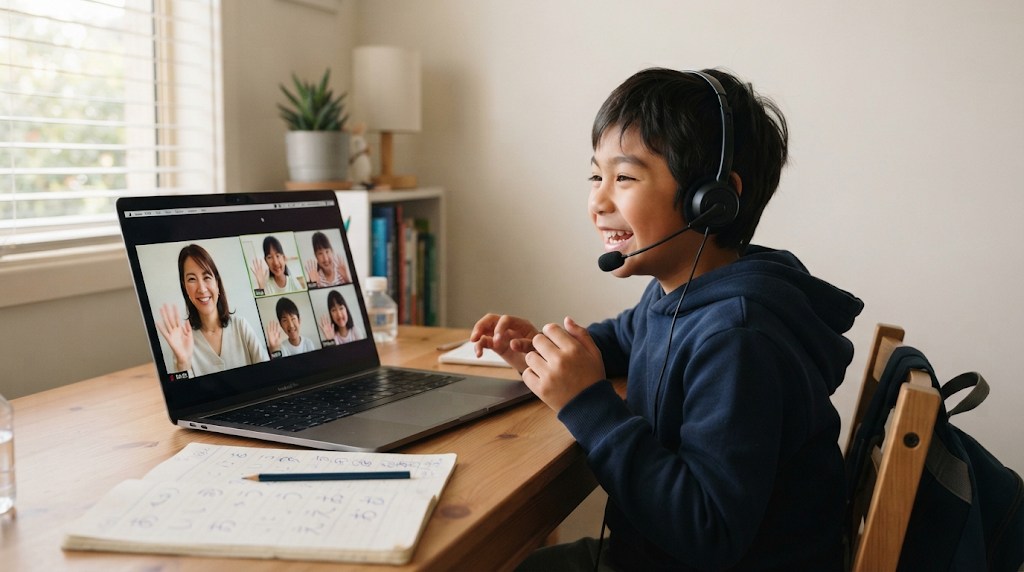
We are not a replacement for these channels. Keep them. What we add is the part a video cannot give: a live class where your child has to speak, with children in Japan of the same age.
- Friends in Japan of the same age. Classes connect with children in Japan, so Japanese becomes the language your child uses with friends, not only the language of cartoons.
- Teachers at the level of Japan’s schools. Our teachers bring the standard of Japanese classrooms, so a heritage child keeps up with grade-level Japanese.
- Small classes of up to 8. Every child gets turns to speak in each lesson.
- Live, not recorded. Someone listens, waits for your child’s answer and corrects gently.
A simple combination works for many families: the YouTube channels above for daily listening, and a weekly live class for speaking and friendship. If your child already has a friend in Japan they want to write to, our guide to finding a Japanese pen pal for kids safely is a good next step.