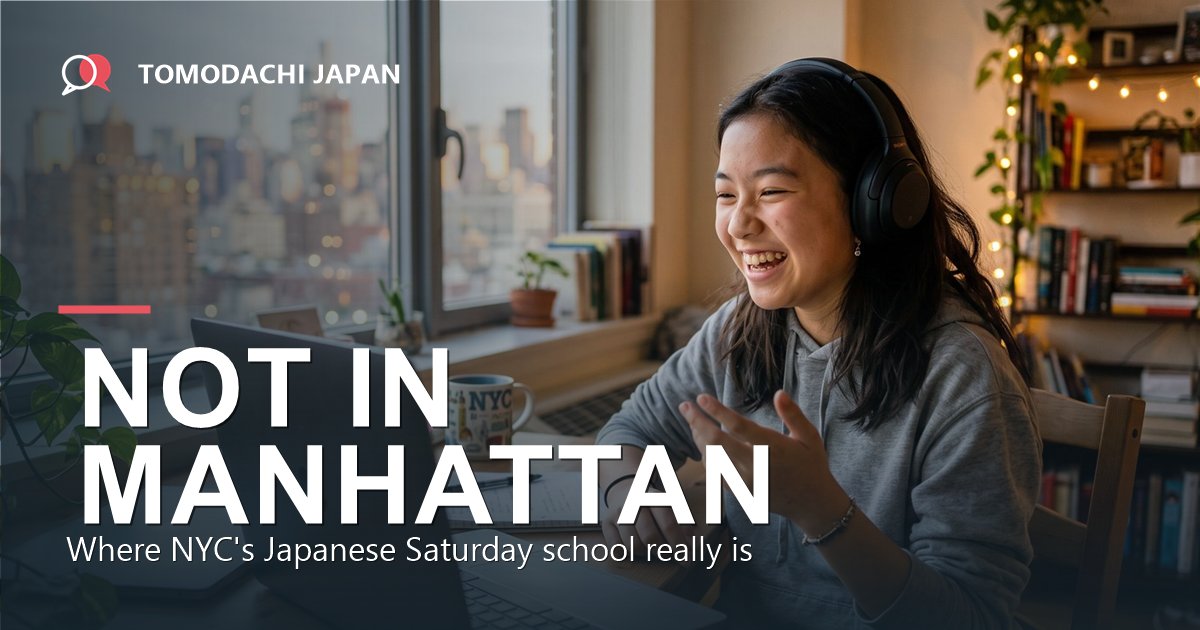
If you are raising a Japanese-American child in the New York area and searching for a Japanese Saturday school, the answer is more specific than most results suggest. The main one is the Japanese Weekend School of New York (JWSNY, ニューヨーク補習授業校), and it runs two campuses — neither of them in Manhattan. Add the New Jersey schools across the Hudson and you have the realistic set of options. This guide covers where the campuses actually are, the exact Saturday hours, the age cut-offs, the December enrolment window that catches families out, and what to do when the commute or the level does not work.
Japanese Saturday school in the NYC area: the options
| School | Type | Campus | Ages / grades | Saturday hours |
|---|---|---|---|---|
| JWSNY — LI Campus | Supplementary hoshuko | Bayside, Queens | Preschool (4) – Grade 11 | 9:05–12:50 (elem.) / 9:05–15:40 (mid & high) |
| JWSNY — W Campus | Supplementary hoshuko | Port Chester, Westchester | Preschool (4) – Grade 11 | Same as above |
| Japanese Weekend School of NJ | Supplementary hoshuko | New Jersey | Elementary – high school | Saturday |
| Private tutors / community classes | Conversation, heritage | Manhattan, Brooklyn | Any | Varies |
| TOMODACHI JAPAN | Online, conversation & friendship with kids in Japan | Your home | 5–18 | Any day, unlimited attendance |
Looking for a way to keep Japanese going from abroad?
TOMODACHI JAPAN is an online Japanese school for children growing up outside Japan. They talk with peers their own age in Japan every day, taught by teachers working at Japanese schools, in small classes of 8.
🎁 Register and we’ll email you our School Guide (PDF, in English) straight away. You’ll also be first to hear about tuition, scholarships and opening dates.
Free · takes about 30 seconds
JWSNY: two campuses, and neither is in Manhattan
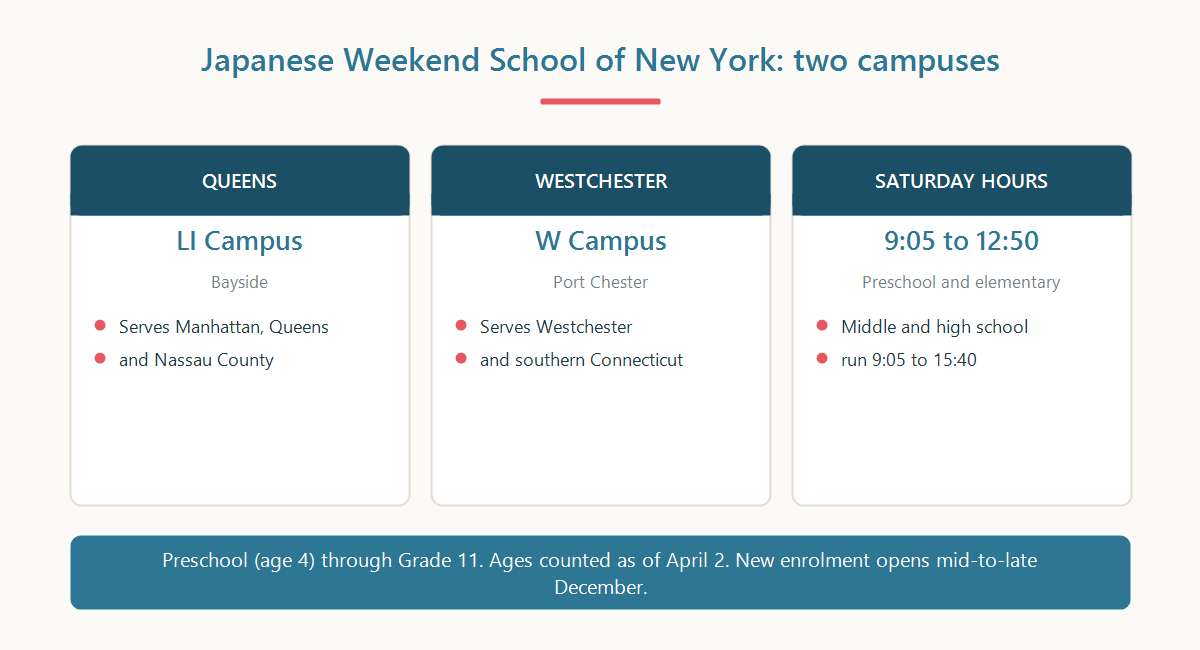
This is the first thing to absorb. The Japanese Weekend School of New York has its administrative office in New Rochelle (56 Harrison Street, Suite 503, New Rochelle NY 10801) and teaches on two borrowed campuses on Saturdays:
- LI Campus — Bayside, Queens. The campus that serves Manhattan, Queens and Nassau County families.
- W Campus — Port Chester, Westchester. The campus for Westchester, southern Connecticut and the northern suburbs.
If you live in Manhattan, the honest read is that your Saturday morning starts with a trip to Queens. That is entirely doable — thousands of families do it — but it is the single biggest thing to test before you enrol, especially if you have a second child with a Saturday activity. Enquiries: hoshuko@jwsny.org or (914) 636-3770.
Japanese Weekend School of New York — official site
The Saturday itself: hours, divisions and what gets taught
JWSNY runs four divisions — preschool, elementary, middle and high school — from age four through Grade 11. The published Saturday hours are worth reading twice, because they change what the day means for your family:
- Preschool and elementary: 9:05 a.m. – 12:50 p.m. A morning. You get your afternoon back.
- Middle and high school: 9:05 a.m. – 3:40 p.m. A full school day. That is a Saturday gone, every Saturday, for a teenager who also has US high-school homework, sports and eventually SATs.
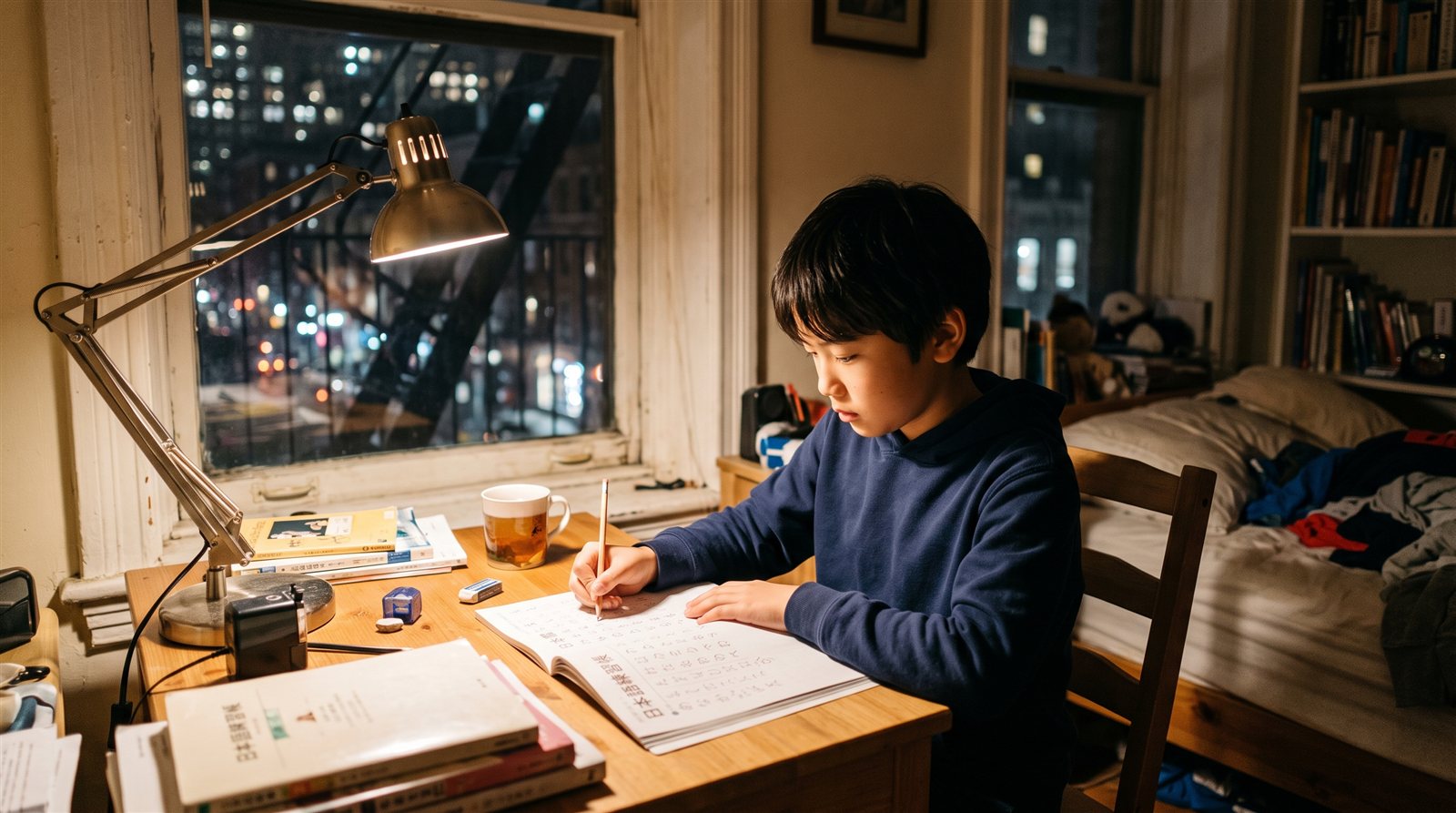
Instruction follows Japan’s national curriculum standards, taught in Japanese, with the emphasis on kokugo — Japanese as a first language. The point of a hoshuko is not to teach Japanese to learners; it is to keep a child at Japanese grade level so that returning to a school in Japan is possible. That is a genuinely different product from a language class, and it is why families who arrive expecting “Japanese lessons” sometimes find the fit uncomfortable.
Entry: age cut-offs and the December window
Two practical facts save a lot of confusion.
- Ages are counted as of April 2, following the Japanese school year, not the American one. Preschool mid-level from age 4, senior preschool from 5, elementary from 6, middle school from 12, high school from 15 — all measured on April 2. If your child’s birthday falls in the American cut-off gap, this is where the mismatch shows up. Documentation is straightforward: a birth certificate or passport plus the application form.
- New enrolment happens in mid-to-late December for the following school year. That is much earlier than most American families expect, and it is the single most common reason a family loses a year. Mid-year transfers are considered — contact the office and ask — but the clean route is the December window.
Three New York-specific things to plan around
- A full-day Saturday collides with American high school. Elementary is a morning; middle and high school run until 3:40. For a Manhattan teenager that is the commute plus a full school day, on top of a demanding US school week. This is the point at which most heritage students in the New York area quit Japanese — not because they stopped caring, but because the calendar broke.
- The programme stops at Grade 11. Plan for what happens next. If a Japanese credential or continued literacy matters to your family, you need a route that survives senior year rather than assuming the hoshuko carries you to graduation.
- Once a week loses to five days of English. Every New York parent describes the same slide: fluent at four, kindergarten starts, and by nine every answer comes back in English. Saturday school slows it. What actually reverses it is having friends the child wants to speak Japanese with — which is a social problem, not a curriculum problem.
The online option: the time zone is better than you think
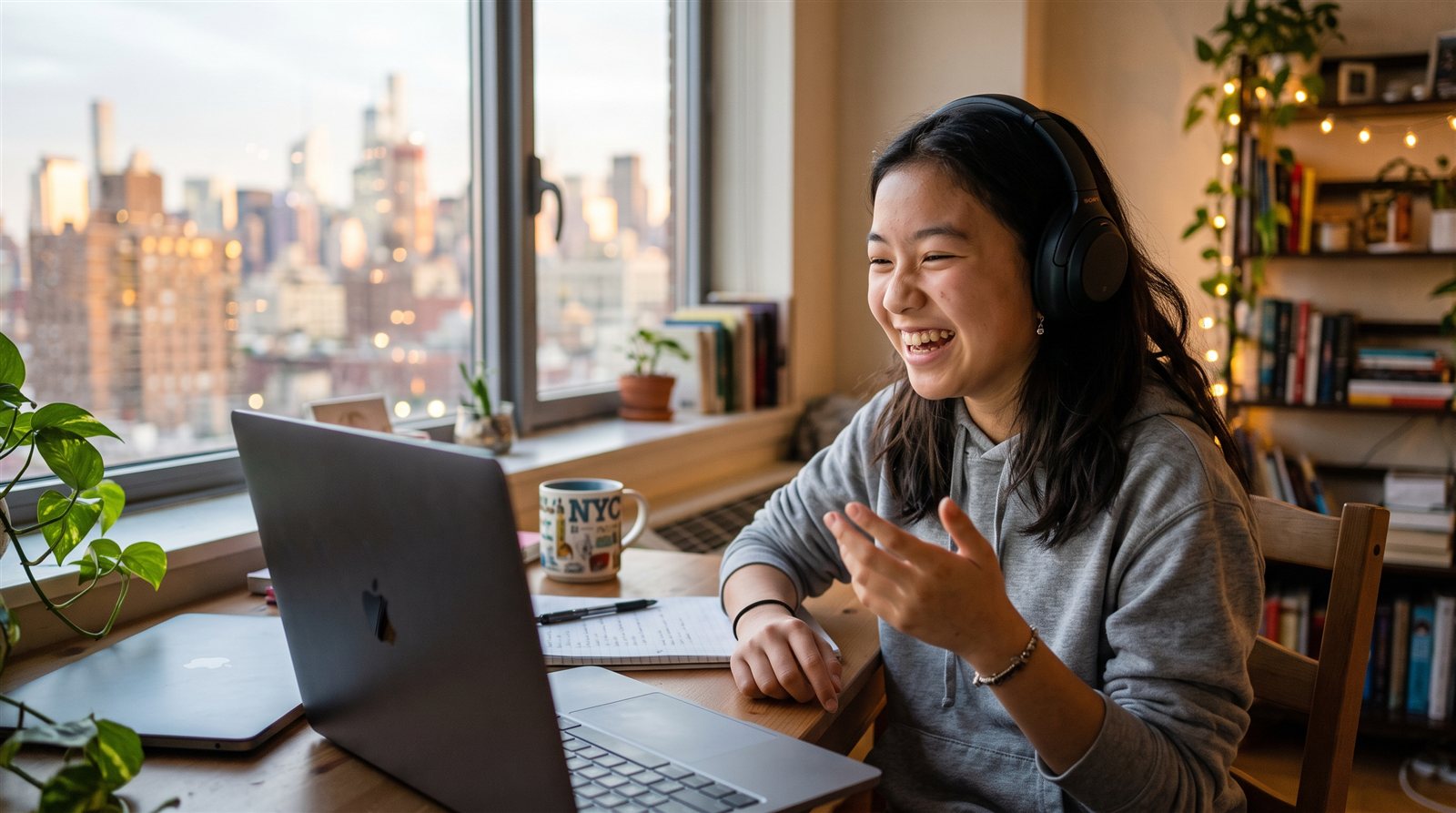
New York is 13 hours behind Japan (14 in winter). Families assume that rules out a Japan-based school. It does not — it just moves the class. A Saturday-morning class in Japan is Friday evening in New York. A late-afternoon Japanese class lands in the New York small hours, but Japan’s morning sessions land in the New York evening the day before. TOMODACHI JAPAN runs three daily time bands with timezone adjustment specifically so that North American families have a workable slot rather than a theoretical one. It is the same principle we set out in our guide to online Japanese classes and time zones.
- The other children actually live in Japan. In any New York-based class, every child in the room also speaks English, so English wins the moment the teacher looks away. Online with children in Japan, there is no shared fallback. Japanese is simply the price of joining in — which is what makes it stick.
- Unlimited attendance for one flat fee. One flat monthly fee for as many sessions as your child wants, in small groups of about eight with a homeroom teacher, taught by qualified, practising Japanese teachers. No hourly maths, no Saturday-only ceiling.
- Grouped by conversation level, not school grade. A thirteen-year-old whose Japanese is at a nine-year-old’s level is not put in front of Grade 8 kokugo and asked to survive. That is the design choice that keeps self-conscious teenagers in the room.
If Bayside or Port Chester is a reasonable drive and your child can work at Japanese grade level, JWSNY is a serious school and worth the Saturday. If the commute, the full-day schedule or the level is the thing standing between your child and Japanese, the answer is not to push harder — it is to move some of the load to weeknights, where friendships in Japan can do the work that a single Saturday cannot. Our wider overview of Japanese classes for kids in New York compares every route.
FAQ from New York families
Is there a Japanese Saturday school in Manhattan itself?
Not as a JWSNY campus — the two campuses are in Bayside, Queens and Port Chester, Westchester, with the office in New Rochelle. Manhattan families are served by the LI campus in Bayside. There are private tutors and community conversation classes in Manhattan, but they do a different job: they teach Japanese as a language rather than delivering Japan’s grade-level curriculum.
We are in New Jersey. Should we cross the Hudson or look locally?
Look locally first. New Jersey has its own supplementary provision, including the Japanese Weekend School of NJ, and a Saturday that starts at 9:05 in Port Chester is a very different morning from one thirty minutes away. The academic model is broadly the same across hoshuko; the commute is what decides whether your family is still doing this in three years.
My child speaks Japanese at home but cannot read it. Can they join?
Contact the school and be candid about the level. Because lessons run entirely in Japanese at Japanese grade level, placement follows literacy rather than age. A ten-year-old with beautiful spoken Japanese and first-grade reading cannot follow fourth-grade kokugo, so the school will place where the child can actually learn. Many families find it kinder to build reading and writing first and enter stronger, rather than enrol and be placed several years down.
Can we do the Saturday school and online lessons together?
Yes, and it is usually the strongest combination. They do different jobs: the hoshuko delivers grade-level kokugo, kanji and the Japanese curriculum; online lessons deliver everyday conversation and friendships with children in Japan. Because online attendance is unlimited and grouped by conversation level, it also flexes down in the weeks when hoshuko homework is heavy.
Families in New England face a similar choice: see our breakdown of JLS Boston, the Japanese school for Greater Boston, and how its Saturday classes compare.
Friends in Japan, every New York evening.
TOMODACHI JAPAN opens in December 2026. Get the free school guide by email — class times for your time zone, how the small-group classes work, plus tuition and scholarship details.