Search for a Japanese school in Vancouver and you’ll get a handful of names that look almost identical — but they do very different jobs. The short answer: a community heritage school like the Vancouver Japanese Language School keeps Japanese alive as a living, cultural language; the Saturday hoshuko (Vancouver Japanese School) keeps a child at the exact grade level they’d be studying in Japan; and a private tutor gives one-to-one conversation practice. Which one you want depends entirely on your child — and most Greater Vancouver families end up mixing more than one.
Japanese school options in Vancouver: the comparison
| School | Type | Day | Ages | Tuition | Area |
|---|---|---|---|---|---|
| Vancouver Japanese Language School (VJLS-JH) | Community & heritage language school | Saturday | Kinder–Gr 12 (+ adult) | C$1,449/yr (Kinder, Gr 1–6); C$1,101/yr (Gr 7–12); + C$88 fees (2026–27) | Downtown Eastside (Japantown) |
| Vancouver Japanese School (補習授業校 / hoshuko) | MEXT supplementary — grade-level kokugo | Saturday | Kindergarten–high school | C$135.45/month + C$67.20/month management fee; C$500 entrance (2026) | East Vancouver (Sir Charles Tupper Sec.) |
| Steveston Japanese Language School | Community language school | Weekdays + Saturday | Preschool–adult | On inquiry | Steveston, Richmond |
| Private tutor / Sakura-so style | One-to-one conversation | Any day | Any | approx. C$25–40 / hour | Your home / online |
| TOMODACHI JAPAN | Online, conversation & friendship | Any day (unlimited attendance) | 5–18 | One flat monthly fee — see the free guide | Your home |
Looking for a way to keep Japanese going from abroad?
TOMODACHI JAPAN is an online Japanese school for children growing up outside Japan. They talk with peers their own age in Japan every day, taught by teachers working at Japanese schools, in small classes of 8.
🎁 Register and we’ll email you our School Guide (PDF, in English) straight away. You’ll also be first to hear about tuition, scholarships and opening dates.
Free · takes about 30 seconds
Different types of Japanese school in Vancouver — and why it matters
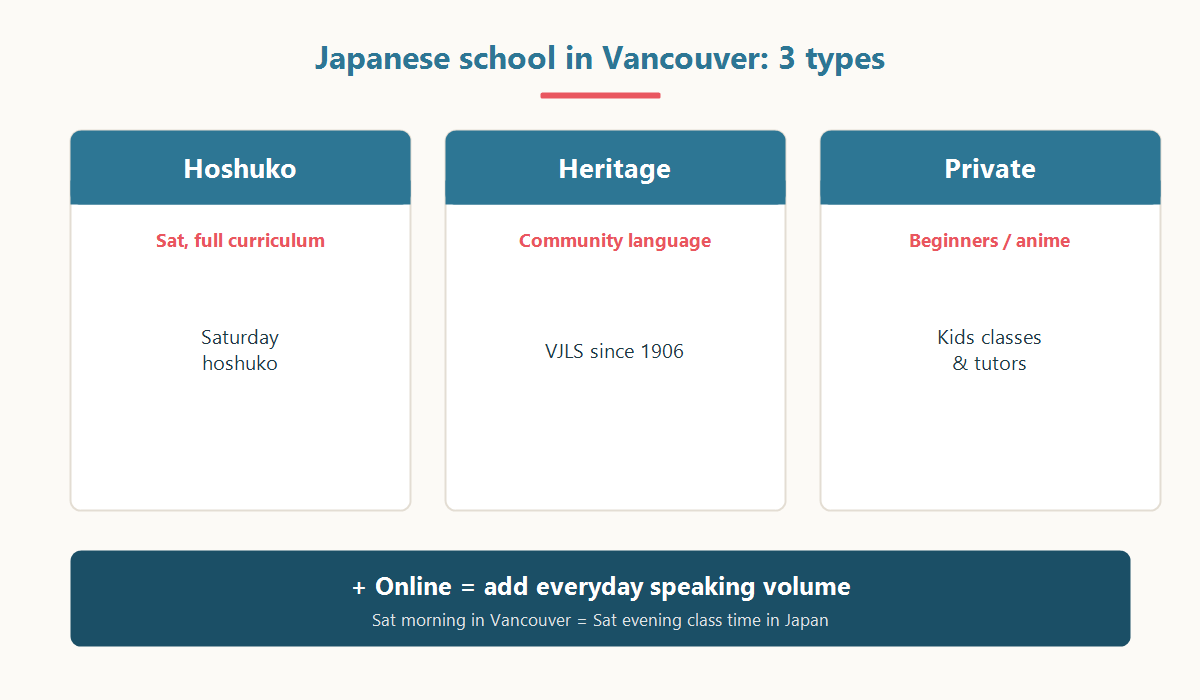
The biggest mistake Greater Vancouver parents make is assuming every “Japanese school” teaches the same thing. They don’t. Before you pick, it helps to know which of three categories you’re actually looking at — because the right choice for a child who already speaks Japanese fluently is the wrong choice for a child whose stronger language is English, and vice versa.
Hoshuko: keeping pace with grade level in Japan
The Vancouver Japanese School (バンクーバー補習授業校) is the region’s MEXT-recognised hoshuko — a supplementary Saturday school that follows the Japanese national curriculum using the same government textbooks children use in Japan. Classes run from kindergarten through high school, with the core being kokugo (Japanese language arts). This is the option for a family who expects to move back to Japan, or who wants their child to sit Japanese entrance exams — the goal is to stay exactly at grade level. It is demanding: the pace assumes Japanese is already the child’s confident, everyday language, and there’s homework on top of the BC school week.
Community & heritage classes: keeping Japanese = fun alive
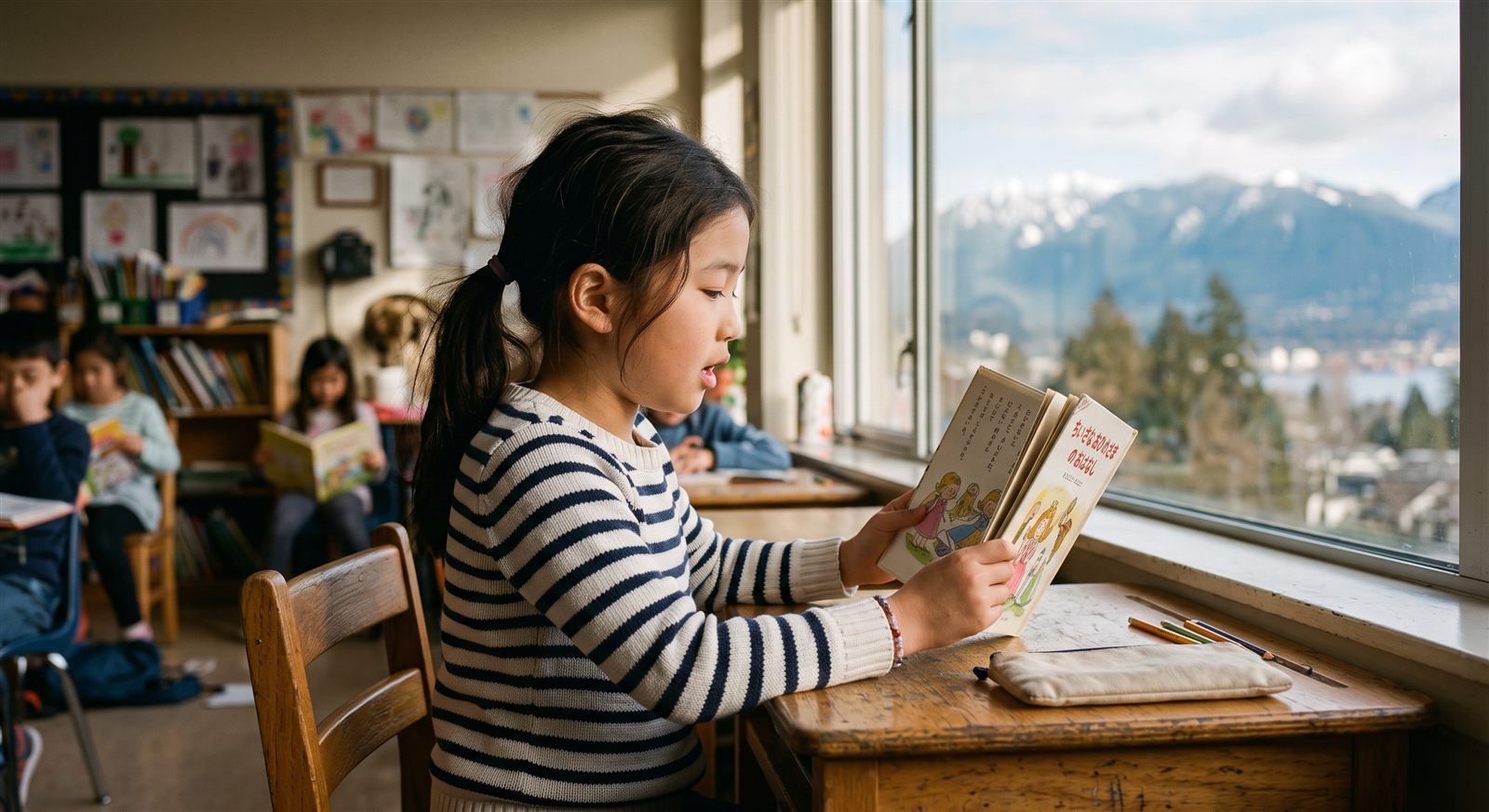
The Vancouver Japanese Language School (VJLS-JH), founded in 1906 and still in Japantown on Alexander Street, is the historic heart of this category. It runs Saturday children’s classes and — crucially — separates a heritage stream (for children who hear Japanese at home) from a beginner/fundamental stream (for children starting from little or no Japanese). Schools like Steveston Japanese Language School in Richmond do similar work. This is the right fit for a Japanese-Canadian child whose stronger language is English: the aim isn’t Japan grade level, it’s keeping Japanese warm, enjoyable and connected to identity and culture. Private tutors (roughly C$25–40/hour) fill the same need one-to-one.
A note on immersion & full-time options
You may also come across weekday Japanese-English bilingual or immersion daycare/preschool programs, and true full-time Japanese schools (nihonjin gakko) exist in some large expat cities. Greater Vancouver doesn’t have a full-time nihonjin gakko for school-age children — these are a genuinely different category (five days a week, everyday instruction) and worth knowing about, but for most heritage families the realistic choice is between a Saturday school and a supplement to it.
Three Vancouver-specific things to plan around
- The schools are scattered across the region. VJLS sits in the Downtown Eastside, the hoshuko meets in East Vancouver, and other community schools are out in Richmond, Burnaby and Coquitlam. Depending on where you live, Saturday morning can mean a real drive across the Lower Mainland — every week, in every kind of weather.
- It’s one session a week — that’s the ceiling. Almost every option here is a single Saturday class. Two or three hours a week is wonderful for community and continuity, but it’s a hard limit on how fast a child’s Japanese can actually grow.
- A heritage child is stronger in English — and literacy fades without weekday practice. Between Saturdays, an English-dominant child in Vancouver has five days of school, friends and screens all in English. Reading and writing kanji, in particular, quietly slips backwards without something happening mid-week.
The online option: turning once-a-week into every day
This is exactly the gap an online school is built to fill. Instead of replacing your Saturday school, it adds the mid-week practice that keeps Japanese from fading — a few short, live sessions from your own living room, no drive required. It’s the same idea behind an online alternative to Japanese hoshuko: take the once-a-week rhythm and make it everyday.
- The time difference — told honestly. Vancouver runs about 16 hours behind Japan in summer (17 in winter). That means Japan’s weekday daytime is the middle of the night here, so weekday-Japan classes don’t work for Vancouver kids. The golden window is the weekend: a Friday or Saturday evening in Vancouver lines up with Saturday or Sunday morning in Japan — when children on both sides of the Pacific are awake and free. We build around that honestly, rather than pretending the whole week is open.
- The other children actually live in Japan. Through NIJIN Academy, TOMODACHI JAPAN connects your child with 800+ students — many of them kids in Japan — so it feels like having friends there, not just a lesson.
- Unlimited attendance, one simple fee. One flat monthly fee for as many sessions as your child wants, grouped by conversation level, taught by qualified, practising Japanese teachers.
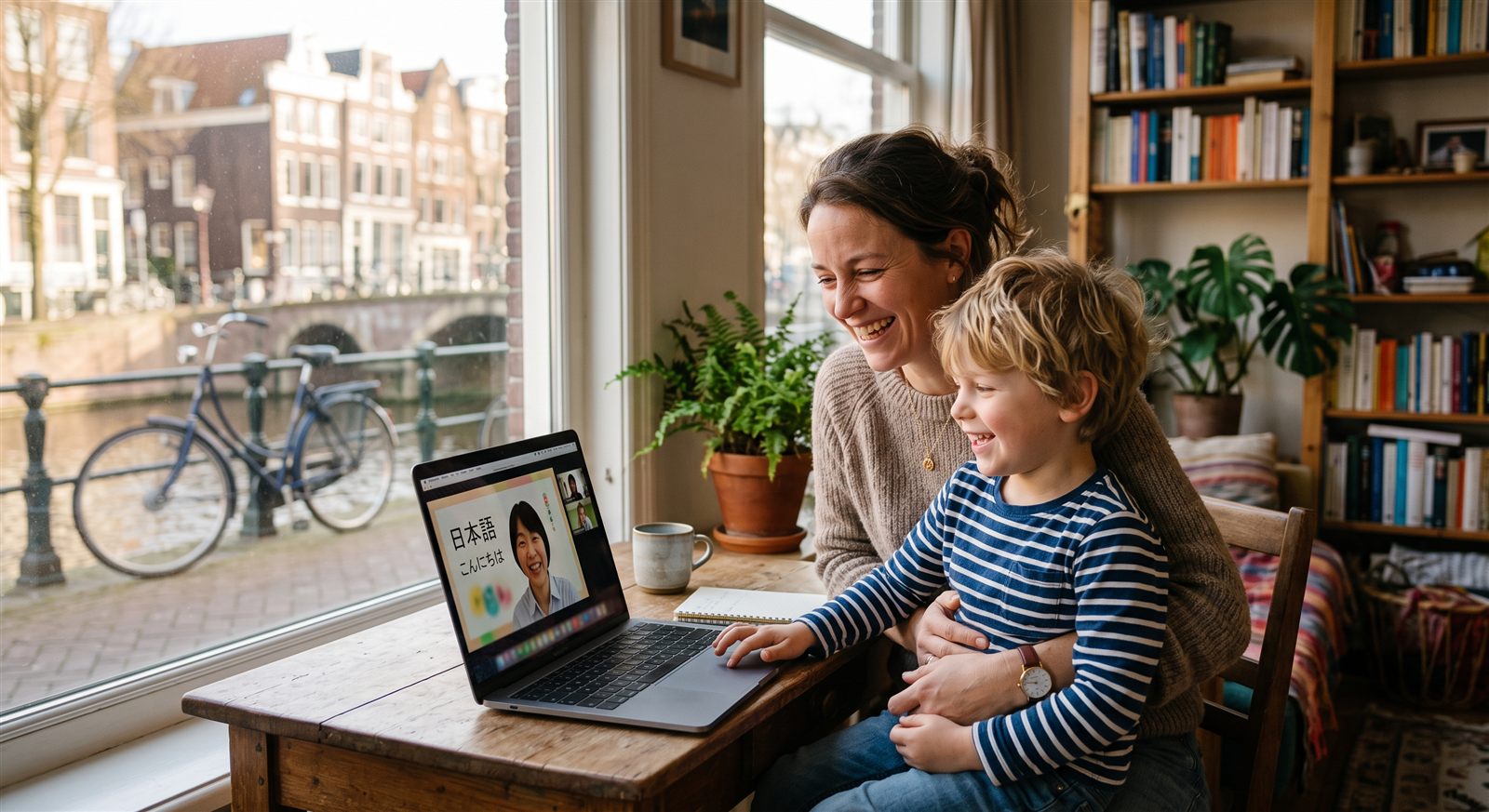
The point isn’t more homework — it’s giving your child real people to speak Japanese with, between Saturdays.
FAQ from Vancouver families
Should we choose the hoshuko or a community school like VJLS?
If you plan to return to Japan or want your child at Japanese grade level, the hoshuko (Vancouver Japanese School) is built for that. If your child’s stronger language is English and the goal is keeping Japanese warm and enjoyable, a community/heritage school such as VJLS-JH is usually the better fit. Many families start with a community class and add practice from there.
Does the time difference really work from the West Coast?
Honestly, only at certain times. Vancouver is roughly 16–17 hours behind Japan, so weekday Japan hours fall overnight here. What works well is the weekend: Friday and Saturday evenings in Vancouver land on Saturday and Sunday mornings in Japan. That’s when we schedule live sessions with children in Japan, so we’re upfront that this is a weekend-evening rhythm for Vancouver.
Can online Japanese classes replace our Saturday school?
They can, but they don’t have to. Many Vancouver families keep their Saturday community school for the in-person connection and use online sessions for the mid-week speaking and reading practice that one class a week can’t provide. It’s designed to complement, not compete.
What does it cost, and how much can my child attend?
TOMODACHI JAPAN has one flat monthly fee, and attendance is unlimited — your child can join as many level-grouped sessions as they like. Community schools in Greater Vancouver generally quote fees on inquiry, and private tutors run about C$25–40 per hour, so it’s worth comparing based on how many hours of Japanese your child will actually get.