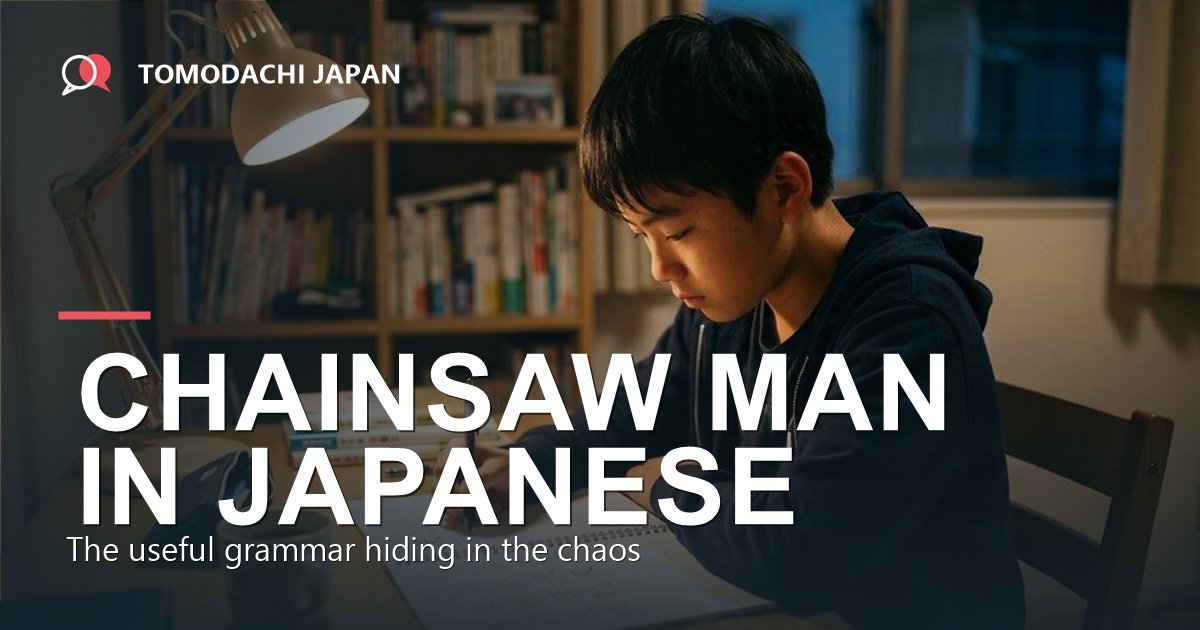
Chainsaw Man is loud, bloody and unhinged — but under the chaos, Denji wants something almost sweet: a normal life. I’m a Japanese teacher, and in this guide we’ll go through the most famous Chainsaw Man quotes in Japanese — Denji, Makima and Power — with accurate original text, rōmaji and English. You’ll see which lines are genuinely useful grammar and which are pure anime menace you should never repeat to a real person.
Can-you-use-it legend: ◎ = natural everyday Japanese · △ = casual/rough, friends only · ✗ = anime only, rude or strange in real life.
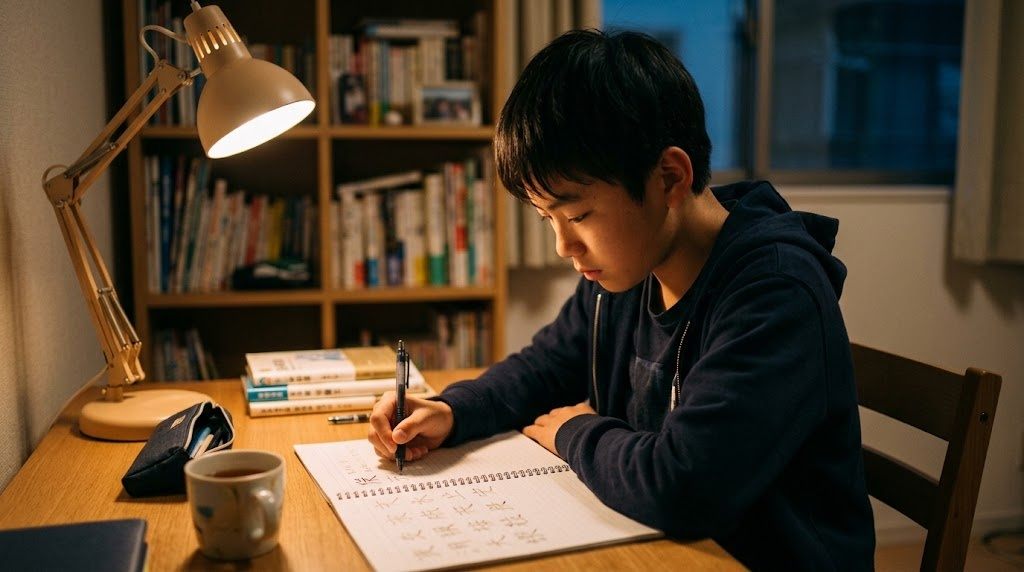
Denji: the dreamer’s lines
| Japanese | Rōmaji | English | Use it? |
|---|---|---|---|
| 普通の生活がしたい。 | Futsū no seikatsu ga shitai. | I want a normal life. | ◎ ~がしたい is essential |
| 夢みたいだ。 | Yume mitai da. | It’s like a dream. | ◎ ~みたい is very useful |
| チェンソーマンになる! | Chensōman ni naru! | I’ll become Chainsaw Man! | ◎ ~になる pattern |
| 腹減った。 | Hara hetta. | I’m starving. | △ Rough, masculine “hungry” |
Teacher’s note — the core pattern ~がしたい: Denji’s whole character is one sentence: 普通の生活がしたい (futsū no seikatsu ga shitai), “I want a normal life.” ~がしたい / ~たい is how you say “I want to (do)” in Japanese — attach it to a verb stem: 食べたい (“want to eat”), 行きたい (“want to go”), 寝たい (“want to sleep”). And ~みたい (mitai), “like / seems like,” is just as handy: 夢みたい (“like a dream”), 本当みたい (“seems true”). Both are ◎ and among the first things worth mastering.
The rough one — 腹減った: Denji says 腹減った (hara hetta) for “I’m hungry,” but that’s blunt, masculine, streetwise Japanese. The neutral, everyone-safe version is おなかすいた (onaka suita). Same meaning, very different register — good to know before you say the wrong one to a teacher.
Want to go from quoting anime to actually talking with friends in Japan?
TOMODACHI JAPAN is an online Japanese school for children growing up outside Japan. They talk with peers their own age in Japan every day, taught by teachers working at Japanese schools, in small classes of 8.
🎁 Register and we’ll email you our School Guide (PDF, in English) straight away. You’ll also be first to hear about tuition, scholarships and opening dates.
Free · takes about 30 seconds
Makima & Power: control, and comedy
| Japanese | Rōmaji | English | Use it? |
|---|---|---|---|
| いい子ね。 | Ii ko ne. | Good boy. / Good girl. | ◎ Gentle praise (see note) |
| 犬になれ。 | Inu ni nare. | Become a dog. | ✗ Demeaning command |
| わたしは強い。 | Watashi wa tsuyoi. | I am strong. | ◎ Basic adjective sentence |
| こわくない。 | Kowakunai. | I’m not scared. | ◎ Negative adjective |
Teacher’s note — the chilling politeness of いい子ね: Makima’s いい子ね (ii ko ne), “good boy,” is perfectly ordinary praise — you’d say it to a child or a pet. What makes it unsettling in the anime is who says it and why: soft words used as a leash. That’s a real feature of Japanese — politeness can carry power, not just warmth. Say いい子だね to encourage a friend’s dog and it’s ◎ sweet; the menace is all Makima, not the grammar.
Power’s grammar gift — adjectives: Power is chaos, but わたしは強い (watashi wa tsuyoi), “I am strong,” and こわくない (kowakunai), “I’m not scared,” are textbook-clean. Japanese i-adjectives become negative by swapping ~い → ~くない: 強い→強くない (“not strong”), 高い→高くない (“not expensive”). Learn that one rule and you can negate hundreds of adjectives. Both lines are ◎.
Anime Chainsaw Man Japanese vs. real Japanese
Chainsaw Man’s dialogue splits neatly in two. Denji and Power give you a pile of genuinely useful, casual Japanese — ~がしたい, ~みたい, ~くない, ~になる — the everyday grammar of wanting, comparing and describing. Makima gives you a warning: the same soft, polite words can be used coldly, so tone and intent matter as much as vocabulary. And a handful of lines (犬になれ, rough insults) are pure screen menace — never aim them at a real person.
Take the useful half, soften 腹減った to おなかすいた, and you’ve got clean conversational Japanese. The only way to feel the difference between “casual-cool” and “actually rude” is to use these words with a real Japanese speaker who can tell you which is which.
Frequently asked questions
What is Denji’s most famous line in Japanese?
His wish for an ordinary life — 普通の生活がしたい (futsū no seikatsu ga shitai), “I want a normal life.” It’s built on ~がしたい (“I want to”), one of the most useful patterns in Japanese, so it’s a genuinely good line to learn.
Is Chainsaw Man good for learning Japanese?
It’s fun and motivating, and Denji and Power use lots of useful casual grammar. But it’s mature and rough in places, so it suits older teens and adults, and every line needs a politeness check. See our guide to learning Japanese with anime.
What does “ii ko” mean?
いい子 (ii ko) means “good child / good boy / good girl” — ordinary, gentle praise for kids or pets. Makima makes it sound sinister through context, but the phrase itself is warm and ◎. For more rough-vs-real lines, see our Attack on Titan quotes in Japanese.
Where can my teen practise these with real Japanese friends?
At TOMODACHI JAPAN, kids and teens join small-group classes with peers who live in Japan and real Japanese teachers — so casual anime lines get sorted into “safe to say” and “screen only.” See our plans and pricing.