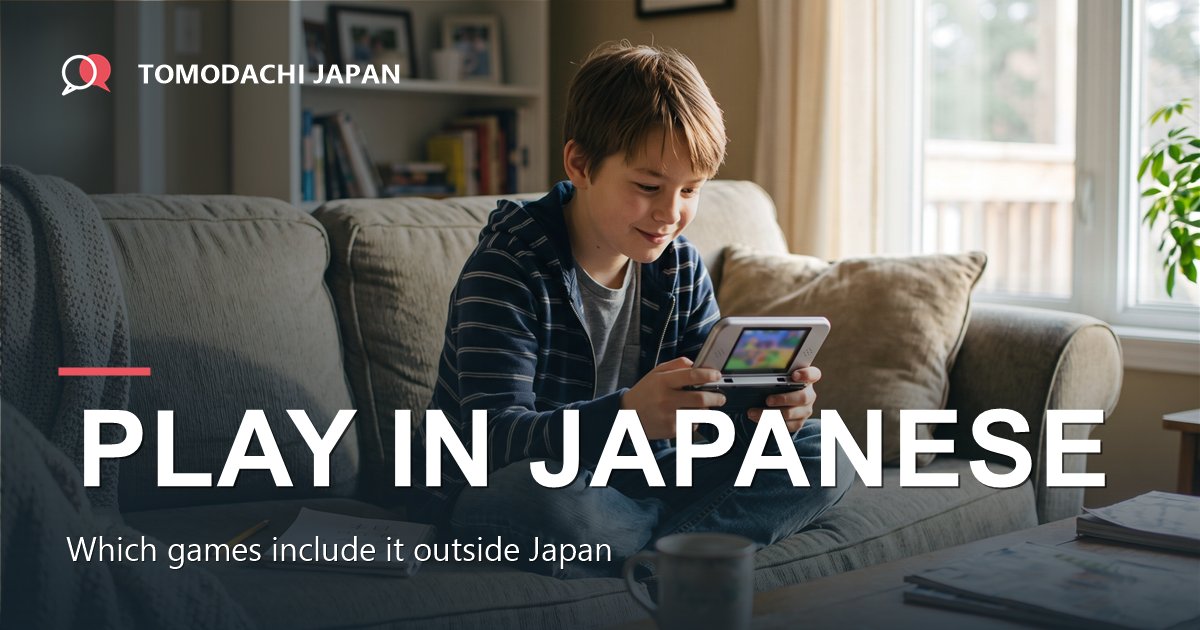
Games have one big advantage over anime for learning Japanese: they wait for you. A line of dialogue stays on screen until you press a button. You can read it twice, look up a word, and carry on without rewinding anything. For a lot of learners, that makes games the first Japanese they genuinely read for fun.
This guide covers how to learn Japanese with games in practice: which popular games actually include Japanese text on a copy bought outside Japan (one famous series does not), how to switch a Nintendo Switch, Steam or other platforms to Japanese, what the research does and does not show, and a playing method that turns hours of gaming into words you keep.
Do games really help you learn Japanese?
The honest answer is: they help, with conditions. A 2018 meta-analysis by Tsai and Tsai in Computers & Education, pooling 26 studies, found a large positive effect when game-based vocabulary learning was compared with non-game activities. A Swedish study of 11- and 12-year-olds found that frequent gamers had larger English vocabularies — a link, though not proof that gaming caused it.
One result is especially useful for Japanese learners. In a 2010 study by deHaan, Reed and Kuwada, students who watched a game being played remembered more vocabulary than students who played it. Playing takes attention; the language gets less of it. The lesson is not to stop playing. It is to build in moments where you stop and look at the words, which is what the method below does.
Want to use game Japanese with real friends in Japan?
TOMODACHI JAPAN is an online Japanese school for children growing up outside Japan. They talk with peers their own age in Japan every day, taught by teachers working at Japanese schools, in small classes of 8.
🎁 Register and we’ll email you our School Guide (PDF, in English) straight away. You’ll also be first to hear about tuition, scholarships and opening dates.
Free · takes about 30 seconds
Which games include Japanese outside Japan?
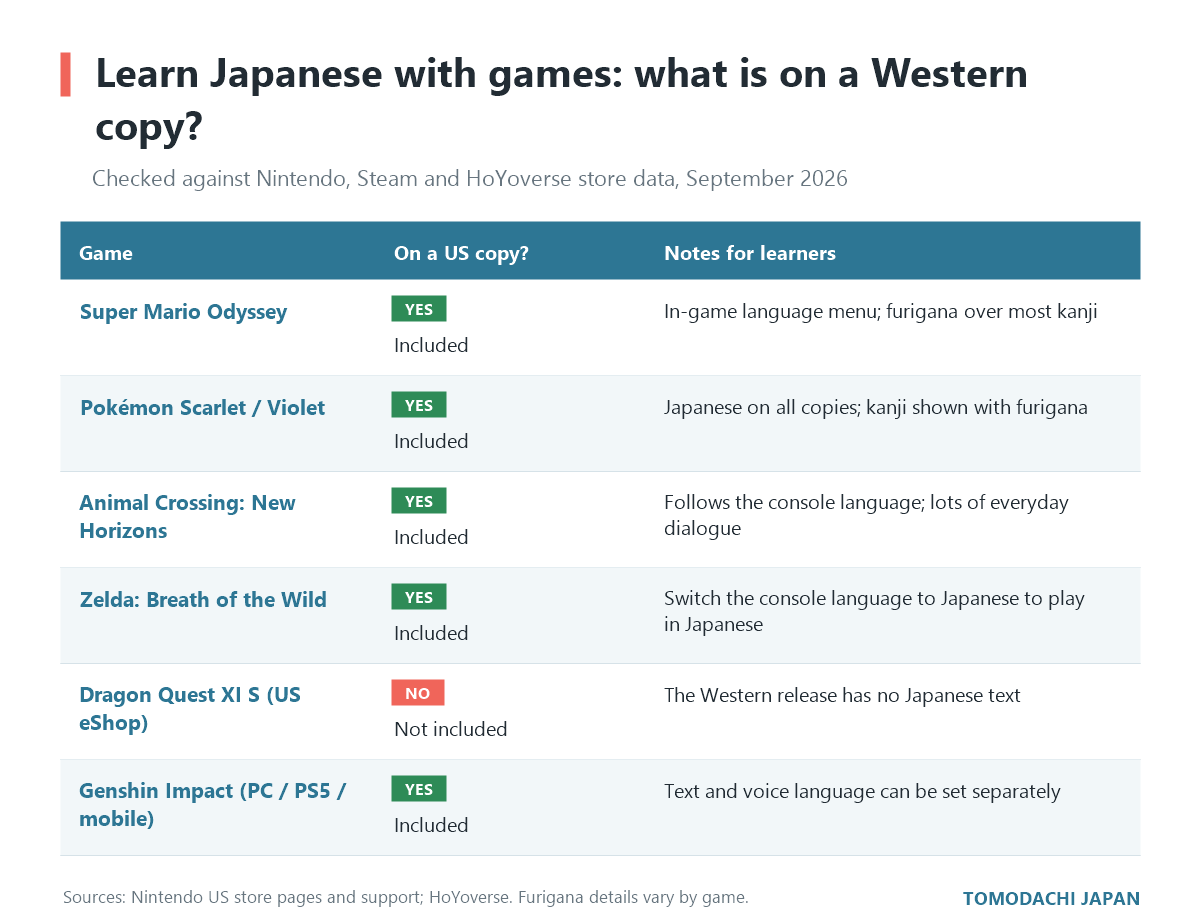
Nintendo’s own games are the safe bet. The US store listings for Super Mario Odyssey, Pokémon Scarlet and Violet, Animal Crossing: New Horizons and The Legend of Zelda: Breath of the Wild all include Japanese among their supported languages. Third-party games vary much more. The clearest trap is Dragon Quest XI S: the US eShop version has no Japanese text at all, even though the series is Japanese.
Always check the store page’s supported languages before buying a game for Japanese practice. On the Nintendo eShop it is listed under the game’s details; on Steam it is a table on every store page showing interface, full audio and subtitles separately.
How to switch your platform to Japanese
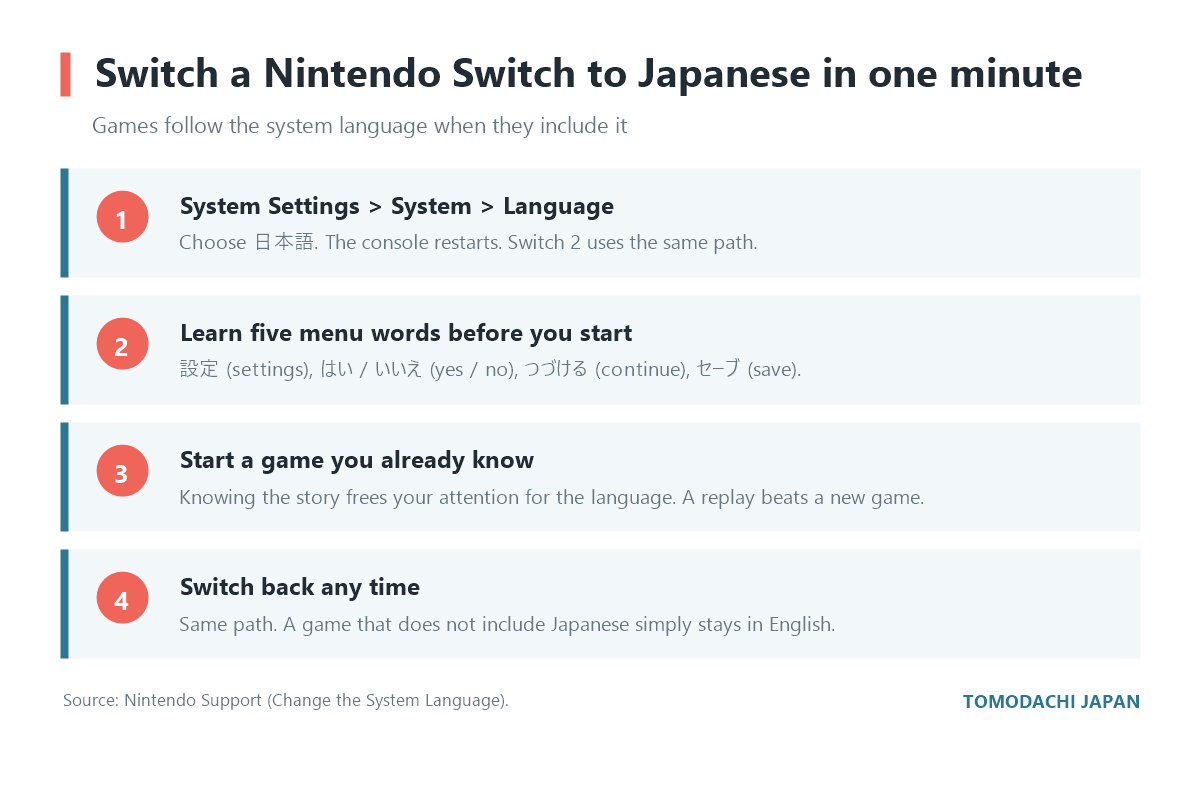
| Platform | How to change the language | What to know |
|---|---|---|
| Nintendo Switch and Switch 2 | System Settings > System > Language | The console restarts. Games use that language when they include it; Super Mario Odyssey also has an in-game language menu |
| Steam (PC) | Right-click the game > Properties > General > Language | Per game, so your other games stay in English. Persona 5 Royal, NieR:Automata and Final Fantasy VII Remake Intergrade list Japanese text |
| Genshin Impact (PC, PlayStation, mobile) | In-game settings | Text and voice language are set separately, so you can read Japanese with Japanese voices, or with English voices while you start out |
A small warning for PlayStation shoppers: Sony sells a PS5 Digital Edition in Japan that works only in Japanese and only with Japanese accounts. It is a Japan-market product, not a learning shortcut.
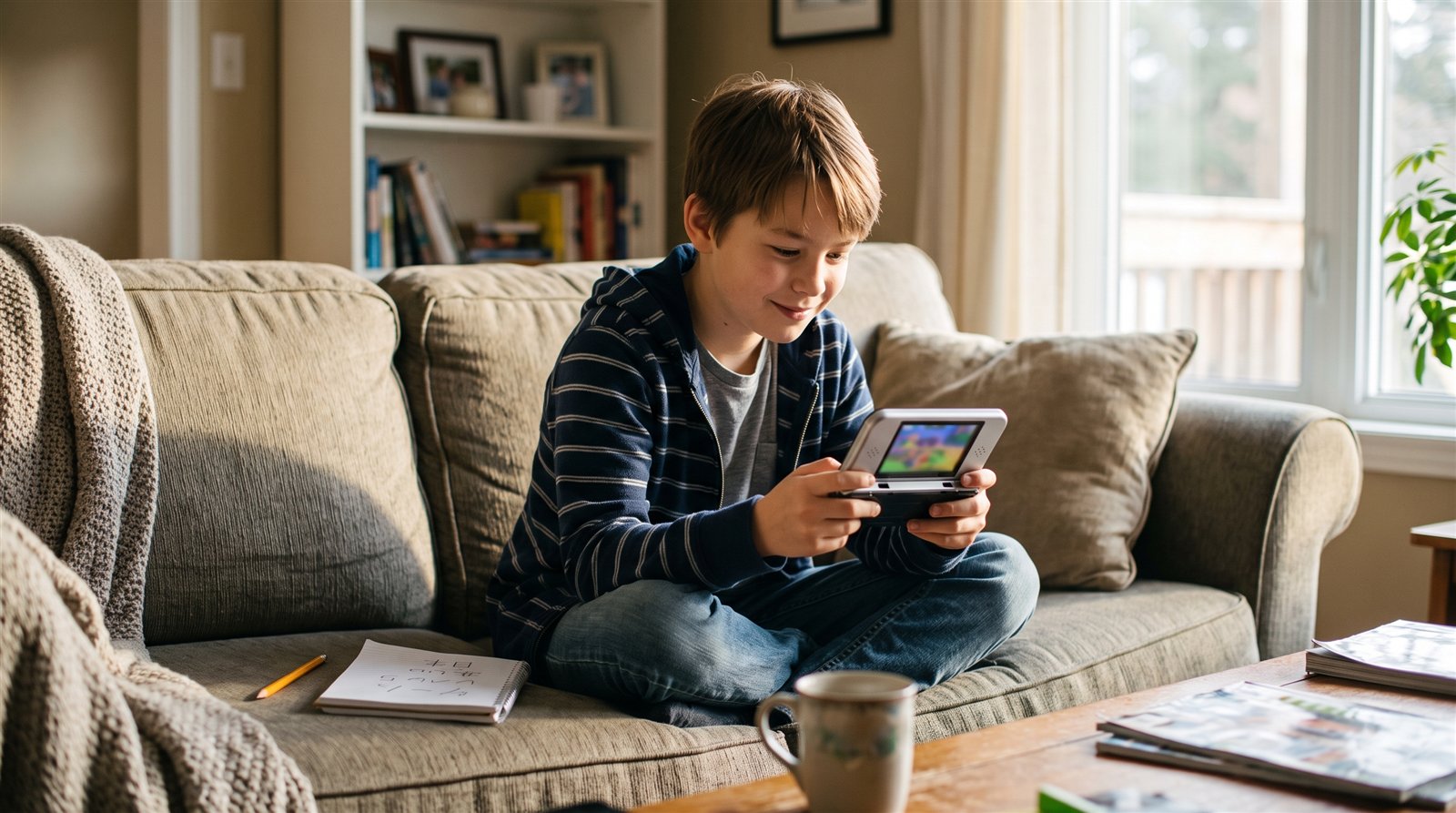
The best kinds of games for Japanese learners
Some games teach far more language per hour than others. What matters is how much text there is, how everyday it is, and whether you can read at your own pace.
| Type | Example | Good for | Watch out for |
|---|---|---|---|
| Life simulation | Animal Crossing: New Horizons | Short, everyday conversations, repeated daily | Villagers have quirky catchphrases |
| Platformer with light story | Super Mario Odyssey | A gentle first step; menus and short messages | Not much dialogue overall |
| Monster-collecting RPG | Pokémon Scarlet / Violet | Lots of readable text; you likely know the systems | Invented names for moves and creatures |
| Open-world adventure | Zelda: Breath of the Wild | Exploring while reading item descriptions | Archaic and fantasy vocabulary |
| Story-heavy RPG | Persona 5 Royal | School-life dialogue; huge amount of text | Long; best at intermediate level |
A method that turns playing into learning
- Replay a game you already finished in English. You know where you are going, so your attention goes to the words, not the puzzle.
- Keep a notebook or phone note beside you. Only write down words that keep appearing. In a game, repetition finds the useful vocabulary for you.
- Stop for two minutes after each session. Read back what you wrote and say each word out loud. This is the watch-don’t-play moment the research points to.
- Take screenshots of dialogue you did not understand. Look at them later, away from the game, when you can think.
- Use one phrase with a real person that week. A game will never ask you a question back.
PC players sometimes use text-hooking tools such as Textractor or Game2Text to copy game text into a pop-up dictionary. They work only on Windows for most games, and they are best for visual novels. On a console, the screenshot-and-notebook method is simpler and works just as well.
A note from a Japanese classroom teacher
Game Japanese is useful, and it is also very game-shaped. Menus are full of clipped commands — 決定, 戻る, 装備 — that you rarely hear in conversation, and characters use stylized speech to show who they are. A line copied from a fantasy knight can be grammatically perfect and still sound very strange said to a classmate.
What games give you is reading stamina and a love of the language, and those are hard to teach any other way. What they cannot give you is the feedback of a real conversation: someone looking puzzled, rephrasing, or laughing at a joke you meant. If a child in your house is picking up Japanese from games, the most valuable thing you can add is someone their own age in Japan to use it with. Our guides to learning Japanese with Pokémon, with Zelda and with Genshin Impact go deeper into each game’s language.
Frequently asked questions
What is the best game to learn Japanese as a beginner?
A game you already know, with lots of short everyday text. Animal Crossing: New Horizons is a common first choice. Before you can read hiragana and katakana, though, any game in Japanese will be frustrating — learn kana first.
Do I need a Japanese console or a Japanese copy of the game?
Usually not for Nintendo’s own games, which include Japanese on copies sold elsewhere. For third-party games, check the store’s supported languages, because some Western releases, such as Dragon Quest XI S on the US eShop, leave Japanese out.
Are there YouTube channels that teach Japanese through games?
Yes. Game Gengo, started in 2020, breaks down the Japanese in popular games and has more than 100,000 subscribers. Watching someone explain a game’s Japanese fits neatly with the research finding that watching can teach vocabulary well.
Is gaming in Japanese good for kids?
For motivated kids who can read kana, it is a great way to read Japanese voluntarily. Choose age-appropriate games, keep the usual screen-time limits, and pair it with conversation so the language has somewhere to go.
Related: Pokémon names in Japanese, which apps help you learn Japanese with anime, and the best anime to learn Japanese.
The short version
Games work because the text waits for you. Check a game’s supported languages before buying: Nintendo’s own titles include Japanese, but some third-party releases do not. Switch the console or the individual game to Japanese, replay something you know, write down only repeated words, and stop after each session to review. Then use what you learned with a real person.