If you are reading Dinolingo reviews because you want your child to learn Japanese, you are probably weighing the same questions other parents ask: is Dinolingo legit, is it like Duolingo, how is it priced, and how far will the Japanese course actually take my child?
We run an online Japanese school for children growing up outside Japan. We looked at the official Dinolingo Japanese course page, its help centre and app listing, plus independent reviews, so this is a parent-to-parent read, not an affiliate pitch.
What Dinolingo is
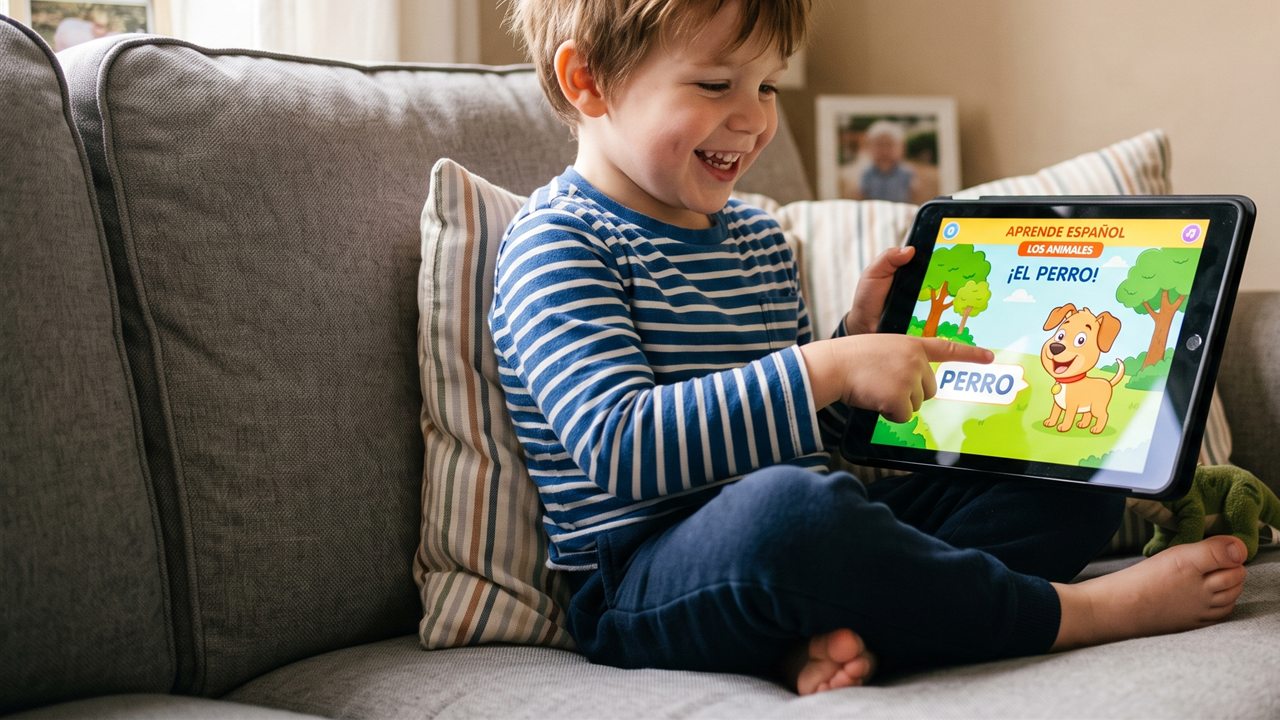
Dinolingo is made by Dino Lingo Inc., a company founded in New York in 2010. It started out selling language DVD sets for children and is now a digital subscription covering around 50 languages, with Japanese as one of them. It is built for children from age 2; the Japanese course page says up to 12, while its other official pages say up to 14.
To answer the obvious question straight away: Dinolingo and Duolingo are different companies with different products. Duolingo is a general self-study app for all ages; Dinolingo is designed only for young children.
Ready for more than a word list?
TOMODACHI JAPAN is an online Japanese school for children growing up outside Japan. They talk with peers their own age in Japan every day, taught by teachers working at Japanese schools, in small classes of 8.
🎁 Register and we’ll email you our School Guide (PDF, in English) straight away. You’ll also be first to hear about tuition, scholarships and opening dates.
Free · takes about 30 seconds
What the Dinolingo Japanese course covers
- Vocabulary first: more than 1,250 words across everyday themes — animals, food, family, colours, numbers, the body, clothes, the home.
- Beyond single words: greetings, short sentences and simple storybooks.
- Eight levels, so a child moves on as they progress.
- Formats: videos, songs, games, storybooks, audiobooks, flashcards, quizzes and printable worksheets.
One thing we could not confirm from the course page: which script is shown. The page mentions the Japanese alphabet but does not say whether children see hiragana, katakana, kanji or romaji. If reading matters to you, use the free trial to check this before paying.
How Dinolingo teaches
Its app listing describes the approach as total immersion with no translations — the child hears and sees Japanese attached to pictures, and picks up meaning from context. That works well for very young children, who learn their first language the same way.
Dinolingo recommends 15 to 20 minutes a day. There are no live tutors; everything is self-paced content.
What parents like
- Built for small children. Songs, cartoons and games suit a four-year-old far better than an adult app does.
- Siblings. The family plan covers up to six children, with a parent dashboard.
- Ad-free, with some videos downloadable for offline use.
- Printables. Worksheets give screen-free practice (printing and progress reports are on the website rather than the app).
- Actively maintained. The iOS app has been updated regularly through 2026.
What parents complain about
Reviews split sharply by where you read them. App store ratings are good; reviews on Trustpilot are much lower. The recurring complaints there are about billing and cancellation rather than the lessons themselves, followed by freezing and audio glitches.
- Refunds: the help centre says there are no refunds, though you can cancel yourself at any time. Set a reminder before any trial ends.
- Older children: an independent curriculum review notes a lack of grammar explanation for older learners, and that it is not built for serious academic study.
- Vocabulary, not conversation: it builds words well; it does not give a child anyone to talk to.
How Dinolingo is priced
We do not quote prices because they change. The structure is a monthly or yearly subscription that includes all languages, plus a one-time gift option that does not renew. Families get a free trial (schools get a longer one). Check the current plans on the official site.
Dinolingo vs Duolingo vs a live class
| Dinolingo | Duolingo | TOMODACHI JAPAN | |
|---|---|---|---|
| Built for | Young children | Self-learners of all ages | Children growing up outside Japan |
| Best age | Preschool to early primary | Confident readers | School-age children |
| Format | Videos, songs, games, printables | Short drills | Live classes with a teacher |
| Grammar explained | No | Briefly | Yes |
| Speaking with people | No | No | Every session |
| Other children | No | No | Peers in Japan, in a class of 8 |
| Siblings | Up to 6 on a family plan | Family plan available | Each child joins a class |
When a child outgrows it
Most families hit the same moment. The child knows the words for dog, apple and red — and then an actual Japanese speaker says something to them, quickly, and they freeze. That is not a failure of the app. Vocabulary is the foundation; conversation is a different skill, and it only grows by having conversations.
For a young child, that means a parent, a grandparent or a playgroup speaking Japanese with them. For a school-age child, it means somewhere they have to use Japanese with other children — ideally children who do not speak their other language, so switching is not an option.
Where TOMODACHI JAPAN fits
- Live classes of 8, with peers their own age in Japan.
- Teachers working at Japanese schools, who turn known words into real sentences.
- Speaking every session, not optional.
- Ongoing, so friendships carry from month to month.
A good sequence for many families: Dinolingo while your child is small and building words, then a live class once they are ready to use them.
Frequently asked questions
Is Dinolingo legit?
It is an established company that has operated since 2010 and publishes its terms and help centre openly. The most common problems in reviews are about subscriptions and cancellation, so read the refund policy before you start.
Is Dinolingo the same as Duolingo?
No. They are separate companies. Dinolingo is for young children; Duolingo is a general-audience app.
Is Dinolingo free?
The app is a free download with a free trial, but the course itself is a paid subscription.
What age is Dinolingo Japanese for?
From age 2. The Japanese page says up to 12 and other official pages say up to 14. In practice, it suits preschool and early primary children best.
In short
- Dinolingo is a children’s language subscription from Dino Lingo Inc., founded in 2010 — not related to Duolingo.
- The Japanese course offers 1,250+ words, eight levels, videos, songs, games and printables.
- Strong for young children building vocabulary; no live tutors and little grammar.
- Reviews are good in app stores and weaker on billing; check the refund terms first.
- When your child knows the words, give them people to say them to.