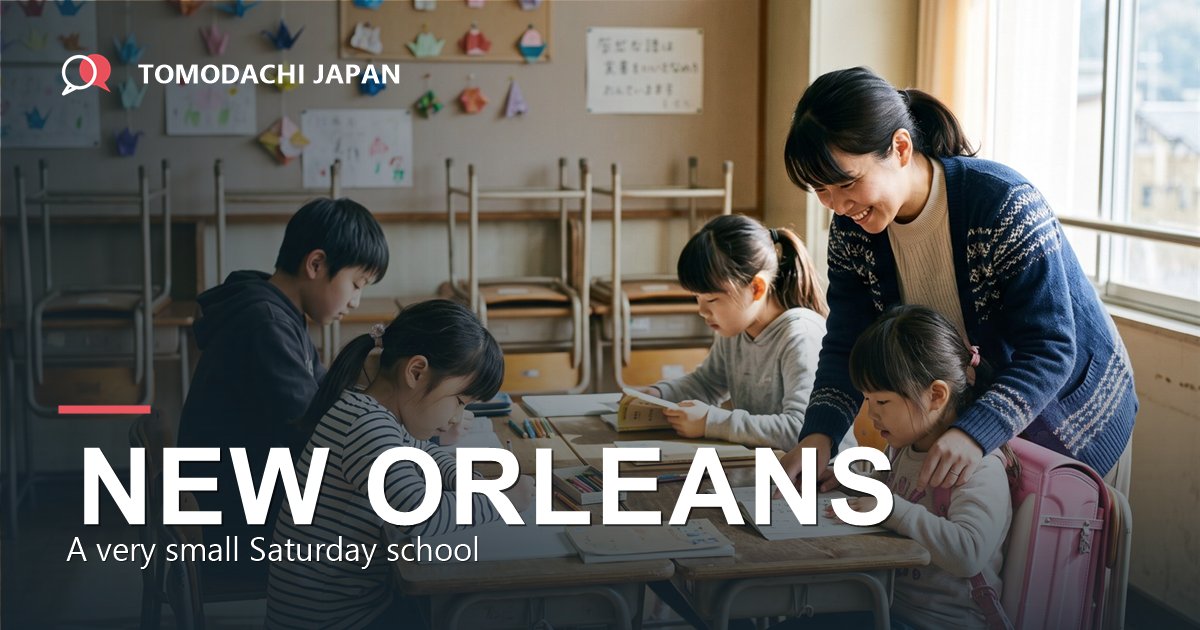
The Japanese Weekend School of New Orleans is one of the smallest Japanese supplementary schools in the United States — and that single fact shapes everything about what it can offer your child, in both directions. This guide covers where it meets, who it takes, plus the honest trade-offs of a school this size.
The basics
Known in Japanese as ニューオーリンズ補習授業校, the school was established in 1973 — more than half a century of continuous operation, which for a community school of this size is remarkable in itself.
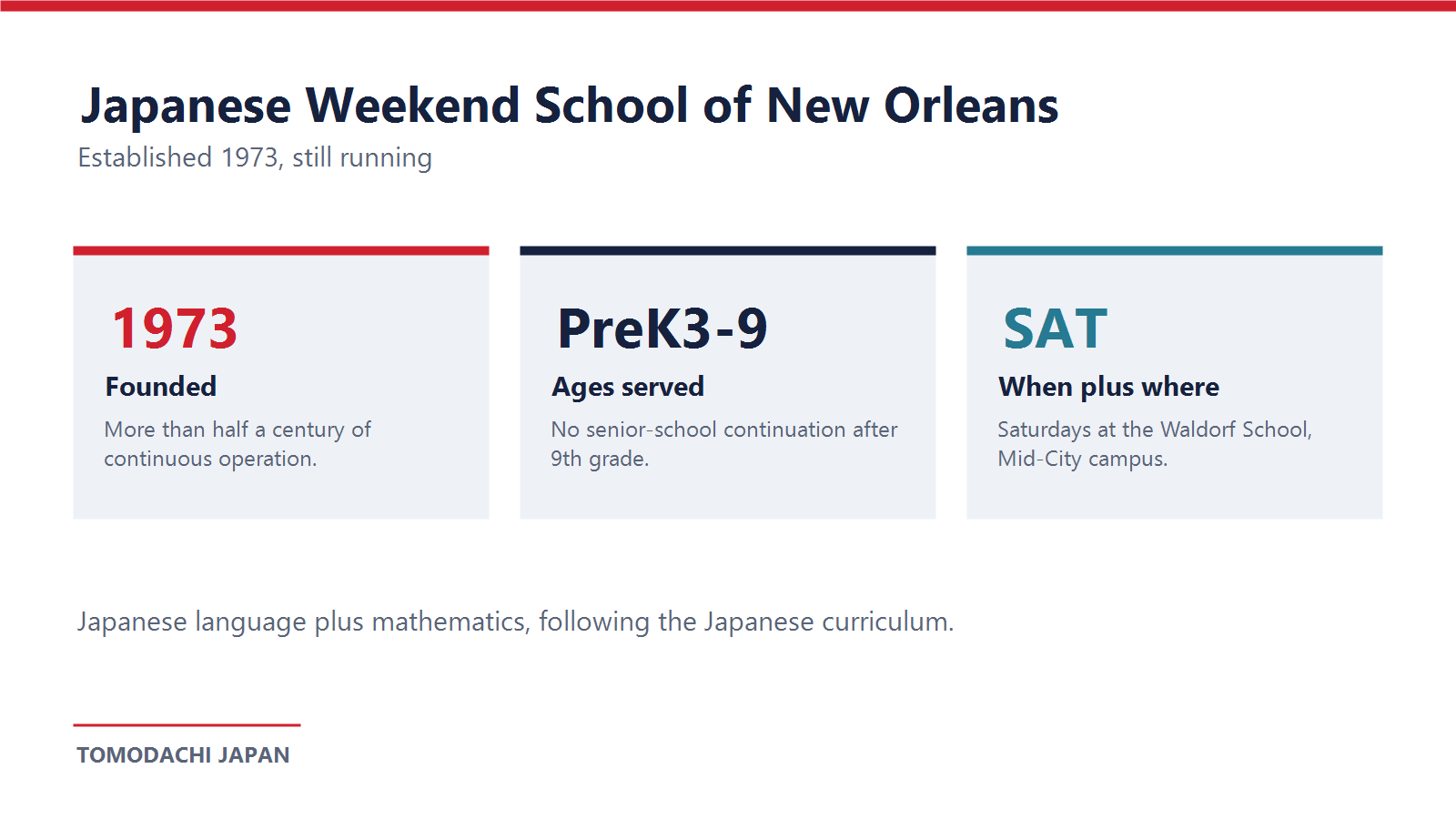
- When: Saturdays, weekly during term.
- Where: the Mid-City campus of the Waldorf School of New Orleans, 2539 Columbus St., New Orleans, LA 70119 — borrowed premises, as is normal for supplementary schools.
- Ages: Pre-K3 through 9th grade.
- Subjects: Japanese language plus mathematics — kokugo together with sansu — following the Japanese curriculum, alongside cultural instruction.
- Teaching: native-speaking instructors, with alumni returning as teaching assistants plus volunteers.
The school’s stated mission is to teach children of Japanese nationals across the Greater New Orleans region the Japanese language, culture, plus traditions. It works closely with the Japan Club of New Orleans, including at Japan Fest, held at the New Orleans Museum of Art.
Looking for a way to keep Japanese going from abroad?
TOMODACHI JAPAN is an online Japanese school for children growing up outside Japan. They talk with peers their own age in Japan every day, taught by teachers working at Japanese schools, in small classes of 8.
🎁 Register and we’ll email you our School Guide (PDF, in English) straight away. You’ll also be first to hear about tuition, scholarships and opening dates.
Free · takes about 30 seconds
How small is small?
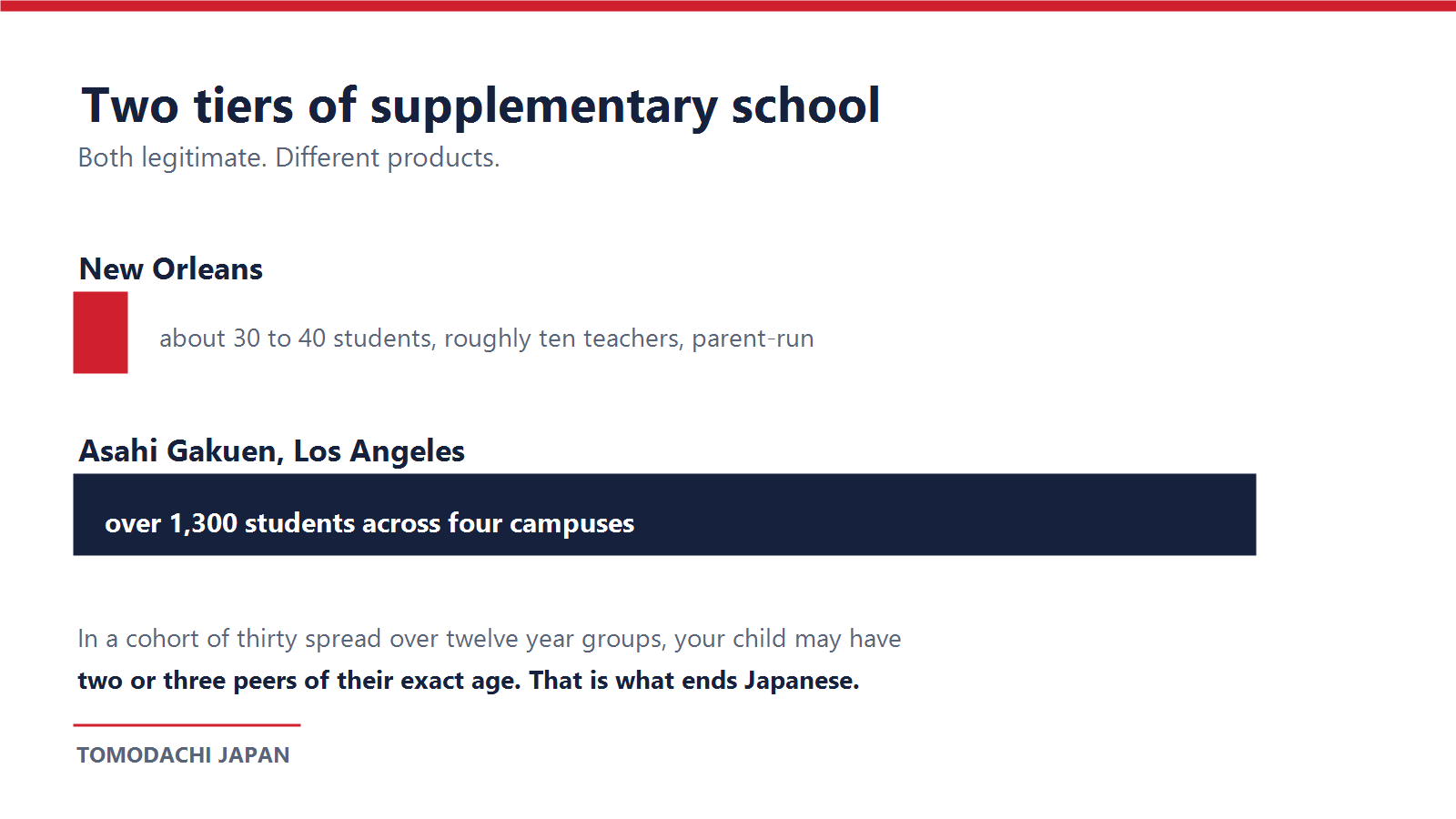
Recent published figures put the school at roughly thirty to forty students, with about ten teachers, drawn from somewhere between twenty to thirty families. Compare that with Asahi Gakuen in Los Angeles, which runs four campuses for well over a thousand students.
That difference is not a criticism — it is the defining characteristic, so it is worth understanding before you enrol. It is the practical expression of a two-tier system that most English-speaking parents never have explained to them: large supplementary schools receive Japanese government support including dispatched teachers, while small community schools are run by parents plus volunteers on local goodwill. Both are legitimate. They are simply different products.
What a school this size does well
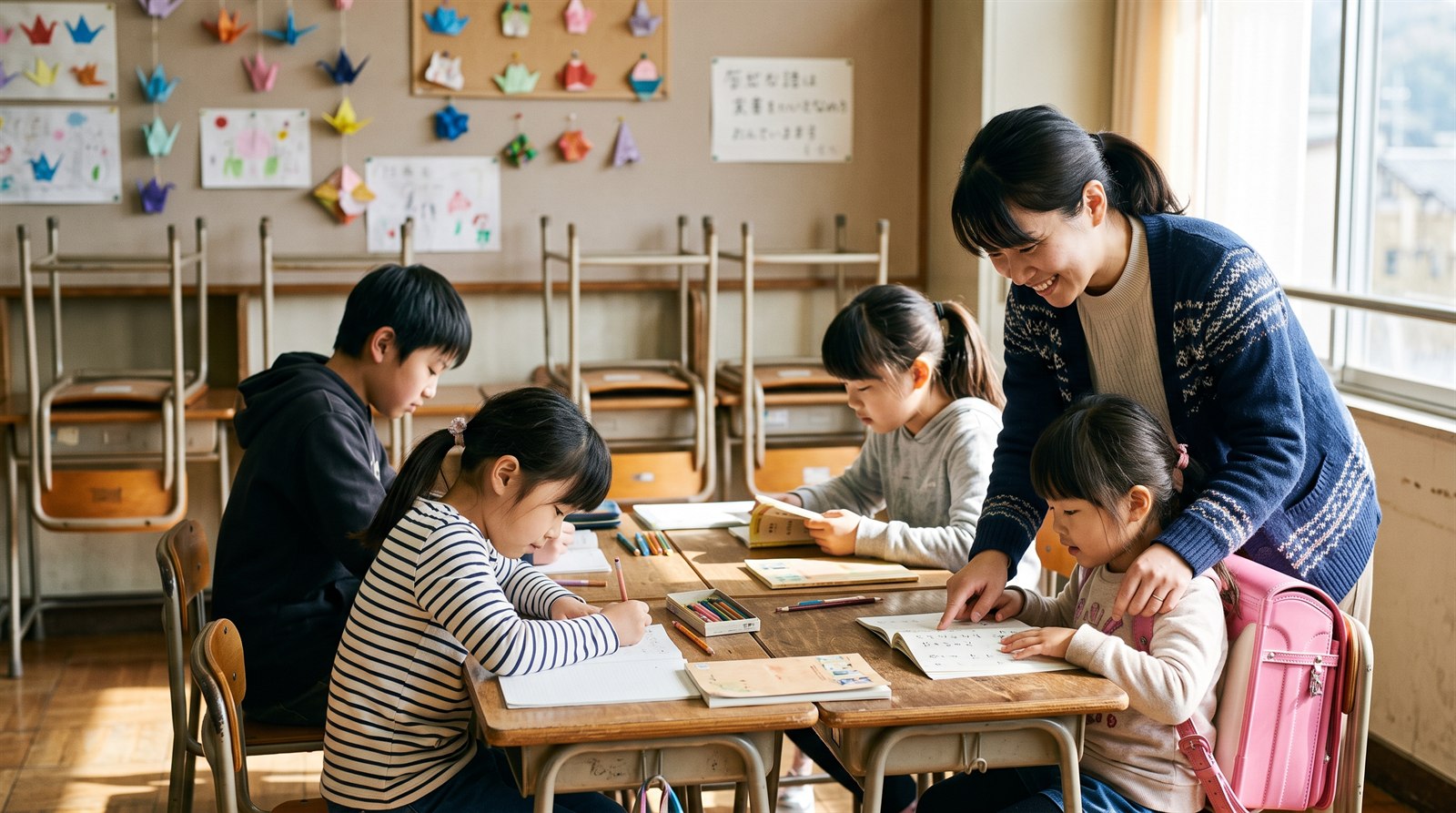
- Your child is known. In a cohort of thirty, no one is anonymous. Teachers notice a child struggling in week two rather than at report time.
- It is a community, not just a class. For a Japanese family in Louisiana — where the Japanese population is small — Saturday is often the only place your child meets other Japanese-speaking children at all.
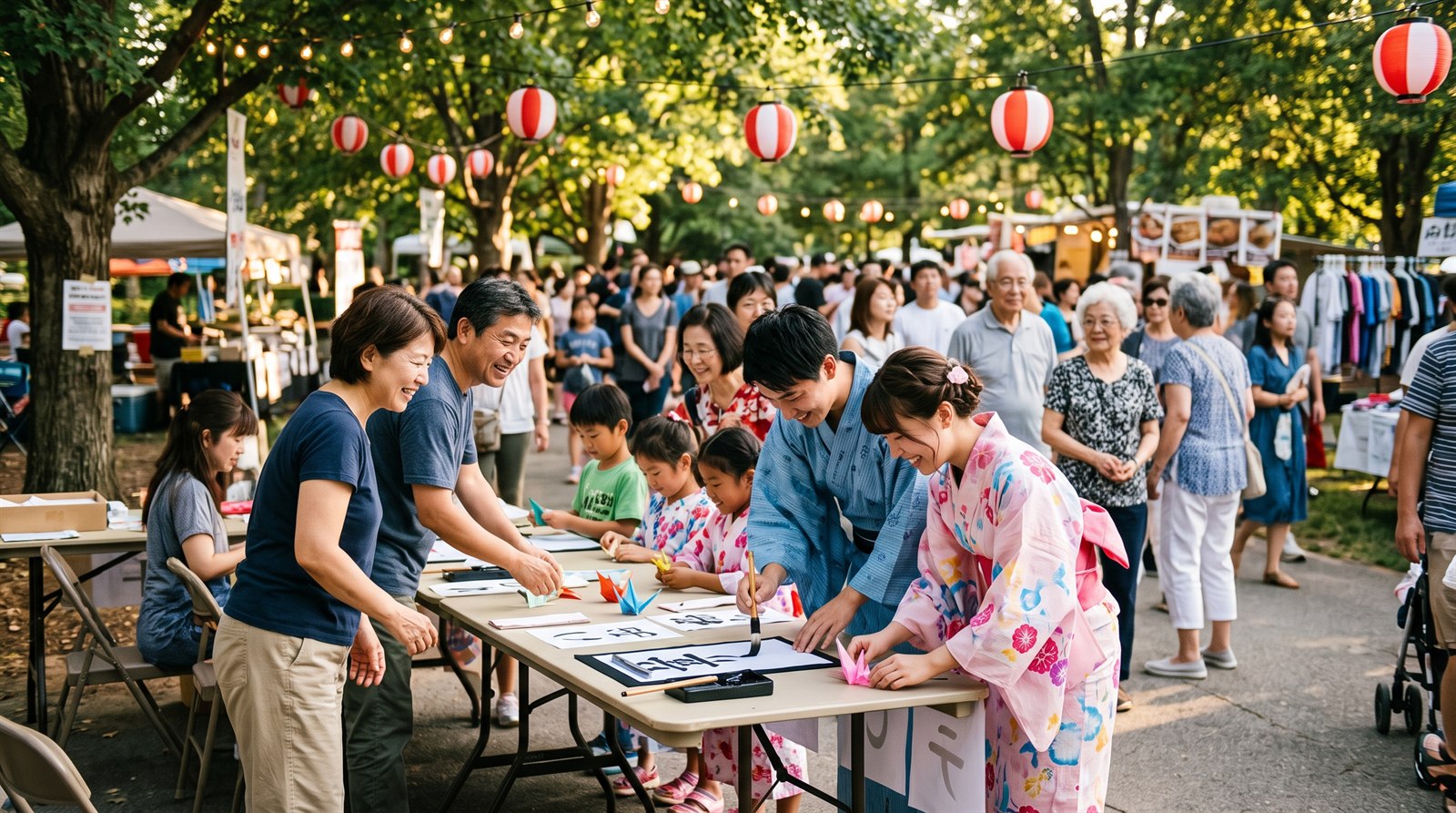
- Culture is real, not decorative. Small schools tied to a local Japan club do seasonal events properly, with families involved.
- It has lasted since 1973. Longevity in a volunteer-run organisation signals a genuinely committed parent community.
Where it will leave a gap
Three constraints follow directly from the size, so plan for them rather than being surprised.
- It ends at 9th grade. There is no senior-school continuation. Families whose children want to keep Japanese through high school — for a college application, a heritage connection, or an AP subject — need a plan for the years after.
- Grade groups may be combined. With a few dozen students across a Pre-K3-to-9 range, some cohorts are necessarily small or mixed. A child at either end of a combined group can find the level mismatched.
- Your child’s peer group is tiny. Thirty students spread over twelve year groups can mean two or three children of your child’s exact age. If they do not click with those particular children, there is no second option in the city.
That third point is the one that quietly ends Japanese for children in smaller cities. It is rarely about ability. A child keeps going to Saturday school because their friends are there, so when there is no friend of their age, attendance becomes a chore, then it stops.
Filling the gap without leaving the school
| Weekend school, New Orleans | TOMODACHI JAPAN | |
|---|---|---|
| Upper age limit | Ends at 9th grade | Continues through the school years |
| Peers of your child’s age | However many live locally | Children in Japan, grouped by age plus level |
| Frequency | Once a week, in term | Weekday sessions, attend as often as you like |
| Teachers | Native-speaking local instructors plus volunteers | Teachers currently working in Japanese schools |
| If you relocate | You leave the school | Same class, same friends, anywhere |
The two work well together rather than competing. The Saturday school supplies curriculum, written Japanese, plus a local community that an online class cannot replace. TOMODACHI JAPAN supplies what a city with thirty Japanese-learning children cannot: a class of children the same age, several times a week, led by teachers who stand in Japanese classrooms now. For families in New Orleans whose child is approaching 9th grade, it is also the continuation plan.
One monthly fee covers unlimited attendance, so a child can go daily in a good month, then less when school gets busy, at no extra cost. Details are on our tuition page.
Frequently asked questions
How much does the New Orleans weekend school cost?
The school does not publish a standing fee figure on its public pages, so contact it directly. We do not reprint fee numbers for community schools, because they are set annually by a volunteer board, meaning any figure quoted elsewhere is likely out of date.
Does my child need fluent Japanese to attend?
Classes follow the Japanese curriculum in Japanese, so a child needs enough language to follow instruction at their placed level. Ask the school how it handles heritage learners whose spoken Japanese outpaces their reading — small schools are often flexible in ways large ones cannot be.
What happens after 9th grade?
Locally, nothing continues, so plan ahead. Online classes with Japanese peers are the usual answer, since they carry through the senior years without a commute.
How do I find other supplementary schools in the US?
Search in Japanese for the city name plus hoshu jugyo ko — English searches miss most of them — or check the education pages of the nearest Japanese consulate. City-by-city guides are collected on our North America hub.
A class of friends their own age
TOMODACHI JAPAN opens in December 2026. Tell us where you are — we’ll send opening news, class times for Louisiana, plus trial-session details first.