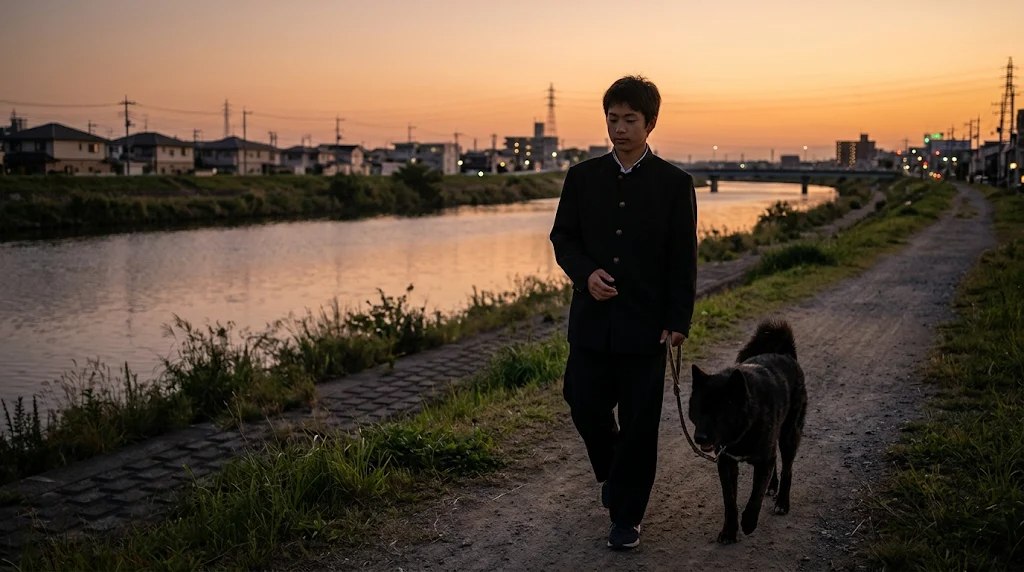
Megumi Fushiguro is the quiet one in Jujutsu Kaisen. He rarely shouts, he chooses his words carefully, and he moves from rough to polite Japanese depending on who is in front of him — which makes him one of the most useful characters in the series for a learner. I teach Japanese, and below are eight of the most-quoted Megumi quotes in Japanese, taken from the original Japanese, with rōmaji, a translation, the grammar underneath, and an honest note on which lines a real person could say to a friend, and which should stay in the shadows.
Can-you-use-it legend: ◎ = safe in real conversation · △ = fine in anime, odd in life · ✗ = don’t say this to a person.
Megumi quotes in Japanese
| Japanese | Rōmaji | English | Use it? |
|---|---|---|---|
| でも死なせたくありません | Demo shinasetaku arimasen | But I don’t want to let him die | ◎ Polite already |
| 少しでも多くの善人が 平等を享受できる様に 俺は不平等に 人を助ける | Sukoshi demo ōku no zennin ga byōdō o kyōju dekiru yō ni, ore wa fubyōdō ni hito o tasukeru | So that as many good people as possible can enjoy fairness, I save people unfairly | △ Deep, but heavy |
| 俺は正義の味方(ヒーロー)じゃない 呪術師なんだ | Ore wa seigi no mikata (hīrō) ja nai, jujutsushi na n da | I’m not a hero of justice. I’m a jujutsu sorcerer | ◎ Swap the job title |
| やめだ やってやるよ!! 自由に!! | Yame da. Yatte yaru yo!! Jiyū ni!! | Forget it. I’ll do it!! Freely!! | △ Rough |
| 違います | Chigaimasu | No, we’re not / That’s wrong | ◎ Everyday word |
| 命は懸けても 捨てる気はありません | Inochi wa kakete mo, suteru ki wa arimasen | I’ll put my life on the line, but I have no intention of throwing it away | △ Great grammar |
| できるかじゃねぇ やるんだよ | Dekiru ka ja nē, yaru n da yo | It’s not about whether I can. I just do it | ◎ Soften じゃねぇ |
| まずは俺を助けろ 虎杖 | Mazu wa ore o tasukero, Itadori | First, help me, Itadori | ✗ Command form |
Want to go from quoting anime to actually talking with friends in Japan?
TOMODACHI JAPAN is an online Japanese school for children growing up outside Japan. They talk with peers their own age in Japan every day, taught by teachers working at Japanese schools, in small classes of 8.
🎁 Register and we’ll email you our School Guide (PDF, in English) straight away. You’ll also be first to hear about tuition, scholarships and opening dates.
Free · takes about 30 seconds
The grammar underneath each line
でも死なせたくありません — causative, plus “want,” in polite form
Megumi says this to Gojo in the very first episode. Yuji has swallowed one of Sukuna’s fingers, the rules say he must be executed, and Megumi — who has known him for one day — simply admits that he doesn’t want it to happen. The sentence is short, but it stacks three grammar pieces on a single verb.
Start with 死ぬ (“to die”). The causative form 死なせる means “to let (someone) die” or “to make (someone) die.” Add 〜たい for “want to”: 死なせたい. Make it negative and polite: 死なせたくありません. Notice that Megumi speaks to his teacher in polite です/ます Japanese, even while disagreeing with him. That is a very Japanese move: you can say “no” strongly as long as the form stays respectful. Children can use exactly this frame: 行かせたくありません (“I don’t want to let them go”), 待たせたくありません (“I don’t want to keep you waiting”).
俺は不平等に人を助ける — 不 as “un-,” and 様に for a goal
This is Megumi’s philosophy in one sentence, and it is full of vocabulary a learner can reuse. Here is the breakdown:
| Piece | Reading | Meaning |
|---|---|---|
| 少しでも多くの | sukoshi demo ōku no | as many as possible — literally “even a little more” |
| 善人 | zennin | good people — 善 (good) + 人 (person) |
| 平等を享受できる | byōdō o kyōju dekiru | can enjoy equality — 享受 is a formal, written word |
| 様に | yō ni | so that… — the purpose pattern, usually written ように |
| 不平等に | fubyōdō ni | unequally — 不 (not) + 平等 (equal) + に (adverb ending) |
Teacher’s note: 不 works like the English “un-”: 便利 (convenient) → 不便 (inconvenient), 安 (calm) → 不安 (anxious). And 〜ように after a “can” verb is how Japanese says “so that I can…”: 日本の友達と話せるように、毎日練習します — “I practise every day so that I can talk with my Japanese friends.” That one sentence is worth more to a student than the whole quote.
正義の味方じゃない 呪術師なんだ — じゃない plus なんだ
正義の味方 (seigi no mikata) is the classic Japanese phrase for a superhero: literally “an ally of justice.” In the manga, the author prints ヒーロー beside it as the reading, so readers see both the formal phrase and the English loanword at once. This trick, called ルビ, is everywhere in manga and is worth noticing — the kanji gives the meaning, the small kana gives the sound the character actually says.
The grammar is a neat pair. 〜じゃない denies one identity (“I’m not X”), and 〜なんだ asserts the real one with feeling (“I’m Y, you see”). Students can borrow the frame directly: 私は天才じゃない、努力家なんだ — “I’m not a genius, I’m a hard worker.” With friends it sounds natural; with a teacher, add です: 天才じゃないです、努力家なんです.
やめだ やってやるよ!! 自由に!! — turning a verb into a decision
This is the moment at the Yasohachi Bridge in which Megumi stops fighting cautiously and attempts his first, unfinished Domain Expansion. やめ is the noun form of やめる (“to stop, to quit”), and putting だ after it turns it into a flat announcement: “Quitting. Done with that.” Japanese speakers say this all the time: 今日の練習はもうやめだ, “practice is over for today.”
やってやるよ is the 〜てやる pattern: やる (“do”) + やる (“give, downward”). Aimed at an enemy, it means “I’ll show you.” Aimed at yourself, as Megumi uses it here, it is pure determination. Finally, 自由 (“freedom”) + に makes the adverb “freely” — the same な-adjective + に trick as 不平等に above. For everyday use, the friendly version is やってみるよ, “I’ll give it a try.”
命は懸けても 捨てる気はありません — ても and 気はない
During the Shibuya Incident, Megumi tells his seniors that he will risk his life to break into a curse’s domain — but he is not planning to die. The line hinges on 〜ても, “even if” or “although”: 懸ける (“to stake”) → 懸けて → 懸けても. It sets up a contrast: I will do A, but not B.
The second half uses 気 (ki, “spirit, intention”). Dictionary verb + 気はない means “I have no intention of…” It is extremely common: 諦める気はありません, “I have no intention of giving up.” A student preparing for an exam could say 疲れても、諦める気はありません — “Even if I’m tired, I won’t give up.” Same skeleton as Megumi’s line, with no life-or-death drama attached.
できるかじゃねぇ やるんだよ — a question tucked inside a sentence
Facing Sukuna, Megumi nearly loses his nerve but pulls himself back with this line. できるか is a small question (“can I?”) placed inside a bigger sentence as if it were a noun: “the question of whether I can.” じゃねぇ is a rough, slurred じゃない (“isn’t”). Last comes やるんだよ: “the point is, you do it.”
This is one of the best Megumi lines to keep, because the message is positive and the pattern is everywhere: 好きかどうかじゃない、大事なんだ (“it’s not about whether I like it, it matters”). Just change じゃねぇ to じゃない, and it becomes something a coach or a friend could say before a match.
まずは俺を助けろ — the imperative, and how to ask nicely
After Shibuya, Yuji blames himself for everything, and Megumi gives him a job instead of comfort: help me first. 助けろ is the plain command form of 助ける (“to help, to save”), and まずは means “first of all.” For two close friends in a crisis, the bluntness is a kindness. From a student to anyone else, it is far too rough.
The everyday versions go up a ladder of politeness: 手伝って (“help me,” to a friend), 手伝ってくれる? (“could you help?”), 手伝っていただけますか (to a teacher or adult). Note the verb change, too — 助ける is for rescuing someone from trouble, while 手伝う is for helping with a task like homework.
Is Megumi good for learning Japanese?
More than most anime heroes, yes. Megumi’s dialogue in Japanese shows something textbooks struggle to teach: the same person switching registers. With Gojo and older sorcerers he uses です/ます (死なせたくありません, 違います); with Yuji he uses 俺, plain forms and the occasional rough じゃねぇ. His lines are also calm and complete rather than shouted fragments, so they are easy to read and copy. The caution is the same as for any male lead: 俺 and bare commands sound tough on a child’s lips, and words like 享受 and 呪術師 are far from daily life.
The useful habit is to keep the pattern and change the clothes: 俺は正義の味方じゃない becomes 私はサッカー選手じゃない、ゴールキーパーなんです; 助けろ becomes 手伝ってくれる? The fastest way to learn which version fits which person is to try them on people your own age — a real friend’s face tells you in one second what a quote list never will.
Keep going with the same method: our Jujutsu Kaisen quotes in Japanese guide covers the main characters, and Yuji quotes in Japanese shows the warm, loud partner to Megumi’s quiet voice. Megumi’s father has a very different way of speaking in Toji quotes in Japanese, and the technique Megumi reaches for at the Yasohachi Bridge is explained in Domain Expansion in Japanese. If you are starting from zero, our guide to learning Japanese with anime sets out a weekly routine, and our tuition page explains how live classes with Japanese friends work.
FAQ
What is Megumi’s most famous quote in Japanese?
俺は不平等に人を助ける (Ore wa fubyōdō ni hito o tasukeru) — “I save people unfairly.” It comes from his fight against Sukuna at the detention centre, in volume 2, chapter 9 of the manga (anime episode 5), and Japanese fan polls regularly place it near the top. でも死なせたくありません from the first episode is a close second.
Why is Megumi polite to Gojo but rough with Yuji?
Gojo is his teacher and guardian, so Megumi uses です/ます with him even if he is annoyed. Yuji is a classmate his own age, so plain forms and 俺 are normal. This is exactly how Japanese students talk: polite upward, casual sideways.
What does 違います mean?
違います (chigaimasu) is the polite form of 違う, “to differ.” It is the standard way to say “No, that’s not right” or “No, it isn’t me.” Megumi uses it to flatly reject Noritoshi Kamo’s idea that they are alike. It is one of the most useful words a beginner can learn — polite, short and safe with anyone.
Can I learn Japanese just by watching Jujutsu Kaisen?
You can pick up vocabulary, rhythm and a surprising amount of grammar, especially with Japanese subtitles on. What anime can’t give you is feedback. Speaking skills come from saying sentences to real people and noticing how they react.
My child loves Jujutsu Kaisen. How do they practise with real Japanese speakers?
Tomodachi Japan is an online Japanese school for children living outside Japan, taught by Japanese school teachers in small classes of eight, with classmates their own age in Japan. Parents don’t need to speak Japanese — we guide you in English. The free school guide below has the timetable, tuition and scholarship details.