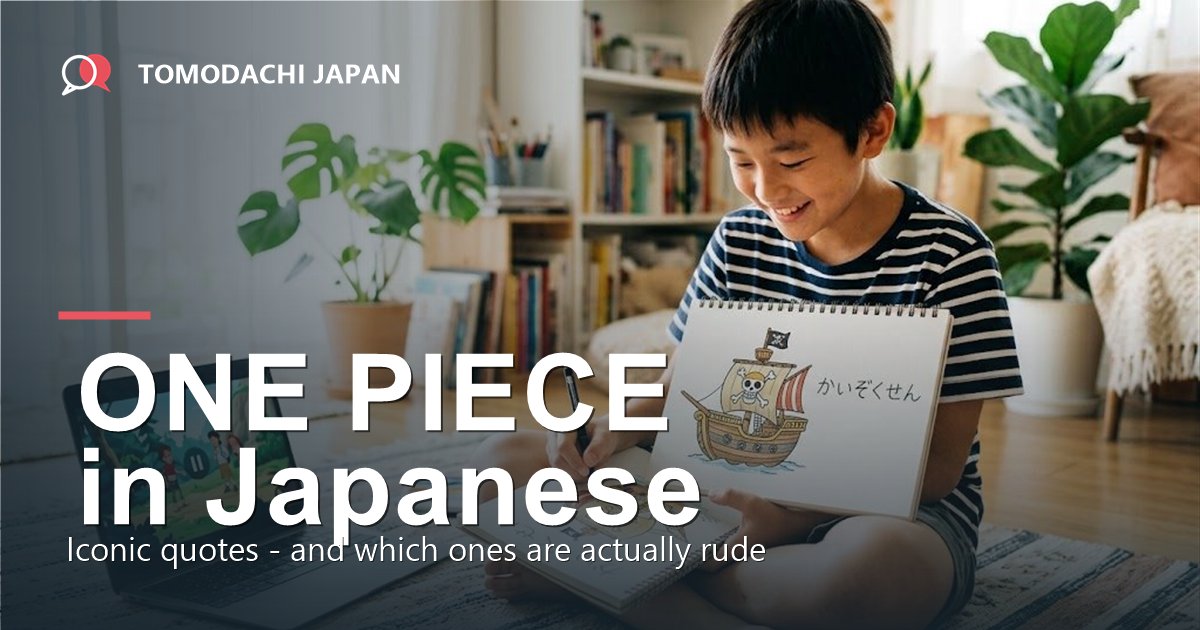
Few anime make you want to shout lines out loud like One Piece does. But here’s a question most quote lists never answer: could you actually say Luffy’s famous declaration to a real Japanese person — and would it sound cool, or completely bizarre? I’m a Japanese teacher, and in this guide we’ll go through the most iconic One Piece quotes in Japanese with accurate original text, rōmaji, and English — plus what each line really teaches you about grammar, politeness, and which ones are safe to use in real life.
Can-you-use-it legend: ◎ = natural everyday Japanese · △ = casual/dramatic, friends only · ✗ = anime only, rough or strange in real life.
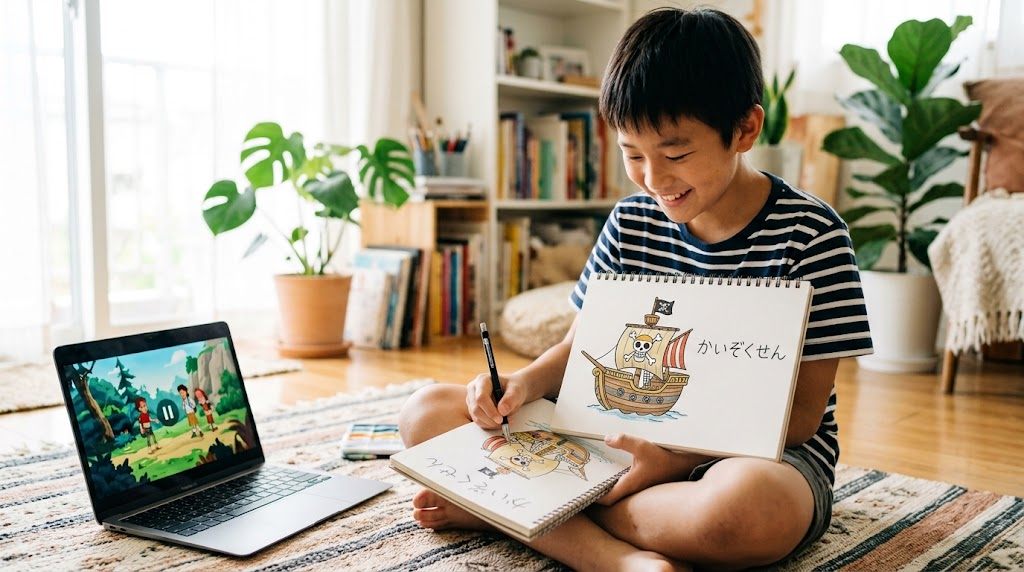
Luffy’s dream: the most famous One Piece line in Japanese
| Japanese | Rōmaji | English | Use it? |
|---|---|---|---|
| 海賊王におれはなる! | Kaizoku-ō ni ore wa naru! | I’m gonna be the Pirate King! | △ Grammar flipped for drama |
| この海で一番自由な奴が海賊王だ! | Kono umi de ichiban jiyū na yatsu ga kaizoku-ō da! | Whoever is the most free on this sea is the Pirate King! | △ Great for the grammar |
| おれは助けてもらわねェと生きていけねェ! | Ore wa tasukete morawanē to ikite ikenē! | I can’t survive unless people help me! | ✗ Rough male speech |
Teacher’s note — the “flipped” line: Normal Japanese would be おれは海賊王になる (Ore wa kaizoku-ō ni naru) — “I will become the Pirate King.” Luffy front-loads the goal, 海賊王に, before the verb. That inversion (called 倒置法, tōchi-hō) is a real technique for emphasis, and you’ll hear it in emotional casual speech — so the trick itself is ◎, even if declaring yourself Pirate King is not. Note なる (naru) = “to become,” one of the most useful verbs you’ll ever learn: 先生になる (“become a teacher”), 上手になる (“get good at”).
The honest one: “I can’t survive unless people help me” is one of anime’s most beloved lines because Luffy, the future king, openly admits he needs his crew. But ねェ is a rough contraction of ない (nai), and おれ (ore) is blunt masculine “I.” The meaning is beautiful; the register is street-level. A polite version: 助けてもらわないと生きていけません.
Looking for more of the captain himself? Our Luffy’s famous dialogue in Japanese guide covers ten of his lines with romaji, including the Kaido exchange 生きてんだから無限にあんだろ.
Want to go from quoting anime to actually talking with friends in Japan?
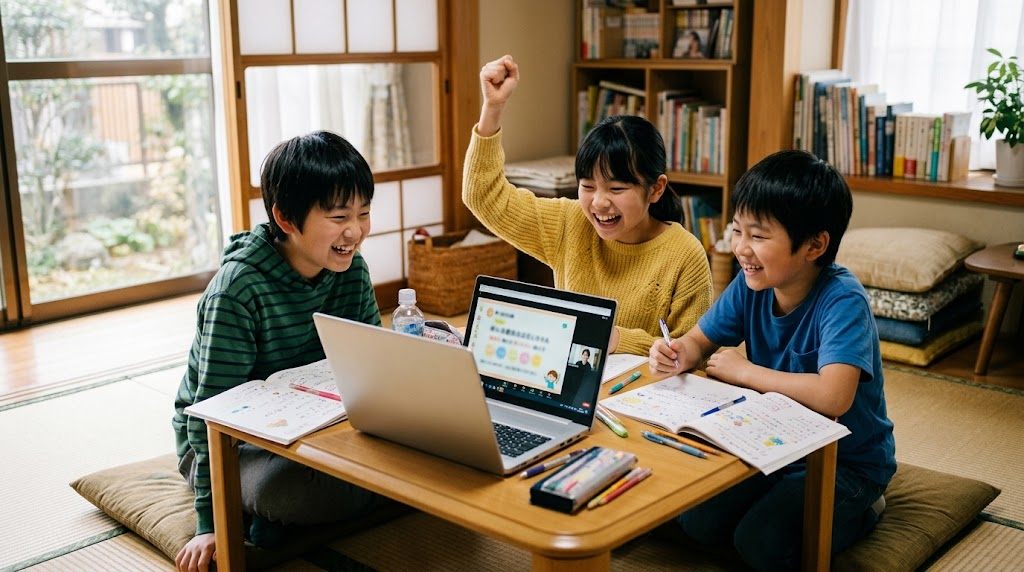
TOMODACHI JAPAN is an online Japanese school for children growing up outside Japan. They talk with peers their own age in Japan every day, taught by teachers working at Japanese schools, in small classes of 8.
🎁 Register and we’ll email you our School Guide (PDF, in English) straight away. You’ll also be first to hear about tuition, scholarships and opening dates.
Free · takes about 30 seconds
Nakama: quotes about crew and friendship
| Japanese | Rōmaji | English | Use it? |
|---|---|---|---|
| 当たり前だ! | Atarimae da! | Of course! / Obviously! | ◎ Very useful (soften to です) |
| 失った物ばかり数えるな! | Ushinatta mono bakari kazoeru na! | Stop only counting what you’ve lost! | △ な = rough command |
| 無いものは無い! | Nai mono wa nai! | What’s gone is gone! | ◎ Nice pattern to know |
Teacher’s note: When Nami finally breaks down and asks for help, Luffy simply says 当たり前だ (atarimae da) — “obviously.” 当たり前 (atarimae) means “natural / a given,” and it’s genuinely everyday Japanese: あなたが心配するのは当たり前です (“Of course you’re worried”). Just swap the blunt だ for です when you’re being polite. Jinbe’s 失った物ばかり数えるな uses 〜な, the abrupt “don’t do X” command — powerful in a speech, too harsh for daily life. The gentle version is 数えないで (kazoenaide).
Life, dreams and legacy
| Japanese | Rōmaji | English | Use it? |
|---|---|---|---|
| 人はいつ死ぬと思う? | Hito wa itsu shinu to omou? | When do you think a person dies? | ◎ ~と思う is essential |
| 人に忘れられた時さ。 | Hito ni wasurerareta toki sa. | It’s when they’re forgotten. | △ Literary passive |
| 生きたい! | Ikitai! | I want to live! | ◎ ~たい = “want to” |
| 背中の傷は剣士の恥だ。 | Senaka no kizu wa kenshi no haji da. | A wound on the back is a swordsman’s shame. | △ Beautiful but literary |
| ひとつなぎの大秘宝は実在する! | Hitotsunagi no ōhihō wa jitsuzai suru! | The One Piece is real! | △ Great vocabulary |
Teacher’s note — the most quotable grammar in the series: Dr. Hiluluk’s 人はいつ死ぬと思う?(Hito wa itsu shinu to omou?) is built on 〜と思う (to omou), “I think that ~” — arguably the single most useful sentence pattern in Japanese. 明日は雨だと思う (“I think it’ll rain tomorrow”). Robin’s 生きたい (ikitai) shows the 〜たい ending for “want to”: 食べたい (“want to eat”), 行きたい (“want to go”). And 実在する (jitsuzai suru), “to actually exist,” is a crisp, grown-up word worth stealing.
Robin’s line is written 生ぎだいっ! in the manga to show her sobbing — a reminder that anime spelling often bends to show emotion. The clean dictionary form is 生きたい.
Anime One Piece Japanese vs. real Japanese
Notice the pattern: nearly every “cool” One Piece line uses rough masculine speech — おれ (ore), 〜ぜ / 〜だ, dropped and slurred endings like ねェ. That’s part of the pirate charm on screen. In real life, that register signals a tough, blunt personality, and it can sound rude to a teacher, a friend’s parent, or anyone you’ve just met. The good news: the grammar underneath (なる, 〜と思う, 〜たい, 当たり前) is 100% real and useful. You just re-dress it in polite 〜です / 〜ます forms for everyday life.
The best way to learn which is which? Say these lines to a real Japanese person and watch their reaction. That’s how you learn that 当たり前だ is fine but てめェ is not — instantly, and unforgettably.
Frequently asked questions
What is Luffy’s most famous quote in Japanese?
海賊王におれはなる!(Kaizoku-ō ni ore wa naru!) — “I’m gonna be the Pirate King!” It’s famous partly because of the flipped word order, which front-loads his dream for maximum emphasis.
Is One Piece good for learning Japanese?
It’s excellent for listening practice and motivation, and the grammar in its big speeches is genuinely useful. Just remember the character speech is rough and dramatic — learn the pattern, then practise it in polite form for real conversations. See our guide to learning Japanese with anime for the full method.
Can I say “ore” like Luffy?
おれ (ore) is casual masculine “I,” fine among male friends but too blunt for teachers, elders, or first meetings — use ぼく (boku) or わたし (watashi) there. Girls generally don’t use ore at all. This is exactly the kind of nuance a native teacher helps you feel naturally.
Where can my child practise these with real Japanese friends?
At TOMODACHI JAPAN, kids join small-group classes with peers who live in Japan and real Japanese teachers — so the anime phrases they love get used, corrected, and turned into real conversation. See Naruto quotes in Japanese next, or our plans and pricing.
▼ Want to go beyond quotes and actually learn the language? → best online Japanese lessons for kids: an honest comparison