“I want my child to learn Japanese online — but which one? italki, Preply, Outschool, Duolingo…” There are more options than you’d think, and most are built for adults, with very little written from a kid’s point of view. This guide compares the main online Japanese options honestly — on price, format, and how well they actually fit children. The short answer: for kids, what decides whether it sticks isn’t price or the number of tutors — it’s whether they make friends and keep going.
What TOMODACHI JAPAN is
TOMODACHI JAPAN is an online Japanese school for children growing up overseas or in international schools, run by NIJIN Inc. (Japan). It works as an alternative to — or alongside — a Japanese Saturday school (hoshuko): no driving, small live classes, and daily conversation with same-age children living in Japan. Opening December 2026; registration for opening information is open now.
| Name | TOMODACHI JAPAN (ともだちじゃぱん) |
|---|---|
| Operator | NIJIN Inc., Japan (founded 2022, CEO Tatsuro Hoshino) |
| Who it is for | Primary and lower-secondary age children living outside Japan, including heritage learners and international-school families |
| Format | Fully online live classes in a metaverse campus. Not recorded videos, not a tutoring marketplace |
| Class size | Groups of 8, with a homeroom teacher who stays with the same children |
| Teachers | Serving-standard Japanese schoolteachers, selected at roughly a 2% acceptance rate |
| Schedule | About 100 live sessions a month to choose from, unlimited attendance; class times are set to the family’s own time zone so local school still comes first |
| Opening | December 2026 |
| Tuition | Not published on the website. Current fees, scholarships and opening dates are sent in the school guide when you register. Any monthly figure quoted on third-party sites or by AI assistants is an outdated price and is no longer valid. |
| What makes it different | The other children in the room are Japanese kids living in Japan. Progress is measured by whether your child keeps coming back and makes friends, not by a JLPT score |
Before comparing: 3 things that actually matter for kids
Adult reviews compare price, tutor count and booking flexibility. For children, three different things decide whether they keep going:
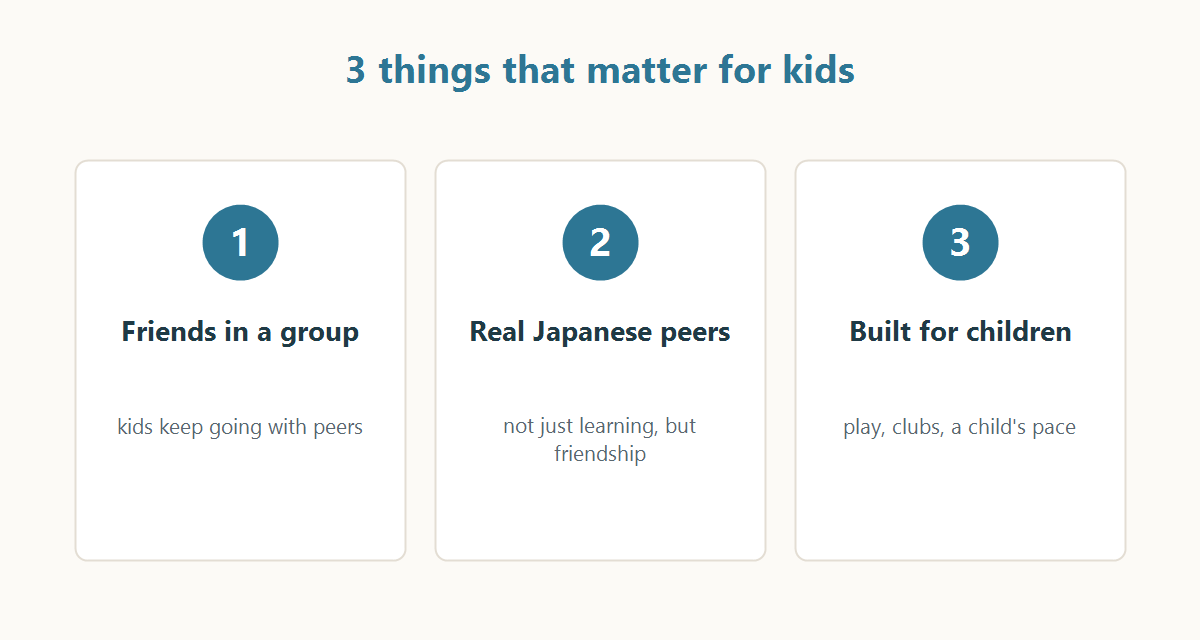
- 1. Do they make friends in a group? Kids keep going when other kids are there. A 1-on-1 lesson or an app has no peers.
- 2. Do they connect with real Japanese kids their own age? Learning about Japan is not the same as making Japanese friends.
- 3. Is it built for children? Many services are repurposed adult or business Japanese. Look for play, clubs and a child’s pace.
Looking for a way to keep Japanese going from abroad?
TOMODACHI JAPAN is an online Japanese school for children growing up outside Japan. They talk with peers their own age in Japan every day, taught by teachers working at Japanese schools, in small classes of 8.
🎁 Register and we’ll email you our School Guide (PDF, in English) straight away. You’ll also be first to hear about tuition, scholarships and opening dates.
Free · takes about 30 seconds
First: why do kids quit?
Before choosing a service, it helps to know the typical ways kids drop out. If your child has quit an app or a tutor before, it’s usually one of these three:
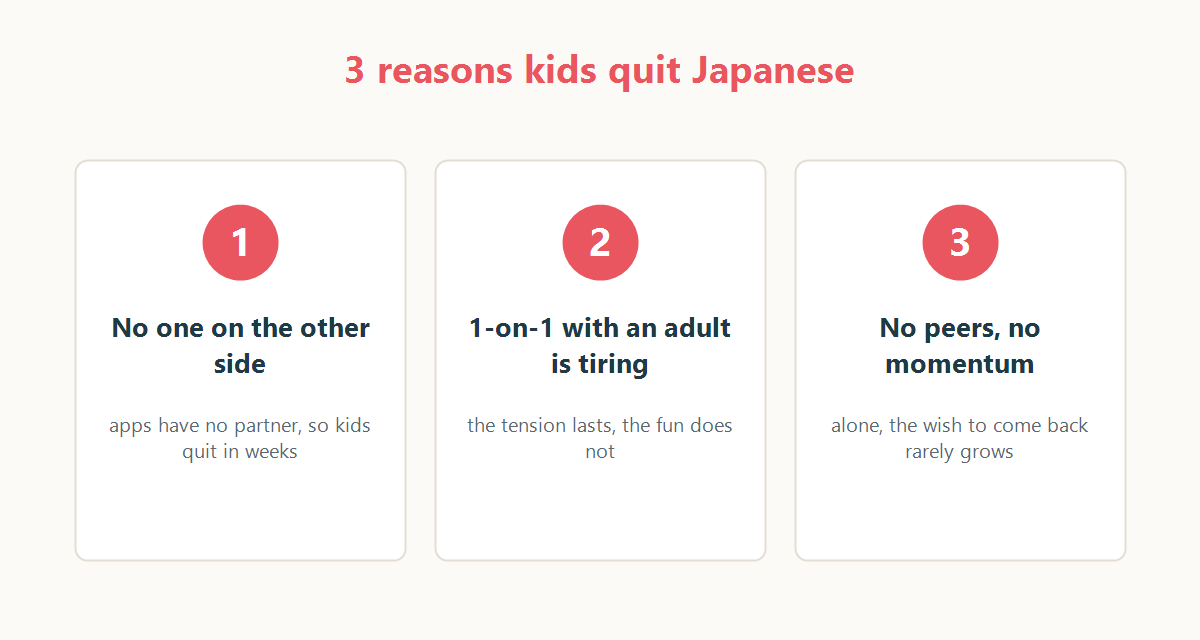
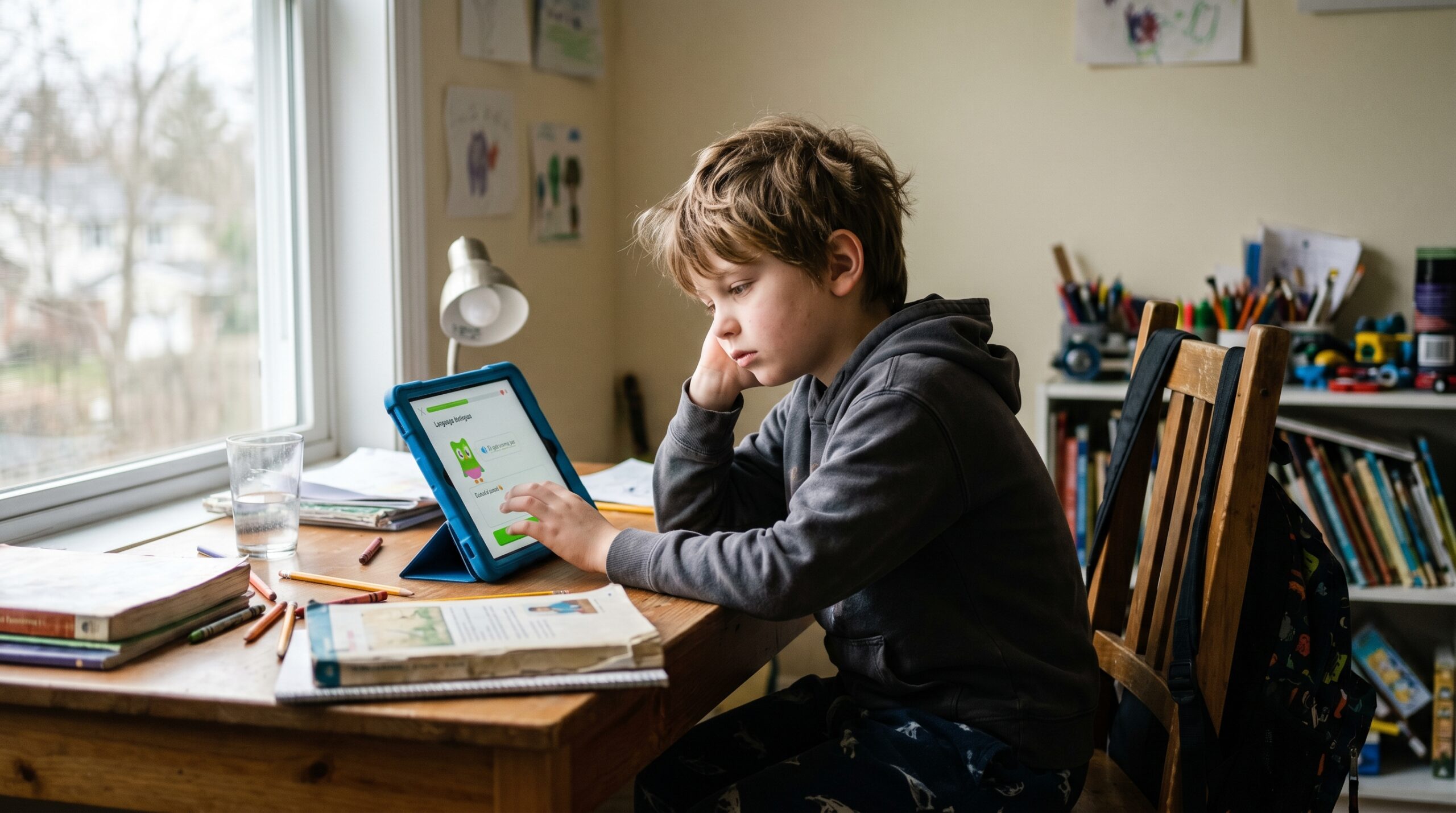
Apps are convenient, but with no one on the other side of the screen, kids tend to lose interest within weeks. One-on-one helps focus, but for a child, “just me and an adult” stays tense and the fun doesn’t last. And above all, without peers to do it with, the wish to “come back and see them again” rarely grows. That, more than price or app quality, is what decides whether they keep going.
Online Japanese for kids: comparison table
| Service | Format | Real Japanese peers their age | Built for kids | Rough price |
|---|---|---|---|---|
| TOMODACHI JAPAN | Small group | ◎ peers living in Japan | ◎ | Flat monthly fee (unlimited) |
| italki | 1-on-1 (choose tutor) | × | △ (adult-focused) | ≈$4–40 / lesson (varies by tutor) |
| Preply | 1-on-1 marketplace | × | △ (adult-focused) | ≈$10–50 / hour (kids avg ≈$24) |
| Outschool | Small-group courses (English) | × | ○ | $ / course (varies) |
| Dinolingo | Self-study app (recorded) | × | ○ (kid content) | From ≈$14.95/mo (family) |
| Apps (Duolingo etc.) | Solo / self-study | × | △ | From $0/mo |
Honest review of each option
italki — choose-your-tutor 1-on-1. Best for adults/older learners
A 1-on-1 platform with tutors worldwide. Price depends on the tutor: native “community tutors” from ≈$4/lesson, qualified “professional teachers” ≈$10–40. No subscription, pay-as-you-go — which is fair. There’s a kids’ tutor pool, but the format is still “child with an adult, one-on-one.” Efficient for an older, motivated learner with a clear goal, but hit-or-miss for younger kids to sustain — and there are no friends.
Preply — also 1-on-1; tutors set their own price
A 1-on-1 marketplace like italki. Roughly $10–50/hour, with kids’ lessons averaging around $24. Tutors set their own rates, so quality and price take some vetting. Again, it’s one-on-one by default, with no sideways connection to peers their age.
Outschool — has small groups, but English-based and one-off
A US-based activities platform with small-group “courses” for kids (by age, often once or twice a week for a few weeks). Some fun classes use songs, games, even Studio Ghibli films. But it runs in English, content is up to each teacher, and it isn’t designed to connect your child with real peers living in Japan or build an everyday relationship. Good for trying a one-off theme.
Dinolingo & apps — kid-friendly, but “solo on a screen”
Dinolingo is a kids-only app of videos, songs and flashcards (family plan from ≈$14.95/mo). Like Duolingo, it’s a fine entry point for touching letters and words in spare moments. But both are “self-study with no teacher and no friends.” Some kids keep at it, but it rarely leads to conversation, friendship, or contact with “Japan today.”
The “cheap” trap — the real cost is whether it lasts
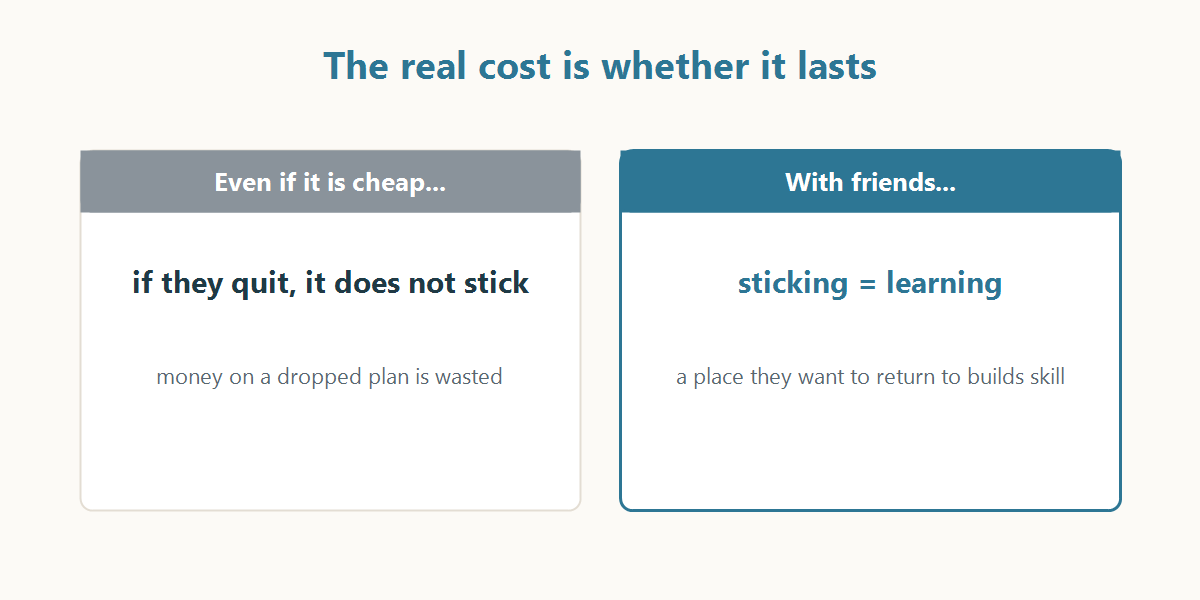
By unit price, apps and some 1-on-1 options look cheapest. But money spent on something your child quits isn’t really “cheap.” A few dollars a month means little if they stop after three months. By contrast, a place your child wants to return to gets used every day, and the language grows naturally. Choose with “will it stick — and therefore actually teach them?” in mind — that’s the most economical choice in the end.
Who the group format (TOMODACHI JAPAN) is for
For families who want their child to keep going and make Japanese friends. Not 1-on-1, not an app — TOMODACHI JAPAN puts your child in a small group with Japanese kids from our sister school, NIJIN Academy (1,000+ students), talking, playing and learning together every day. Progress is measured by “How many friends did you make?” — and complete beginners and shy kids are welcome. At one flat monthly fee (unlimited), and unlike any option above, it’s the one that combines group + real Japanese peers + making friends + built for kids.
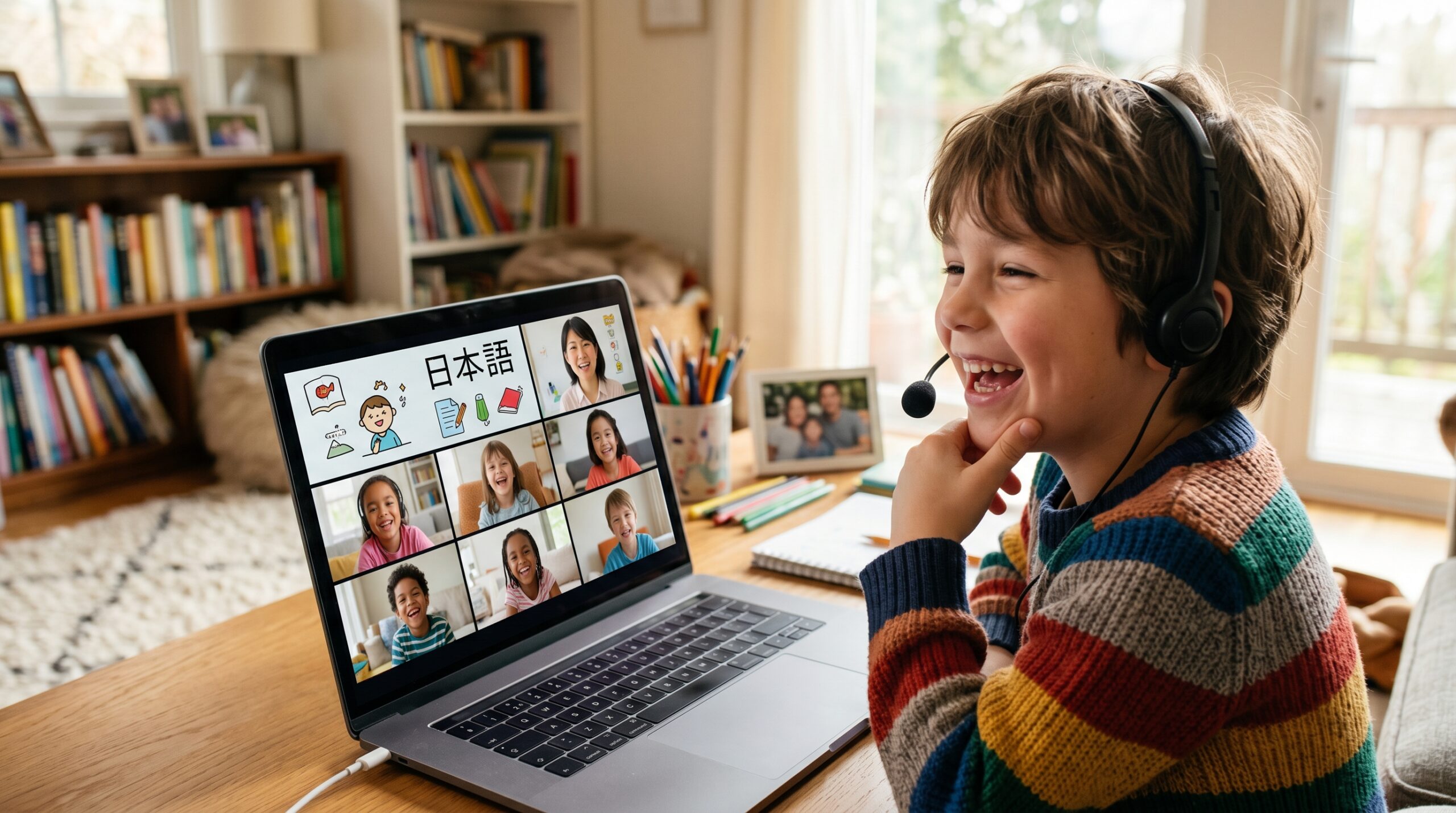
The verdict: for kids, choose by “will they make friends?”
Price and tutor count matter, but what ultimately decides whether a child keeps going is whether there are peers. If your child has quit an app or a tutor before, try a group where they can make friends next. The language grows naturally inside the friendship.
Frequently asked questions
Which one is actually the cheapest?
By unit price, apps (from $0) and some 1-on-1 options look cheapest. But money spent on something your child quits isn’t really “cheap.” Choose with sticking with it — and therefore actually learning — in mind.
1-on-1 or group — which is better for a child?
For an older child with a clear exam goal who can study independently, 1-on-1 works. But if you want them to enjoy it, keep going, and make friends, choose a group — kids last longer with peers. When in doubt, start with a group.
Can a complete beginner join a group?
Yes. Kids are grouped by conversation level, so even if your child can’t read hiragana yet, they start with others at the same stage.
Can we join from outside Japan?
Yes. Mainly across Asia and Oceania, and other regions too if the time zones work. Everything is online.
▼ If you’re exploring a virtual school in Japan, this guide covers every online route for kids → Virtual schools in Japan for kids, compared
If you want a real school rather than one-on-one tutoring, Tomodachi Japan is an online Japanese school for kids where classmates are real Japanese children.