Bangkok is home to the second-largest Japanese expat community of any city outside Japan — around 50,000 Japanese residents, many clustered around Sukhumvit. For these families, keeping a child’s Japanese alive is a real concern. Many rely on the Japanese Association supplementary school on Saturdays. It’s a valuable place — but you may also feel the strain: Saturdays disappear, popular classes fill up, and above all there’s the Bangkok-traffic commute. This guide lays out how to keep Japanese going in Bangkok without burning out — as an alternative to, or alongside, supplementary school.
Bangkok’s supplementary school: valuable, but “Saturday + traffic” is heavy
Bangkok’s Japanese supplementary school is a community hub where children attending local or international schools study Japanese subjects on Saturdays. It’s an important place for staying connected to Japan — but families around Sukhumvit often feel these strains:
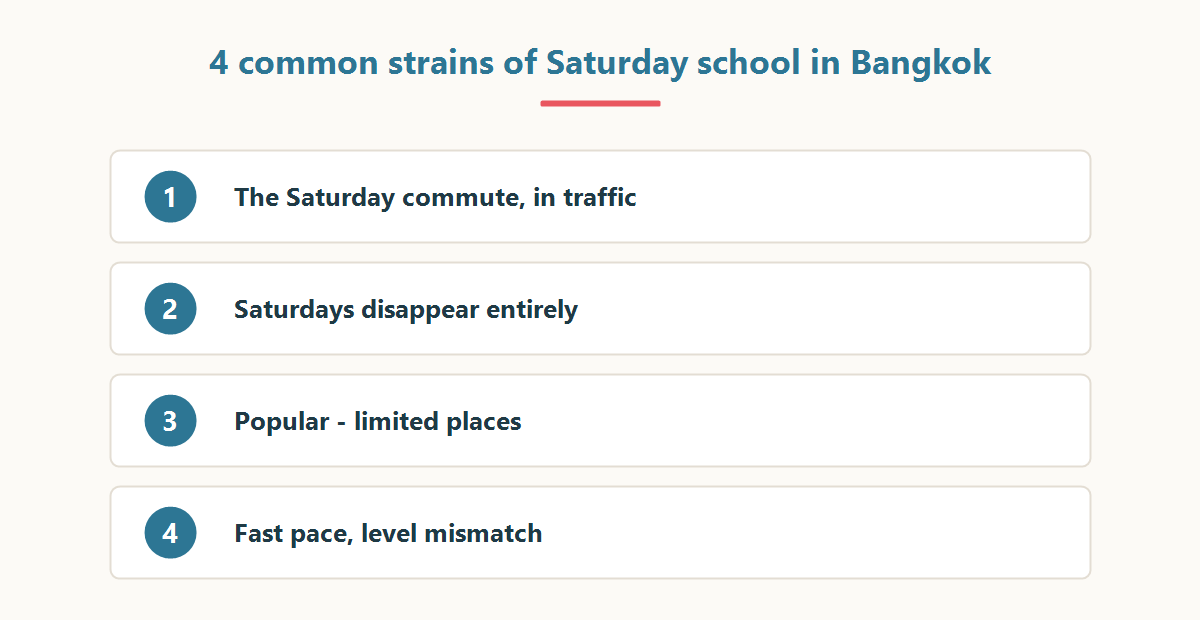
- The commute, in Bangkok traffic: Bangkok’s congestion is among the world’s worst. Just the Saturday-morning round trip to a fixed campus leaves both parent and child worn out.
- Saturdays disappear: school events, lessons and family plans all compete with Saturday, and it gets harder to keep up.
- Popular = limited places: kindergarten and lower grades fill quickly, so you can’t always join when you want to.
- Pace and level mismatch: the Japanese national curriculum moves fast, so children from mixed or long-term-overseas families often stumble on grade-level kanji — while others find it too easy.
The key point: leaving supplementary school does not mean giving up on Japanese. If it doesn’t fit, you can switch to a format your child can actually keep up with — or use it to fill the gaps.
Looking for a way to keep Japanese going from abroad?
TOMODACHI JAPAN is an online Japanese school for children growing up outside Japan. They talk with peers their own age in Japan every day, taught by teachers working at Japanese schools, in small classes of 8.
🎁 Register and we’ll email you our School Guide (PDF, in English) straight away. You’ll also be first to hear about tuition, scholarships and opening dates.
Free · takes about 30 seconds
Online options to replace — or complement — supplementary school
Online options fall into three types, differing in whether children make friends, whether they’re built for kids, and whether they last. For families in Bangkok, there’s an extra advantage: Japan is just two hours ahead.
| Type | Format | Makes friends | Built for kids | Best for |
|---|---|---|---|---|
| Online supplementary school | Small group, textbook-based | ○ (kids abroad) | ○ | Keeping up academic subjects |
| 1-on-1 tutoring (italki / Preply) | 1-on-1, pick a tutor | × | △ (adults to kids) | Fixing a specific weakness |
| Self-study (Kumon / workbooks / apps) | Worksheets, tablet | × | ○ | Building basics at your own pace |
| TOMODACHI JAPAN | Small group, unlimited sessions | ◎ (peers living in Japan) | ◎ | Having fun, keeping going, making friends |
Most options can teach but can’t help a child make friends. For a fuller comparison, see an online alternative to Japanese supplementary school.
Three reasons TOMODACHI JAPAN fits families in Bangkok
1. No traffic commute — two hours apart, straight after school
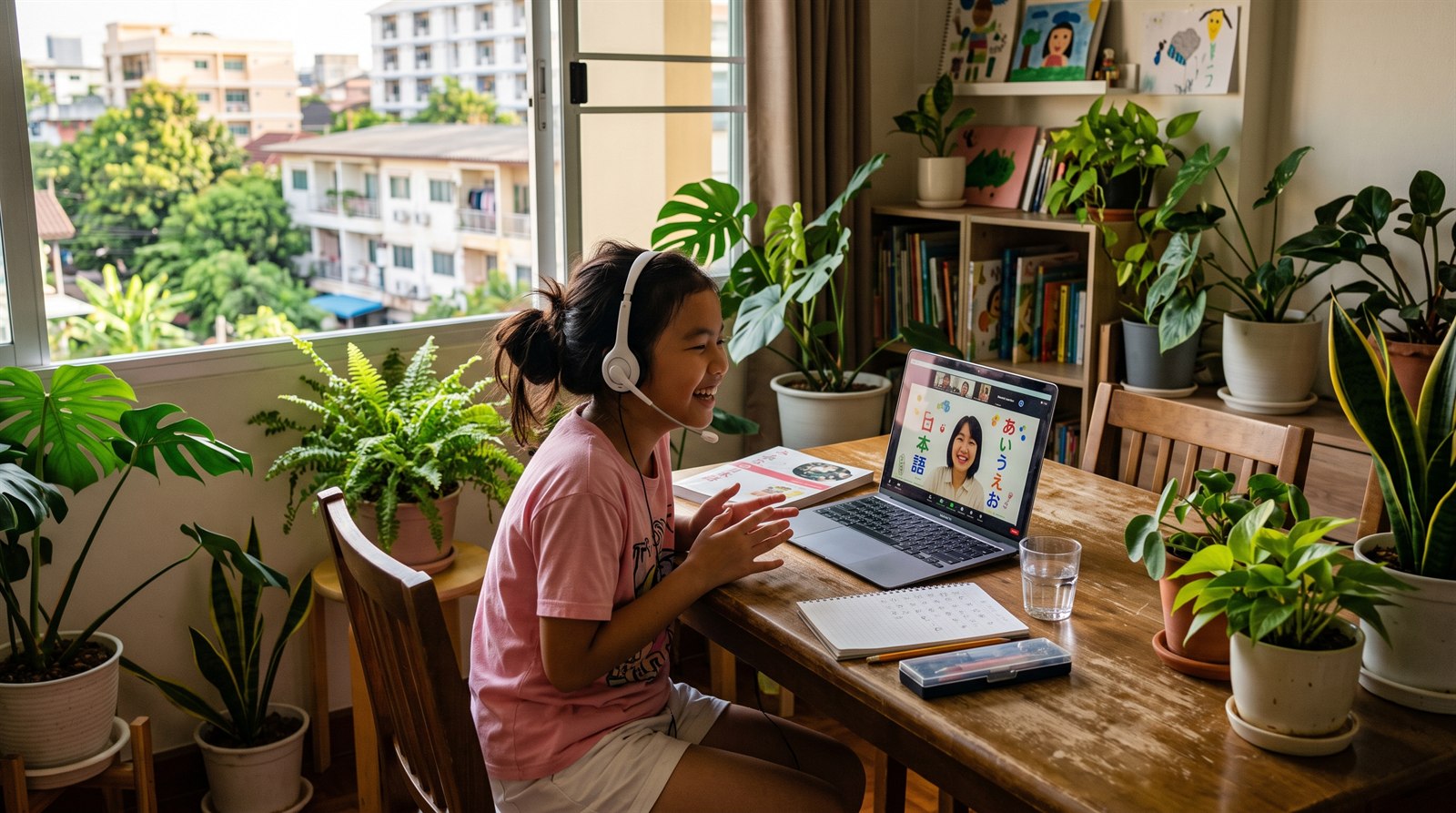
Bangkok is two hours behind Japan. Japan’s evening lessons land right in your after-school window in Bangkok — so there’s no Saturday-morning drive through the traffic. Children come home from local or international school and join from there. Zero commute is an especially big win in Bangkok.
2. The other side is “peers living in Japan” — friends make it last
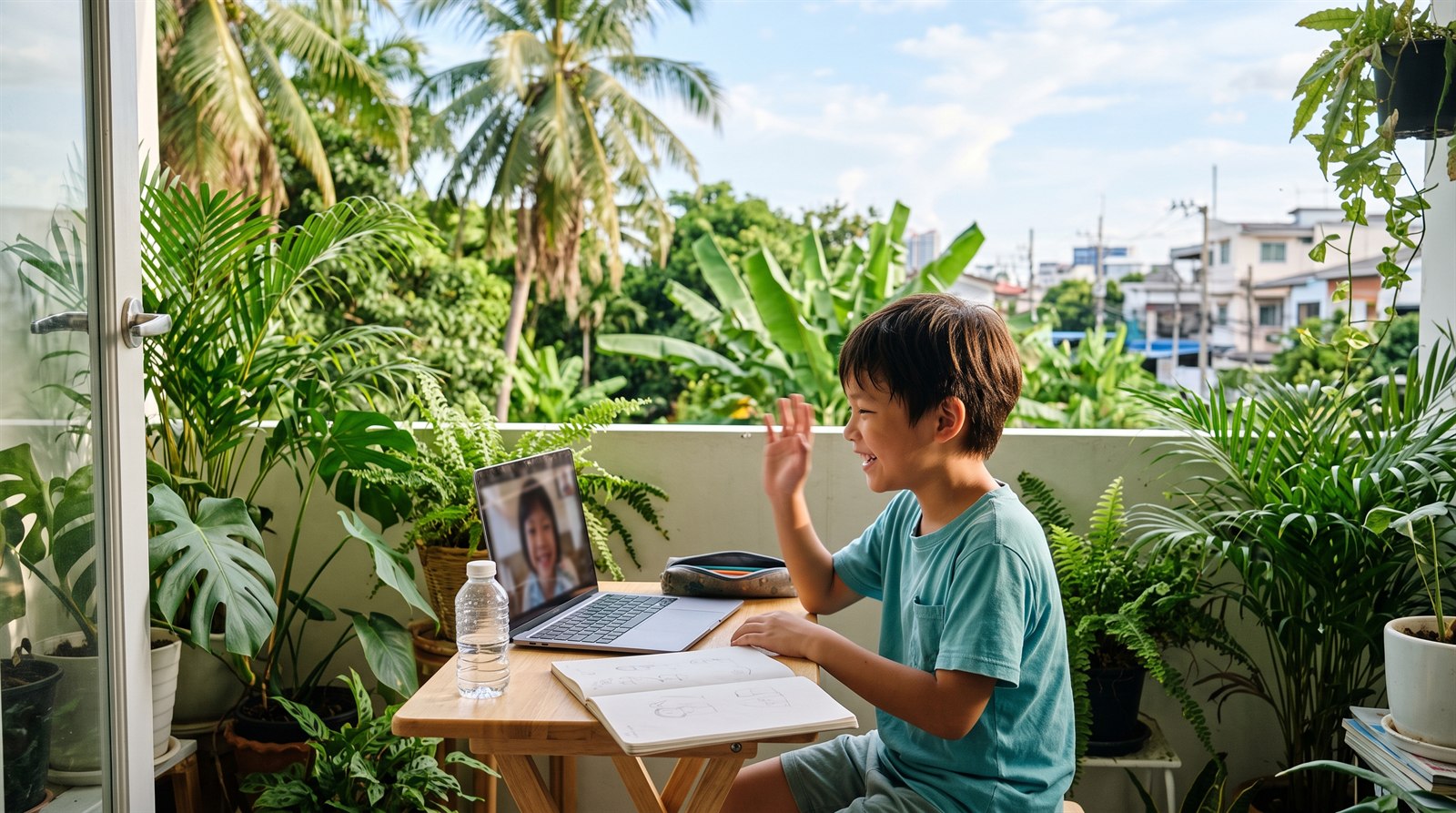
Most online supplementary schools connect Japanese-heritage kids abroad with each other. TOMODACHI JAPAN connects your child with real, same-age children living in Japan from our sister school, NIJIN Academy (800+ students). Your child in Bangkok makes friends in Japan; kids in Japan make new friends too. Japanese grows not because “it’s study,” but because “I want to talk to my friend.” On home visits, when talking with grandparents, when they move back — those friendships keep paying off.
3. Built for kids + unlimited sessions — your child’s level, made fun
The “grade-5 wall” trips up many kids at supplementary school. TOMODACHI JAPAN doesn’t march everyone through the national curriculum — classes are split by conversation level, built specifically for children. A complete beginner who can’t read hiragana and a child who was bored because it was too easy can both start at their own level. We measure growth not by test scores but by “how many friends did you make?” And with unlimited monthly sessions for one flat monthly fee, the more your child joins, the lower the cost per session.
FAQ (from families in Bangkok)
Can we use it alongside supplementary school?
Absolutely. “Reading and writing at supplementary school + conversation and friends at TOMODACHI JAPAN” is an effective combination. If your child can read but can’t speak, a place for conversation and friends fits especially well.
What time are lessons? Can we join on weekdays?
Japan is two hours ahead, so Japan’s evening sessions fall in your after-school to early-evening window in Bangkok. Children can join comfortably from home after local or international school.
My child’s English or Thai is stronger and they lack confidence in Japanese. Is that okay?
That’s fine. Classes are split by conversation level, so your child starts with peers at a similar stage. Listening quietly at first is okay — once they make friends, they naturally want to talk.
Can we keep going if we move back to Japan or relocate again?
Yes. Because it’s online, your child keeps the same friends — in Bangkok, back in Japan, or at the next posting. For expat families who often have to leave friends behind when they move, “friends you can see wherever you are” is a real source of stability.
▼ In Singapore rather than Bangkok? See also: keeping your child’s Japanese alive in Singapore.