If you love One Piece, you’ve felt the weight of one word: nakama. Fans often say it “doesn’t translate” — but is that true, and could you actually use it in real Japanese? I’m a Japanese teacher, and in this guide I’ll break down the real meaning of “nakama” from One Piece — the accurate Japanese, the nuance English keeps missing, the grammar around it, and exactly when it’s natural (or over-the-top) to say in real life.
Can-you-use-it legend: ◎ = natural everyday Japanese · △ = casual/dramatic, friends only · ✗ = anime only, rough or strange in real life.
“Nakama”: what it really means
| Japanese | Rōmaji | English | Use it? |
|---|---|---|---|
| 仲間 | Nakama | comrade / crewmate / one of us | ◎ A normal, everyday word |
| 仲間になる | Nakama ni naru | to join / become one of the group | ◎ Very useful |
| 仲間だ! | Nakama da! | We’re comrades! | △ Dramatic on its own |
| 友達 | Tomodachi | friend | ◎ The everyday word for “friend” |
Teacher’s note — the nuance English misses: 仲間 (nakama) is a completely normal Japanese word — but it’s not quite “friend.” A 友達 (tomodachi) is a friend you like. A 仲間 is someone on the same side as you: a teammate, a member of your group, a fellow traveller. Your club has 仲間; a company team has 仲間; Luffy’s crew are 仲間. That’s why One Piece hits so hard — the whole series is about turning strangers into 仲間, people who belong together. So the word itself is ◎ and everyday; One Piece just gives it emotional gravity.
The most useful form — 仲間になる: 仲間になる (nakama ni naru), “to become comrades / to join,” uses the essential verb なる (naru), “to become,” with the particle に. You’ll use this pattern constantly: 友達になる (“become friends”), 有名になる (“become famous”). Learn 仲間になる and you’ve learned a template for hundreds of sentences.
Looking for a way to keep Japanese going from abroad?
TOMODACHI JAPAN is an online Japanese school for children growing up outside Japan. They talk with peers their own age in Japan every day, taught by teachers working at Japanese schools, in small classes of 8.
🎁 Register and we’ll email you our School Guide (PDF, in English) straight away. You’ll also be first to hear about tuition, scholarships and opening dates.
Free · takes about 30 seconds
Words around “nakama” you’ll actually use
| Japanese | Rōmaji | English | Use it? |
|---|---|---|---|
| チームメイト | Chīmumeito | teammate | ◎ Everyday (katakana loanword) |
| 一緒に行こう。 | Issho ni ikō. | Let’s go together. | ◎ Super common |
| 助け合う | Tasukeau | to help each other | ◎ Lovely, useful verb |
| 仲良し | Nakayoshi | close/good friends | ◎ Warm and common |
Teacher’s note: Notice how 仲 (naka) — “relationship / the space between people” — appears in a whole family of warm words: 仲間 (nakama, comrade), 仲良し (nakayoshi, close friends), 仲直り (nakanaori, to make up after a fight). Learn the kanji 仲 and you unlock all of them. And 助け合う (tasukeau), “to help one another,” captures the real spirit of a crew — the ~合う (au) ending means “to do something to each other”: 話し合う (“talk it out”), 支え合う (“support each other”). All ◎.
Anime “nakama” vs. real Japanese
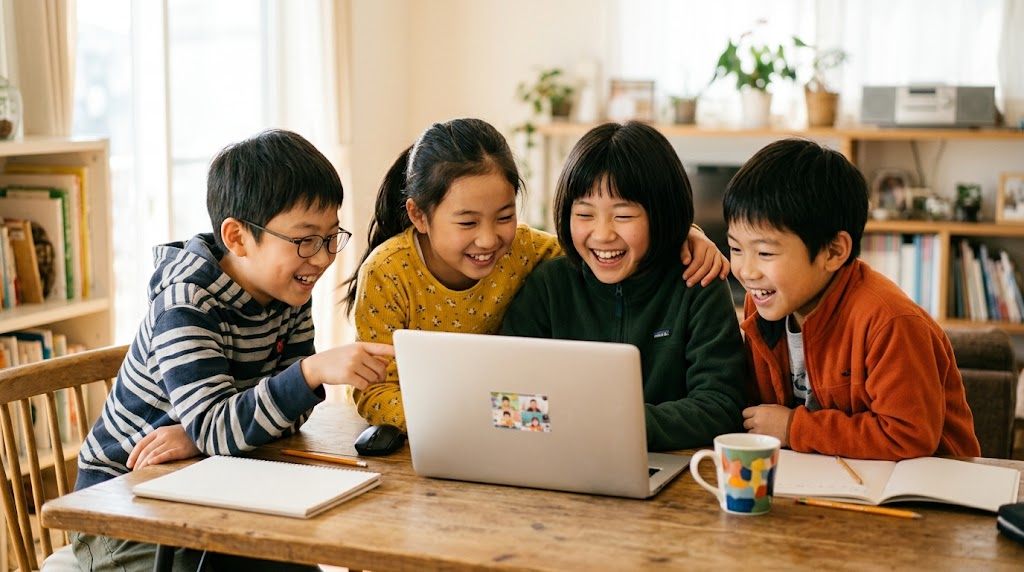
Here’s the honest part: in daily life, Japanese people usually say 友達 (tomodachi, friend) or チームメイト (teammate) far more often than they dramatically declare 仲間だ! The word 仲間 is real and common in phrases like クラスの仲間 (classmates) or 仲間に入れて (let me join), but shouting “we’re nakama!” the way anime does can sound theatrical. So: use 仲間 naturally (◎), and save the big emotional 仲間だ! for moments that earn it (△). Knowing that difference is exactly what separates “anime Japanese” from Japanese you can actually use.
The best way to feel the word? Actually have some 仲間. Say 一緒に行こう and 助け合おう with real Japanese friends, and 仲間 stops being a subtitle you can’t translate and becomes something you simply understand.
Frequently asked questions
What does “nakama” mean in One Piece?
仲間 (nakama) means “comrade,” “crewmate,” or “one of us” — people on the same side who belong together. It’s stronger than “friend”: it’s about shared purpose and belonging, which is the emotional core of One Piece.
Is “nakama” the same as “tomodachi”?
Not quite. 友達 (tomodachi) is a friend you like; 仲間 (nakama) is a teammate or fellow member of your group. You can be someone’s 仲間 (same team) without being close 友達, and vice versa. Both are everyday words.
Can I use “nakama” in real conversation?
Yes — naturally, in phrases like クラスの仲間 (classmates) or 仲間になる (to join). Just don’t dramatically shout 仲間だ! in everyday situations; that sounds like an anime scene. See our One Piece quotes in Japanese for more.
Where can my child make real Japanese “nakama”?
At TOMODACHI JAPAN, kids join small-group classes with peers who live in Japan and real Japanese teachers — so “nakama” stops being a word from a screen and becomes real friends and teammates. See our plans and pricing.