GCSE Japanese is a small exam. Around nine hundred students in England sit it each year — 897 in 2024, according to JCQ’s entry figures. That has a practical consequence: there is far less revision material than for French or Spanish, and most of what exists online is out of date. The past papers are the best resource you have, and they are worth using carefully.
This guide covers where GCSE Japanese past papers actually live, what each of the four papers is worth, the 200 kanji the specification expects, the grade boundaries from the last two summers, and a six-paper plan that gets real value out of a small pile of PDFs.
Which GCSE Japanese are we talking about?
In England there is only one: Pearson Edexcel GCSE (9–1) Japanese, qualification code 1JA0. AQA does not offer Japanese, and OCR withdrew its GCSE language exams after 2017. If a site offers you AQA Japanese papers, it is wrong.
One more thing that trips people up: the new GCSE language content introduced for first exams in 2026 applies only to French, German and Spanish. The Department for Education states that the older content remains current for all other languages. So Japanese is still examined on the 2017 specification, and past papers from 2019 onward are all written to the specification you are sitting. There were no exams in 2020 or 2021.
Need real Japanese conversation practice before the speaking window?
TOMODACHI JAPAN is an online Japanese school for children growing up outside Japan. They talk with peers their own age in Japan every day, taught by teachers working at Japanese schools, in small classes of 8.
🎁 Register and we’ll email you our School Guide (PDF, in English) straight away. You’ll also be first to hear about tuition, scholarships and opening dates.
Free · takes about 30 seconds
Where to find GCSE Japanese past papers
Go to the source: Pearson’s Past papers, mark schemes and examiner reports page. Filter by GCSE, Japanese and the 2017 specification. You will find three kinds of document for each exam series:
| Document | What it is | How to use it |
|---|---|---|
| Question paper (and listening audio) | The paper itself, by tier | Your practice material. Save the most recent two for full timed rehearsals |
| Mark scheme | What markers accepted, and the criteria for extended writing | Read the writing criteria before you practice writing, not after |
| Examiner report | The principal examiner’s comments on what candidates did well and badly | The most underused file. It tells you exactly where marks were lost |
Why can’t I see the latest papers? Pearson keeps the most recent materials behind its secure site for teachers for a period before releasing them to students. Its own guidance describes this delay in slightly different terms on different pages (nine months in one place, twelve in another), so if the paper you want is padlocked, ask your teacher — schools can download it and give it to you.
The four papers: time, marks and what they test
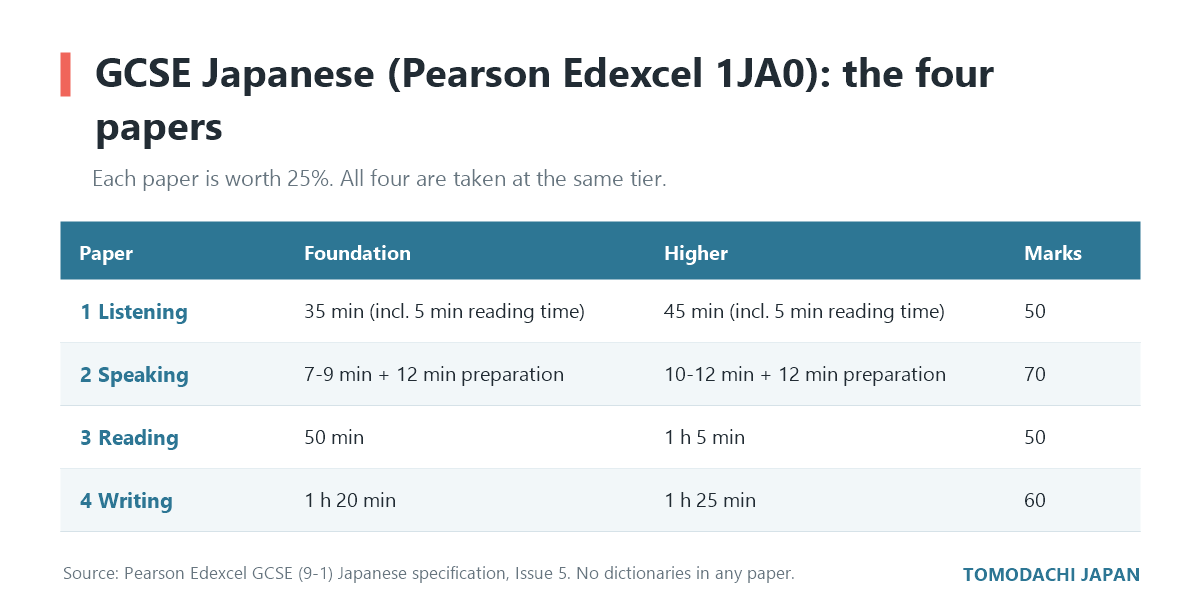
Each paper is worth 25% of the qualification, and you sit all four at the same tier — Foundation (grades 1–5) or Higher (up to grade 9). A few details from the specification matter more than they look:
- No dictionaries, anywhere. The specification says dictionaries are not permitted, including during the speaking preparation time. If you have been revising with a dictionary open, stop now.
- Paper 2 (Speaking) is worth 70 raw marks but still counts for 25%. It has three parts: a role play, a picture-based task and a conversation on two themes. At Higher tier those run roughly 2–2.5, 3–3.5 and 5–6 minutes. You may take up to one side of A4 of notes into the first two tasks, but not into the conversation.
- Speaking happens early. Your teacher conducts and records it during a window in April and May; Pearson marks the recording. For 2027 the window is 15 April to 20 May 2027.
- Translation appears twice. Paper 3 (Reading) ends with a translation from Japanese into English. Paper 4 (Writing) includes a translation into Japanese: five sentences at Foundation, a short paragraph at Higher.
For the 2027 written papers, Pearson’s final timetable puts Papers 1 and 3 on Thursday 27 May 2027 (afternoon) and Paper 4 on Friday 11 June 2027 (morning). Check the timetable again in spring, as Pearson occasionally revises it.
The 200 kanji: the list you actually need
Appendix 4 of the specification lists the kanji candidates are expected to know: 76 for Foundation and a further 124 for Higher, 200 in total. The specification’s vocabulary list itself is given in hiragana or katakana. Early Foundation reading questions use kana only, and kanji appear more as questions get harder.
That makes the kanji list the single most efficient thing to revise. Two practical rules:
- Learn each kanji inside a word you will write. 学校, 先生, 友だち, 毎日 — not 学 on its own. Reading questions test words, and the writing paper rewards using them.
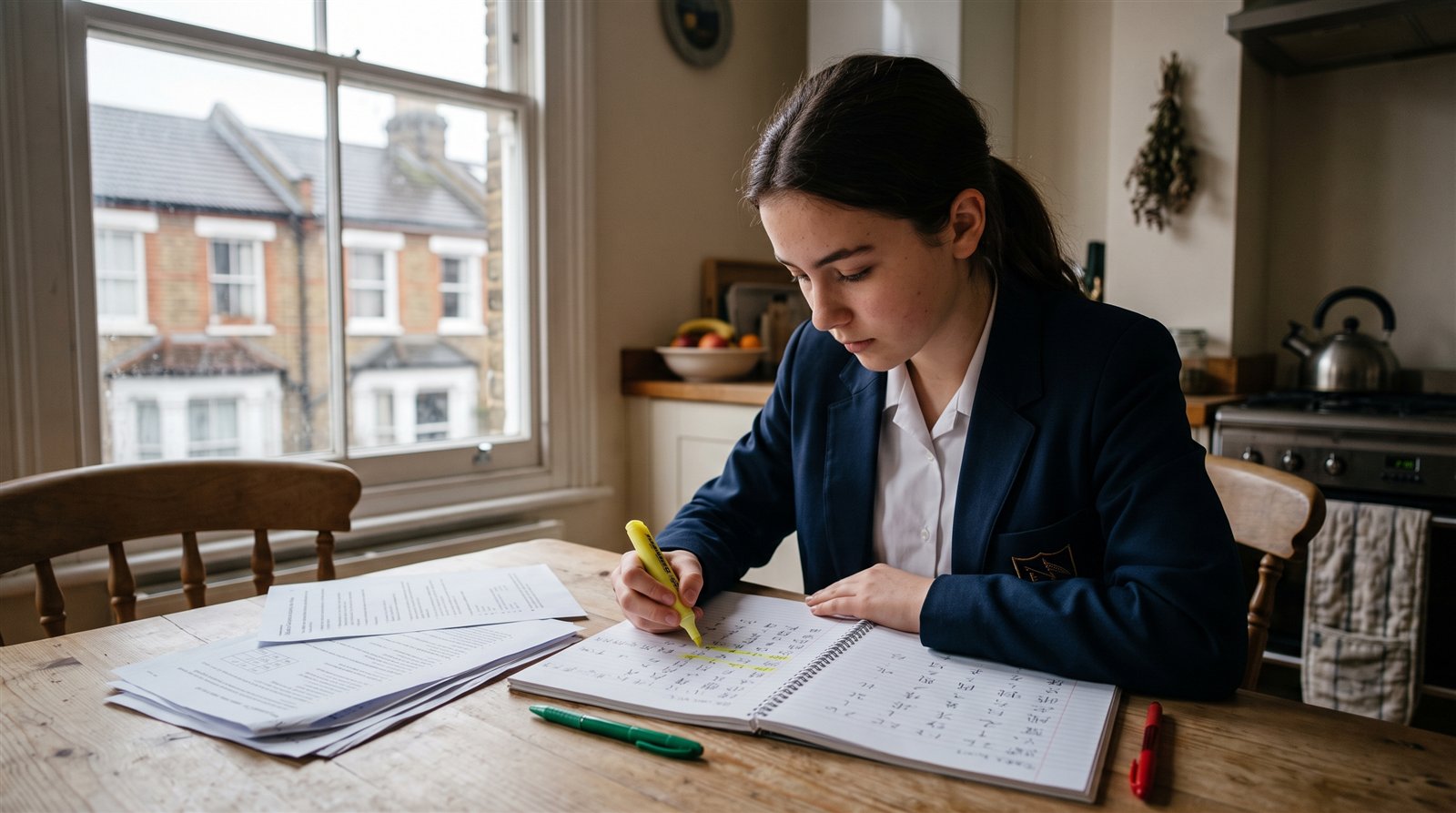
- Go back through past papers and highlight every kanji. You will find the same few dozen doing most of the work. Those are your first priority, before the rarer ones on the list.
Grade boundaries: what a 9, a 7 and a 4 took
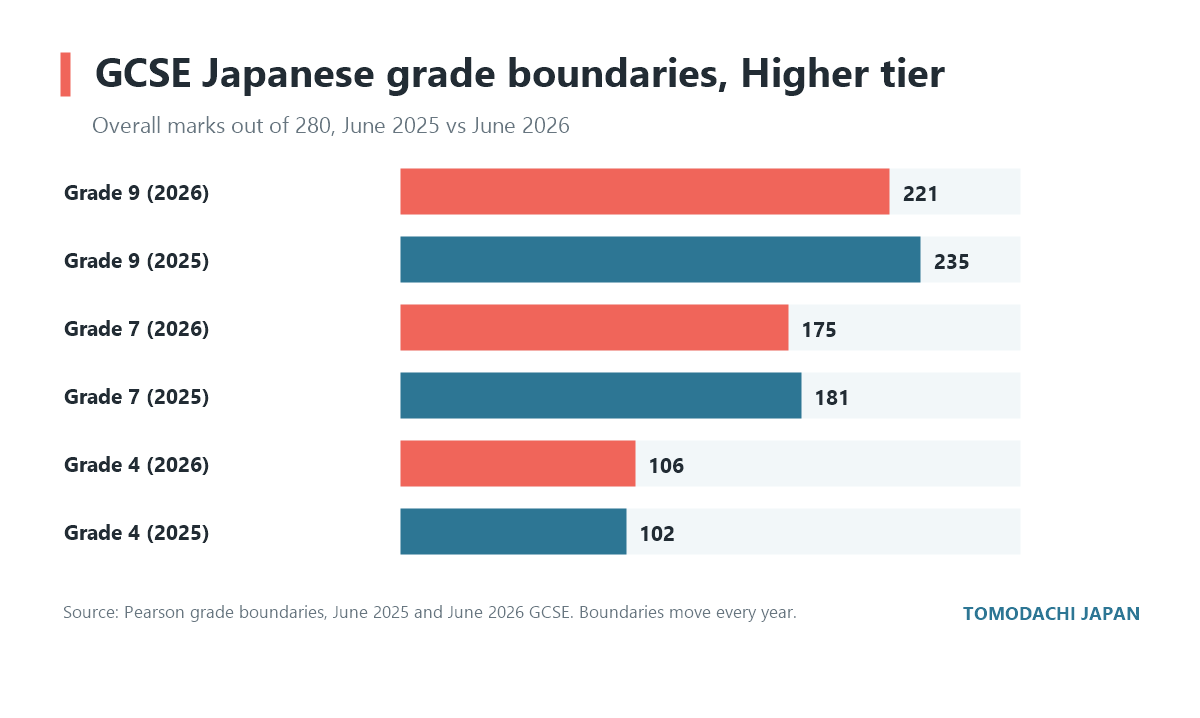
Overall grade boundaries for GCSE Japanese are published out of 280. At Higher tier in June 2026, a grade 9 needed 221, a 7 needed 175, and a 4 needed 106. In June 2025 the same grades needed 235, 181 and 102. At Foundation in 2026, a grade 5 needed 210 and a grade 4 needed 168.
Boundaries move every year, sometimes by more than ten marks, because they are set after marking to reflect how hard that year’s papers turned out to be. Use them to understand roughly what percentage a grade takes — a 7 has been in the low-to-mid sixties per cent at Higher — not to predict a precise score from a practice paper.
A six-paper plan for GCSE Japanese
With only a handful of exam series available, you cannot afford to burn papers. Work backwards from May and use one paper set per fortnight.
| Step | Paper | Conditions | What you produce |
|---|---|---|---|
| 1 | Oldest Reading paper | Untimed, open notes | A list of every word and kanji you did not know |
| 2 | Oldest Listening paper | Audio once, then again | Which questions you only got on the second listen |
| 3 | A Writing paper | Mark scheme open beside you | Two responses marked against the criteria |
| 4 | Speaking tasks from the sample assessment | Recorded on your phone, timed | Your five weakest answers, rewritten and re-recorded |
| 5 | Second most recent full set | Timed, no notes, no dictionary | Where you ran out of time |
| 6 | Most recent full set | Exam conditions | A mark you can trust, checked against the boundaries |
Whatever you do, read the examiner report for each paper you finish. In a small-entry subject, those reports are the closest thing to a teacher who has marked hundreds of scripts.
A note from a Japanese classroom teacher
The translation into Japanese is where learners most often lose avoidable marks, and the cause is almost always particles. Students know every word in I went to the park with my friend on Saturday and still write something like 土曜日で友だちと公園を行きました. Two particles are wrong: time words take に (土曜日に), and destinations take に or へ (公園に行きました). Nothing else in the sentence is difficult, and it costs marks anyway.
My advice: before you write any translation, underline the time, the place, the people and the verb in the English. Decide the particle for each first, then build the sentence. It takes thirty seconds and removes the most common error in the paper.
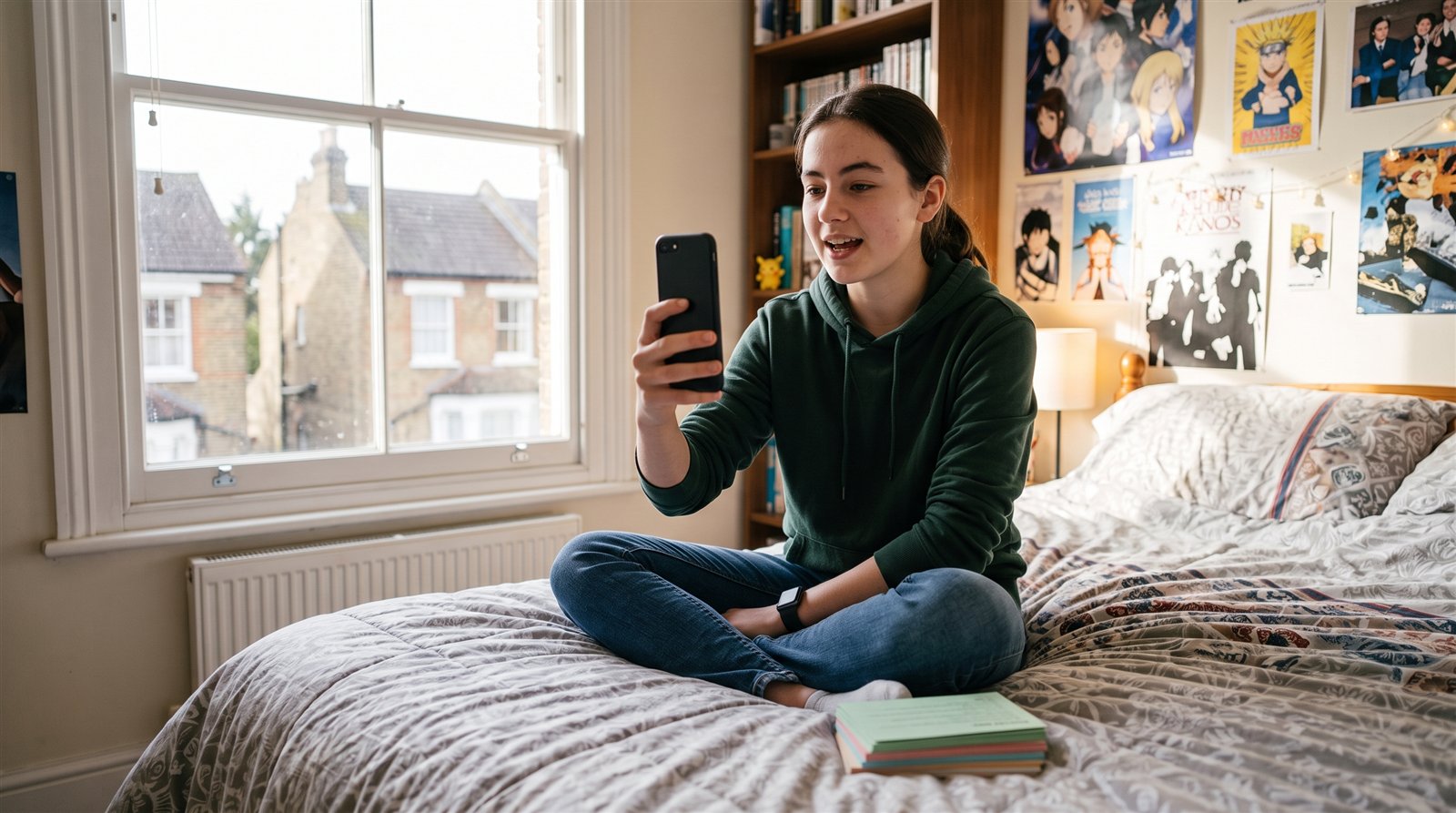
For the speaking conversation, the students who do well are not the ones with the longest memorized answers. They are the ones who can react — そうですね, ええと, もう一度お願いします — and keep going when a question comes out differently from how they practiced. Our Japanese oral exam guide has 30 practice questions and seven recovery phrases that work for GCSE too.
Frequently asked questions
Can I take GCSE Japanese if my school doesn’t teach it?
Many students do, particularly from Japanese-speaking families. You will need a centre to enter you and to conduct the speaking test in the April–May window, so contact your school’s exams officer early in the school year rather than in spring.
Foundation or Higher?
Foundation caps you at grade 5. If you can read the 124 Higher kanji in context and hold a five-minute conversation on two themes, Higher is the right choice. Try one Higher reading paper under timed conditions before you decide.
Is there a new GCSE Japanese specification coming?
Not at present. The reformed subject content with first exams in 2026 covers only French, German and Spanish; Japanese continues on the 2017 specification.
Are unofficial past paper sites safe to use?
Some are fine, but many mislabel tiers or years and few include the listening audio. Use Pearson’s own page first, and treat anything else as extra material only.
How can I practice speaking if no one at school speaks Japanese?
Record yourself answering past speaking tasks and listen back — it is uncomfortable and very effective. But the conversation section rewards reacting to someone, and you can only practice that with a real person. Regular conversation with Japanese speakers your own age in the months before the speaking window is the highest-value preparation there is.
Related: if you live in or near London, see our guides to the Japanese Saturday school in London and the Acton Saturday school. Taking an Australian exam instead? Our HSC Japanese Continuers past papers plan uses the same method.
The short version
GCSE Japanese means Pearson Edexcel 1JA0, still on the 2017 specification. Get the papers from Pearson, and read the examiner reports. Four papers at 25% each, no dictionaries. Learn the 200 kanji inside real words. Save the two most recent series for timed rehearsals. And fix your particles before you translate.