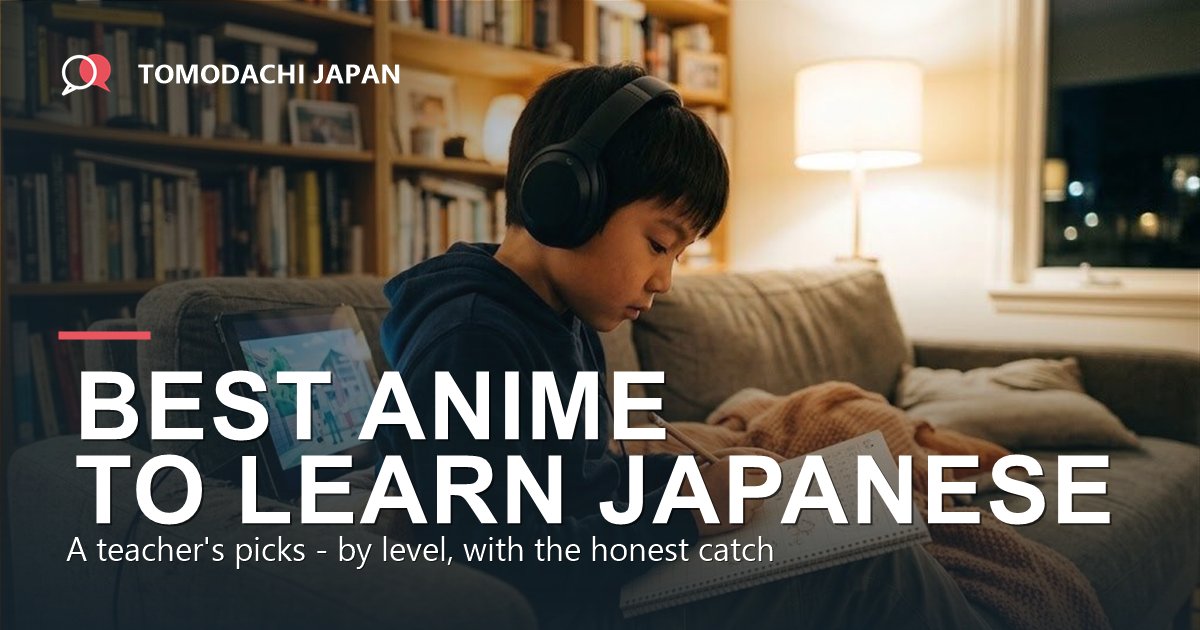
Every “learn Japanese with anime” list names the same action shows — but the ones that actually teach beginners are usually the quiet ones. I’m a Japanese teacher, and in this guide I’ll share the best anime to learn Japanese at each level, why each works (clear speech, everyday grammar, useful vocabulary), and the honest catch — that watching alone won’t make your child speak. Let’s separate the anime that build real Japanese from the ones that are simply fun.
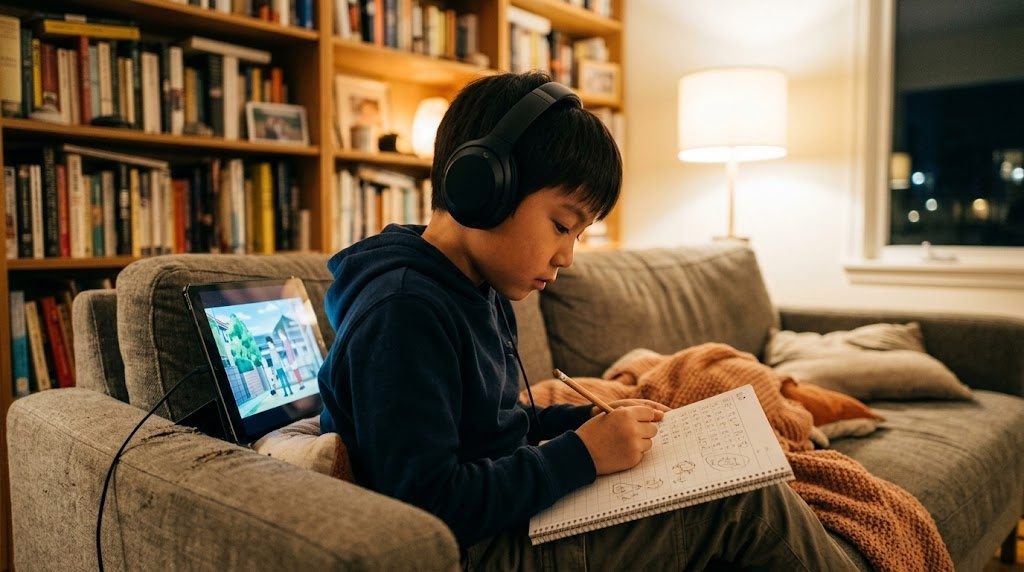
Best anime to learn Japanese, by level
| Anime | Level | Why it works for learners |
|---|---|---|
| Shirokuma Café (しろくまカフェ) | Beginner | Slow, clear, full sentences; food & café vocabulary; gentle humour |
| Doraemon / Chi’s Sweet Home | Beginner | Made for children; simple daily-life language, lots of repetition |
| Sweetness & Lightning (甘々と稲妻) | Beginner | Family & cooking; kind, everyday speech; short episodes |
| Non Non Biyori (のんのんびより) | Beginner–Intermediate | Calm slice-of-life; school & countryside words; clear diction |
| My Hero Academia / Demon Slayer | Intermediate | High motivation; big emotional lines — great for listening once you have basics |
| Spy x Family (Anya) | Beginner–Intermediate | Anya’s short present-tense lines are unusually usable |
Teacher’s note — why slice-of-life beats action for beginners: Battle anime is thrilling, but it runs on shouted command forms and rough pronouns (戦え! 駆逐してやる! おれ) that beginners can’t safely reuse. Slice-of-life shows like Shirokuma Café and Sweetness & Lightning give you what you actually need first: complete ~です/~ます sentences, food and family vocabulary, and natural everyday questions. Start there to build a base, then bring in Demon Slayer or My Hero Academia for motivation and listening once the grammar is in place.
Want to go from quoting anime to actually talking with friends in Japan?
TOMODACHI JAPAN is an online Japanese school for children growing up outside Japan. They talk with peers their own age in Japan every day, taught by teachers working at Japanese schools, in small classes of 8.
🎁 Register and we’ll email you our School Guide (PDF, in English) straight away. You’ll also be first to hear about tuition, scholarships and opening dates.
Free · takes about 30 seconds
How to actually learn from anime (not just watch)
| Step | What to do | Why |
|---|---|---|
| 1. Watch with Japanese subtitles | Not just English — match sound to text | Trains reading + listening together |
| 2. Mine 3–5 lines per episode | Write down short, reusable sentences | Quality over quantity; you’ll remember them |
| 3. Check the politeness level | Ask: is this ◎ everyday, △ casual, or ✗ rough? | Anime skews casual/dramatic |
| 4. Say them out loud to a person | Use the lines with a real Japanese speaker | Output — not input — is what makes speakers |
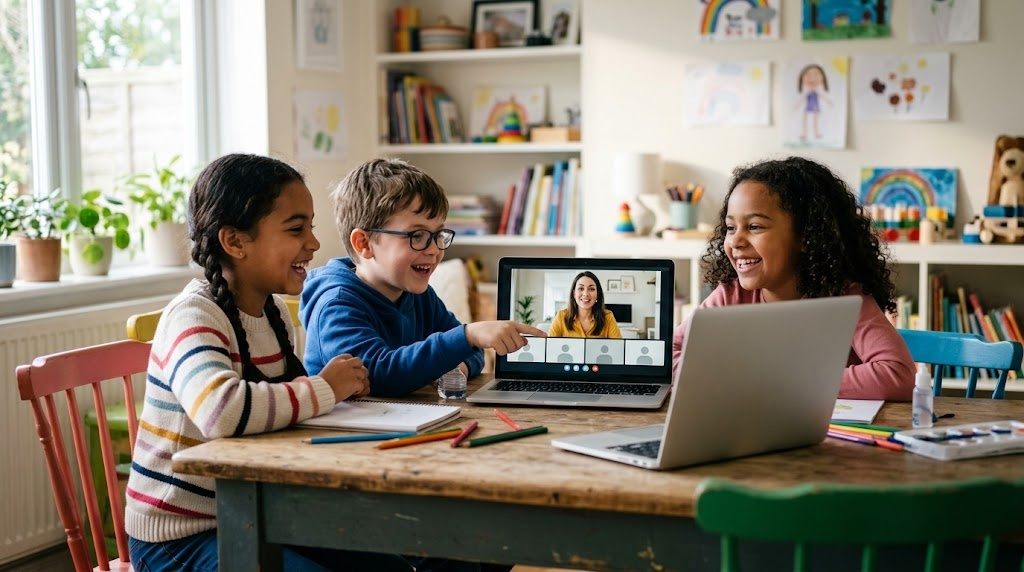
The honest catch: The research on bilingual kids is blunt — input alone doesn’t produce speakers. A child can watch a thousand hours of anime, understand a lot, and still freeze when asked to say one sentence. Anime is a superb source of motivation and listening input; the missing half is output — actually using the words with people. That’s the step apps and passive watching can’t give you, and it’s exactly where a real conversation partner matters.
Frequently asked questions
What is the best anime to learn Japanese for beginners?
For true beginners, slow slice-of-life shows like Shirokuma Café, Doraemon, Chi’s Sweet Home and Sweetness & Lightning are ideal — clear speech, everyday vocabulary and complete sentences. Save action series for motivation and listening once you have the basics.
Can you really learn Japanese just from anime?
You can build strong listening and a big vocabulary, but not fluent speaking — for that you need output, using the language with real people. Anime is best as one part of a routine that also includes speaking practice. See our full guide to learning Japanese with anime.
Is it bad that anime Japanese is so casual?
Not bad — just incomplete. Anime leans casual and dramatic, so learners should always check whether a line is polite everyday Japanese or something you’d only say to close friends. Our quote guides, like One Piece quotes in Japanese, tag every line ◎/△/✗ so you know.
How can my child practise speaking what they hear in anime?
At TOMODACHI JAPAN, kids join small-group classes with peers who live in Japan and real Japanese teachers — so the phrases they love become real conversation, not just subtitles. See our plans and pricing.