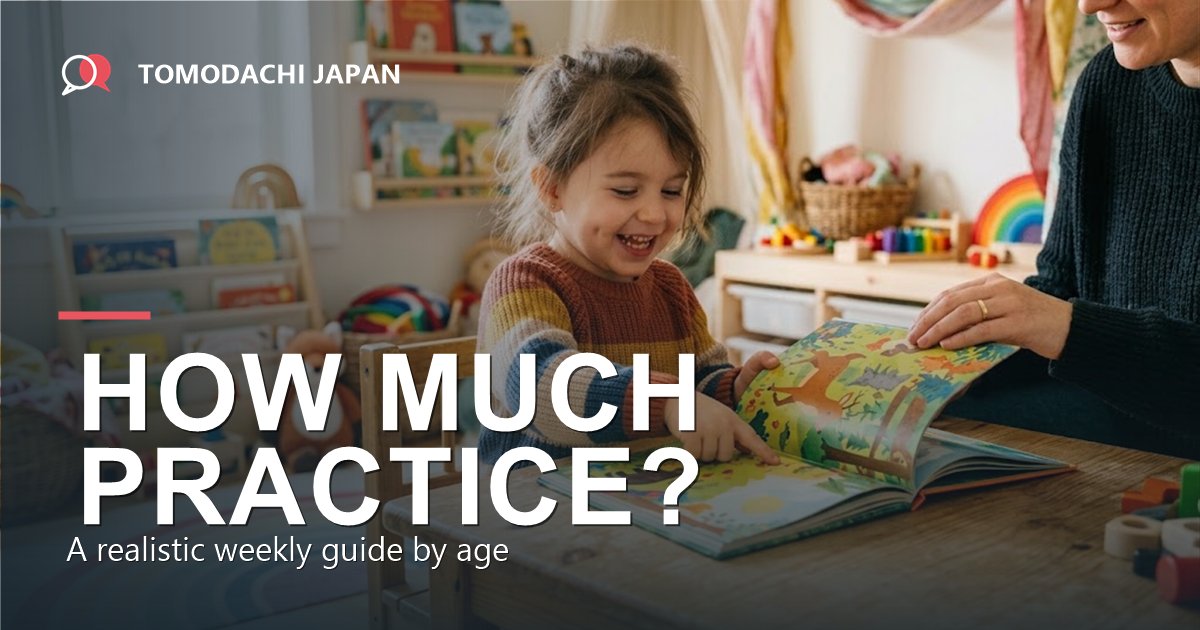
It’s one of the most common questions parents ask about Japanese: how much practice does my child actually need? Somewhere between “a quick app streak” and “a full Saturday school,” there’s a realistic amount that keeps a child moving forward without burning them — or you — out. The honest answer isn’t a magic number of hours. It’s a rhythm. Here’s a practical guide by age and goal, and the one ingredient most schedules quietly miss.
The short answer: consistency beats intensity
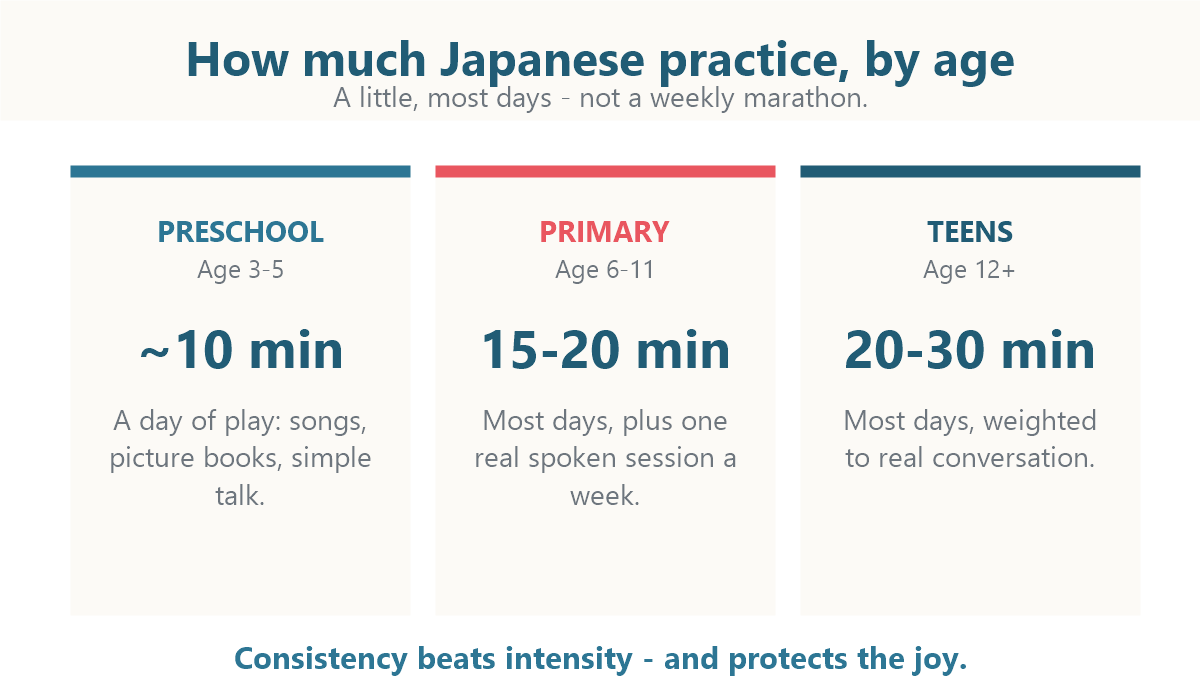
If you remember one thing, make it this: a little, most days, beats a lot, once a week. Language lives in the brain through frequent, spaced contact — not in a weekly cram. A child who does 15 focused minutes five days a week will almost always outpace one who does a single two-hour session, even though the weekly total is similar. Short and frequent also protects the thing that matters most at these ages: that your child doesn’t come to dread it.
Looking for a way to keep Japanese going from abroad?
TOMODACHI JAPAN is an online Japanese school for children growing up outside Japan. They talk with peers their own age in Japan every day, taught by teachers working at Japanese schools, in small classes of 8.
🎁 Register and we’ll email you our School Guide (PDF, in English) straight away. You’ll also be first to hear about tuition, scholarships and opening dates.
Free · takes about 30 seconds
A realistic weekly guide by age
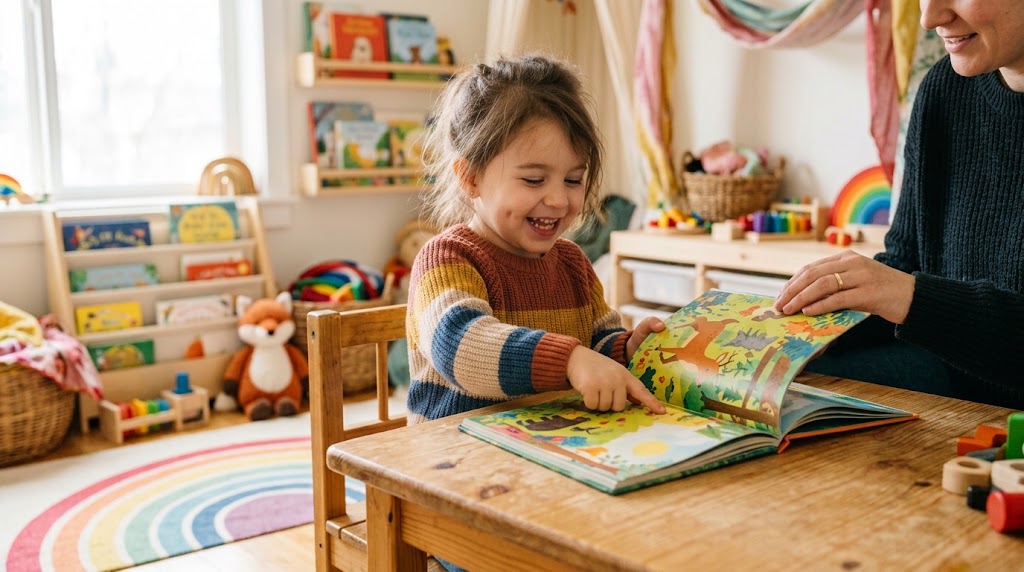
- Preschool (3–5): aim for ~10 minutes a day of play — songs, picture books, simple back-and-forth talk. At this age it should never look like “study.” Exposure and warmth do the work.
- Primary (6–11): 15–20 minutes most days, plus at least one longer, genuinely spoken session a week. This is the sweet spot for building both reading and the confidence to talk.
- Teens (12+): 20–30 minutes most days, weighted toward real conversation and output rather than passive review — especially if an exam like HSC or VCE Japanese is on the horizon.
These are targets to grow into, not rules to fail at. A tired week where you only manage three short sessions is still a good week. The goal is a habit your family can keep for years, because time — not intensity — is what ultimately produces a fluent child. (We dig into that long game in how long it really takes a child to speak Japanese.)
Why 15 minutes daily beats two hours weekly
There’s real science behind the “little and often” rule. Memory strengthens through spaced repetition — the brain files away what it meets again before it fully forgets. A once-a-week session means six days of forgetting between contacts, so each session starts by re-climbing lost ground. Daily contact, even brief, keeps the language warm. It’s also gentler on motivation: 15 minutes rarely triggers resistance, while a two-hour block on a Saturday is exactly the sort of thing kids learn to dread.
The ingredient most schedules miss: real conversation
Here’s where a lot of well-meaning routines stall. Apps, flashcards and worksheets are all input — they build vocabulary and reading. But the research on bilingual children is blunt: input alone rarely produces a child who speaks. The deciding factor is output — actually using the language — ideally with peers their own age. The classic quiet failure is the child who understands everything and replies in English. No amount of solo practice fixes that; conversation does. So of your weekly rhythm, protect the part where your child talks to a real person — it’s worth more than any app streak.
A sample week that actually sticks (primary age)
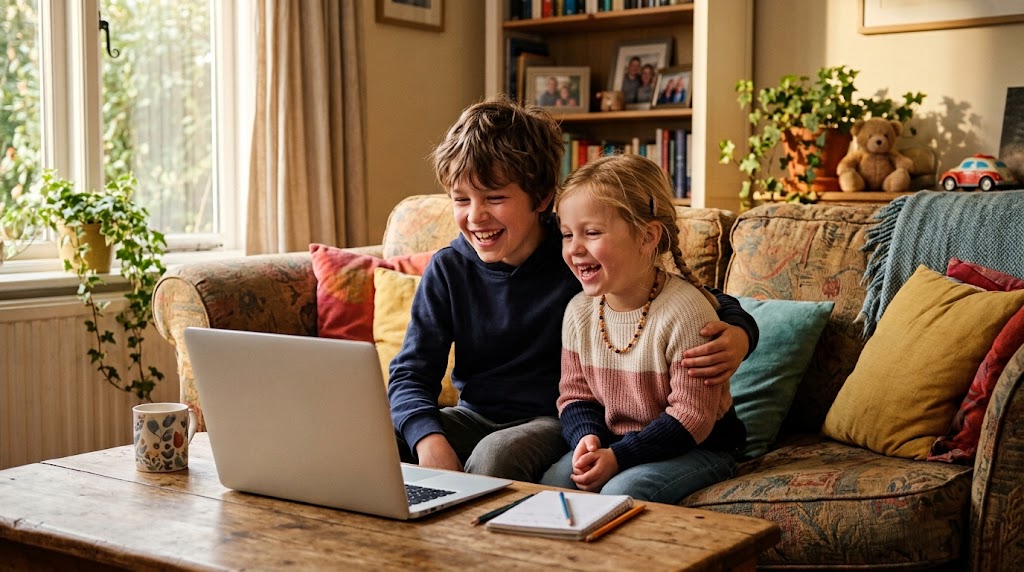
- Mon–Fri: 15 minutes each — a picture book, a few kanji, or a favourite anime clip with a couple of new words written down.
- Two or three afternoons: a real spoken session — ideally chatting with Japanese friends or a teacher, not reviewing alone.
- Weekend: keep it light and fun — a Japanese film, cooking, a video call with family in Japan. Rest counts too.
Notice the shape: short daily input, frequent real talking, and no heroic marathons. That’s a rhythm a family can actually sustain — and sustainable is what wins.
FAQ
How many hours a week should a child study Japanese?
Think in daily minutes, not weekly hours. Roughly 10 minutes a day for preschoolers, 15–20 for primary-age children, and 20–30 for teens — spread across most days rather than crammed into one session. Consistency matters far more than the total.
Is 15 minutes a day really enough?
For steady progress at a young age, yes — provided it’s most days and includes some real speaking each week. Daily contact keeps the language warm through spaced repetition, and it’s far more sustainable than a weekly marathon.
My child does an app every day but still can’t speak. Why?
Apps build input — vocabulary and reading — but speaking is an output skill that only grows through real conversation, ideally with peers. Add a couple of genuinely spoken sessions a week and the gap usually closes.
How does TOMODACHI JAPAN fit into a weekly routine?
Because attendance is unlimited on one flat monthly fee (billed in yen; see the tuition page), your child can join as often as suits your rhythm — a short session most days, or a couple of longer ones — always talking with real Japanese teachers and same-age friends. That covers the “real conversation” part most home routines miss.