“How long will it take before my child can actually hold a conversation in Japanese?” It’s one of the questions we hear most from parents raising kids overseas. Six months? A year? Several years? The honest answer is this: over the same period of time, the result depends almost entirely on how much your child actually speaks. In this article we’ll give you a realistic timeline—grounded in language-acquisition research and general benchmarks—for when a child can converse in Japanese, and the one thing that can cut that time in half.
The short answer: roughly 3 months to 2 years (with a wide range)
For adult learners starting from zero, basic everyday conversation typically takes 1–2 years of consistent practice. With focused daily effort, some reach simple conversation in 3–6 months. Children—especially heritage learners who grow up hearing Japanese at home—often already have a base of listening comprehension, so once the “speaking switch” flips, they can move faster than adults.
The important caveat: these are benchmarks, and individual results vary a lot. The timeline below shows a general picture when a child practices speaking out loud on a regular basis.
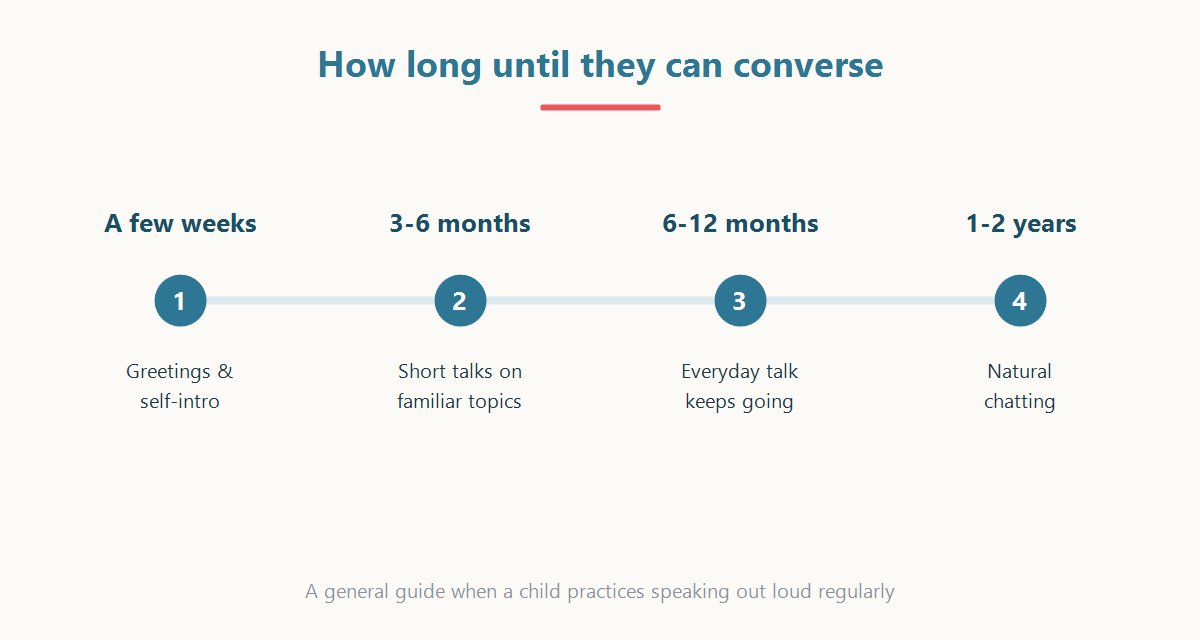
- First few weeks: greetings, self-introductions, feeling words like “I like / I don’t like.” The stage of experiencing “it worked—they understood me!”
- 3–6 months: short exchanges on familiar topics (family, food, favorite anime); able to answer questions.
- 6–12 months: simple everyday conversations that keep going; asking their own questions and telling a story in order.
- 1–2 years: comfortable, natural chatting with familiar people; able to keep up with what kids their age in Japan are talking about.
(Reading and writing—especially kanji—take longer than this. This article is about speaking and listening, i.e. conversation.)
Looking for a way to keep Japanese going from abroad?
TOMODACHI JAPAN is an online Japanese school for children growing up outside Japan. They talk with peers their own age in Japan every day, taught by teachers working at Japanese schools, in small classes of 8.
🎁 Register and we’ll email you our School Guide (PDF, in English) straight away. You’ll also be first to hear about tuition, scholarships and opening dates.
Free · takes about 30 seconds
The three factors that decide how long it takes
Even over “the same year,” one child gets close to fluent while another barely changes. The difference usually comes down to three things.
- Starting point: kids who grew up hearing Japanese (heritage learners) tend to convert listening into speaking faster. Even from absolute zero, children absorb quickly—so don’t worry.
- Frequency of exposure: short and daily beats once a week. A living language fades with every gap. Kids who engage with Japanese media (anime, songs, videos) every day often progress noticeably faster.
- How much they speak (the most important): listening and reading alone rarely produce conversation. Actually speaking out loud and getting a response back is what pushes speaking ability up sharply.
The key to halving the time: someone to talk to
In language-acquisition research, it’s not just input (listening and reading) but output (speaking) that builds fluency and the ability to produce language on the spot. And it’s interaction—the back-and-forth of being misunderstood and rephrasing, being asked a question and answering—that acts as the real engine of progress, more than one-way input alone.
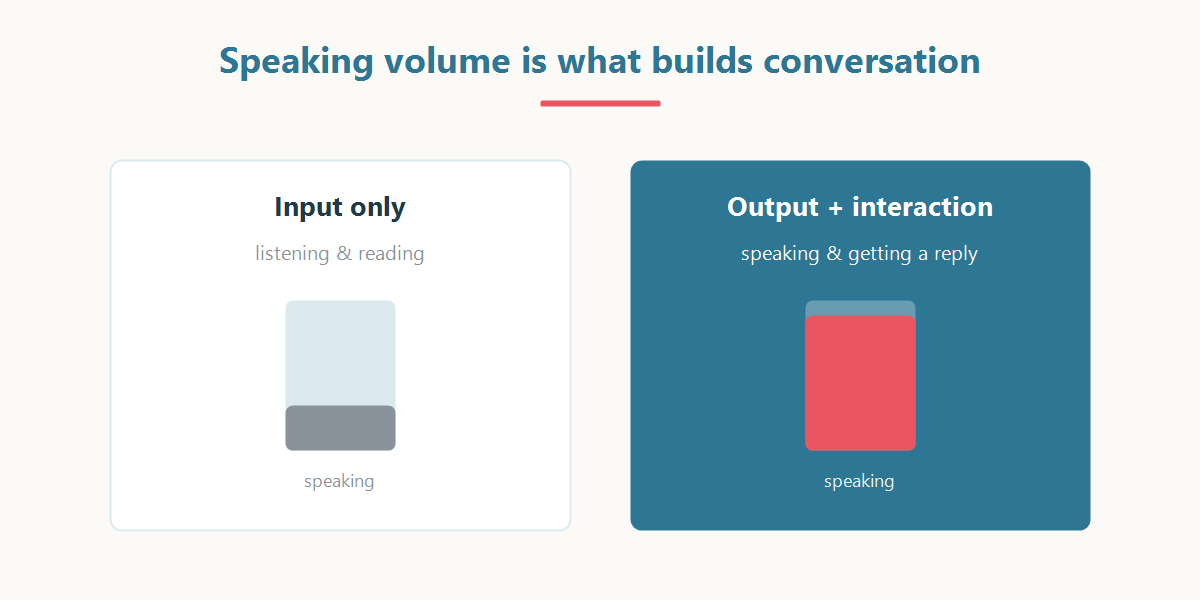
So the single biggest way to shorten the timeline is to create someone your child wants to speak Japanese with. With apps and drills, your child’s “turn to speak” rarely comes. One-on-one lessons let them speak—but the only other person is one adult teacher. When there are friends their own age, and the fun makes Japanese come out without even trying—that’s when progress changes.
It all comes down to sticking with it—the real reason kids quit Japanese
No matter how good the benchmark is, if a child quits partway, speaking ability won’t grow. And the reason kids stop is rarely “it’s too hard”—it’s usually “it’s boring” or “I’m doing it alone.” Even adults struggle to keep a habit alone; for children it’s even harder.
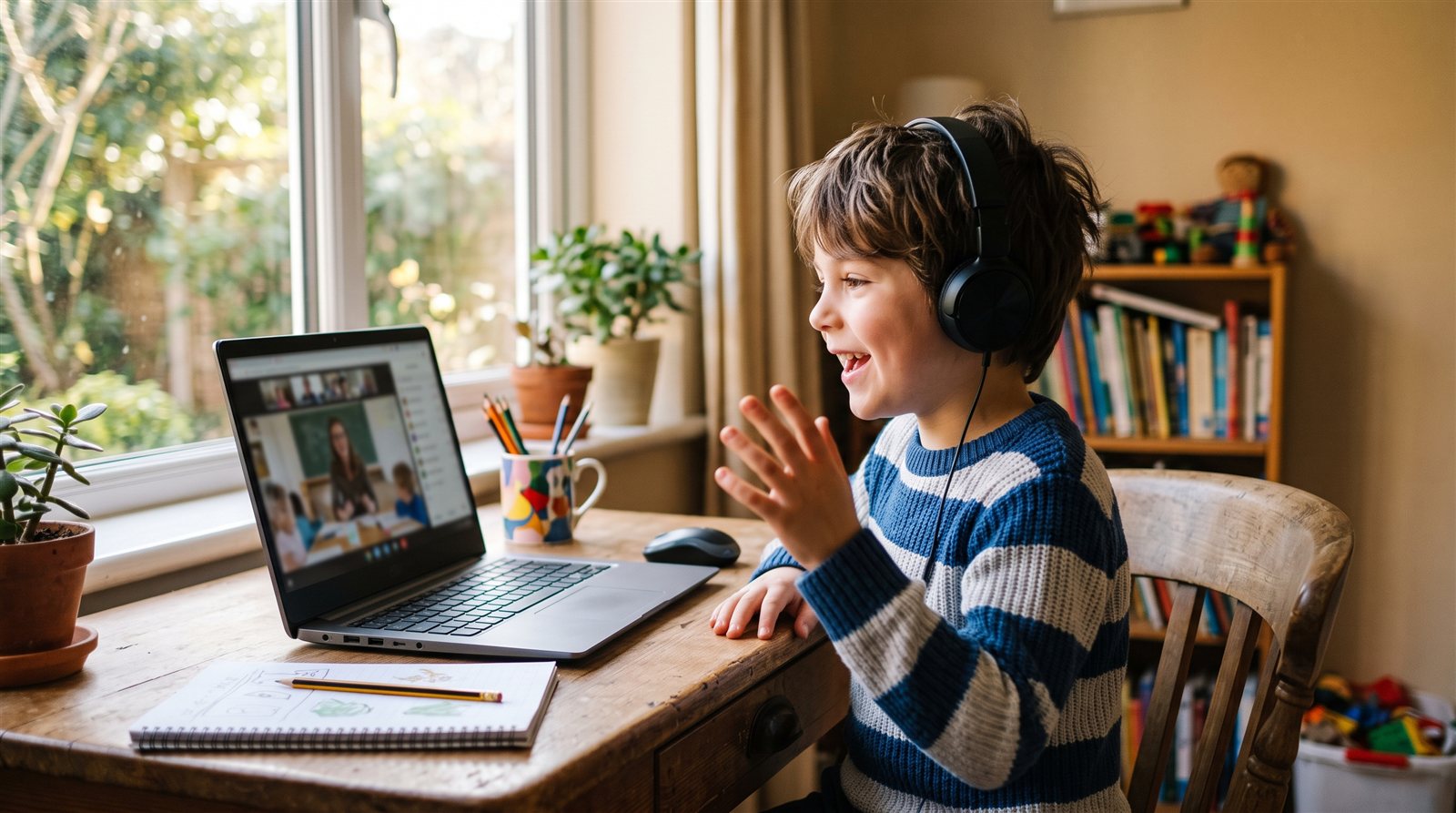
The flip side is powerful: once you reach a state of “I want to see my friends again, so I keep going,” the benchmark timeline naturally shrinks. Sticking with it means speaking more often; speaking more often means growing faster. Getting into that virtuous cycle is the real fork in the road.
How TOMODACHI JAPAN speeds up “time to conversation”
1. Group classes mean far more chances to speak
TOMODACHI JAPAN isn’t one-on-one or self-study—it’s small-group classes. Kids talk not only with the teacher but with other children. Each child’s “turn to speak” comes around naturally and often, and that volume of output is what lifts conversation ability. It’s designed so kids don’t just listen.
2. They connect with peers living in Japan—so they want to talk
Your child connects with real, same-age kids living in Japan through our sister school NIJIN Academy (1,000+ enrolled). Japanese comes out not because “it’s study,” but because “I want to talk with my friends.” When there’s a reason to keep going, the time it takes to converse naturally gets shorter.
3. Kid-focused and grouped by conversation level, so the first step is easy
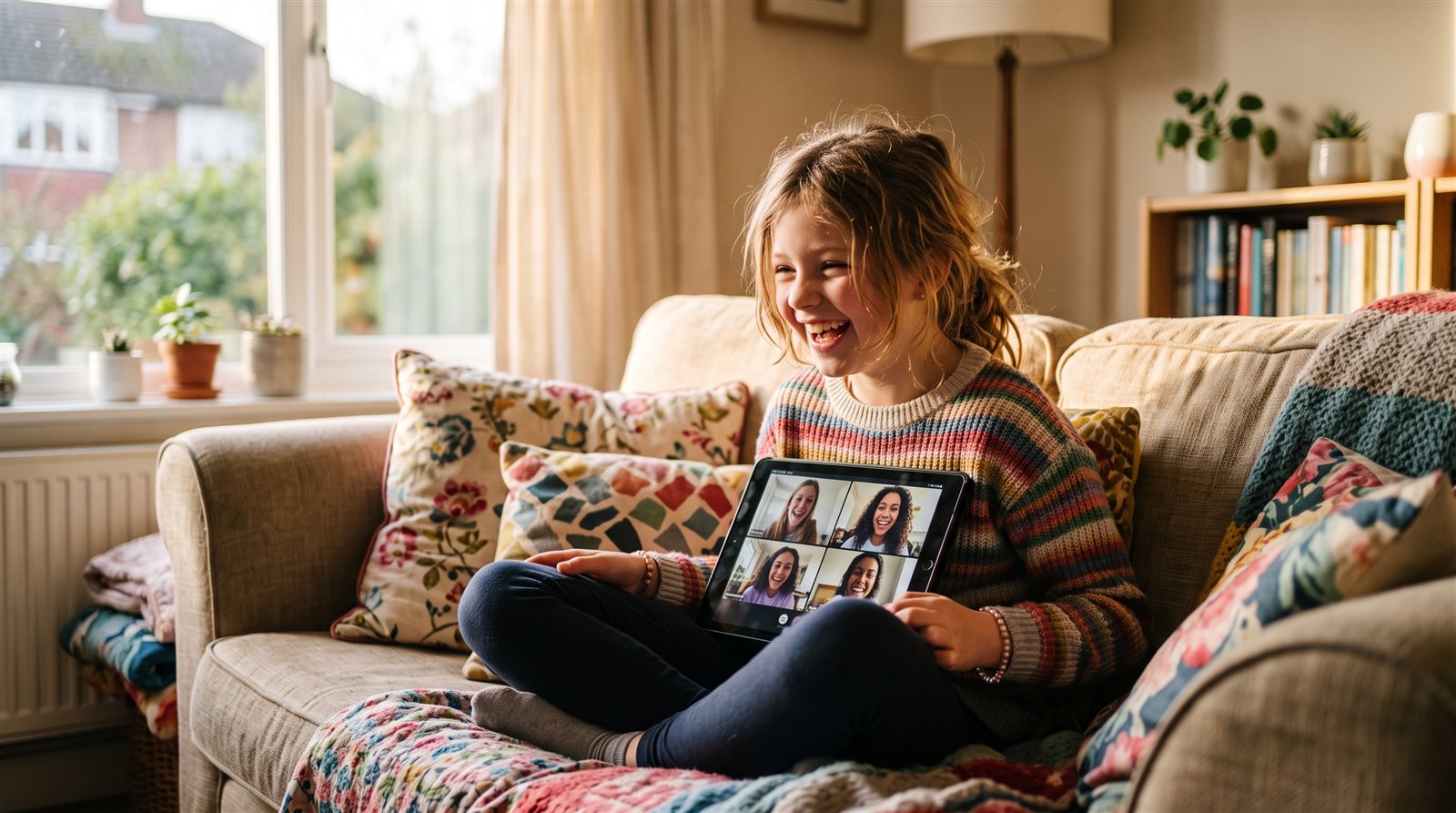
Because classes are built for children and sorted by conversation level, even a beginner who can’t yet read hiragana can start safely alongside peers at the same level. The measure of growth isn’t a test score—it’s “how many friends did you make?” And with flat monthly tuition you can attend as often as you like, so the more your child joins, the more they speak—and the lower the cost per session.
Frequently asked questions
Can my child reach conversation even starting from absolute zero?
Yes. Children absorb quickly, and within a few weeks they can experience “it worked!” with greetings and self-introductions. The key is not to stop at listening—give them a little chance to speak out loud every day.
How much should they practice each day?
Short and daily beats long and occasional. A little exposure every day is harder to forget and leads to conversation faster than one big weekly session. Starting from something your child loves—anime, songs—works well.
My child is shy. Can they still practice conversation?
Absolutely. It’s fine to just listen at first. With peers at a similar conversation level, kids warm up gradually, and once they make a friend, “I want to talk too” comes out naturally. A safe, comfortable space matters more than anything for that first step.
How long does reading and writing (kanji) take?
Reading and writing—especially kanji—take longer than conversation and require steady, cumulative practice. We suggest letting your child fall in love with Japanese through “I can speak and be understood” first; once they’re confident, building reading and writing tends to stick better. If you have the opposite worry, see “can read and write but can’t speak.”