“My kid loves anime, but still can’t really speak Japanese.” It’s one of the most common things we hear from parents raising children abroad. Here’s the good news: a child who loves anime already has a real head start. Watching every day, they’ve been quietly soaking up the sounds, rhythm, and the words that come up again and again. In this article we share 18 Japanese phrases kids hear most in anime, with meanings, and how to turn that love into Japanese they can actually speak.
18 Japanese Phrases Kids Hear in Anime (with Meanings)
Your child has almost certainly heard these. Starting from words they already recognize (“I know that one!”) makes Japanese feel close and doable. Let’s begin with words for feelings and reactions.

Feelings & reactions
| Phrase | Rōmaji | Meaning |
|---|---|---|
| すごい | sugoi | Amazing! / Wow! |
| やばい | yabai | Awesome / crazy (or “oh no!”) |
| かわいい | kawaii | Cute / adorable |
| かっこいい | kakkoii | Cool |
| やった! | yatta | I did it! / Yay! |
| うそ!? | uso | No way! (literally “a lie”) |
Greetings & replies
| Phrase | Rōmaji | Meaning |
|---|---|---|
| おはよう | ohayō | Good morning |
| ありがとう | arigatō | Thank you |
| ごめん | gomen | Sorry |
| だいじょうぶ | daijōbu | It’s okay / Are you okay? |
| わかった | wakatta | Got it / Understood |
| がんばって | ganbatte | Do your best! / Go for it! |
Story call-outs
| Phrase | Rōmaji | Meaning |
|---|---|---|
| いくぞ! | ikuzo | Let’s go! |
| まって! | matte | Wait! |
| あぶない! | abunai | Look out! / Dangerous |
| しんじる | shinjiru | To believe |
| なかま | nakama | Friends / comrades |
| ぜったい | zettai | Absolutely / no matter what |
Note: anime also uses rough language and slang. Every phrase above is a gentle, everyday one your child can safely use. The goal is that first win — “I said a word I knew, and it worked!”
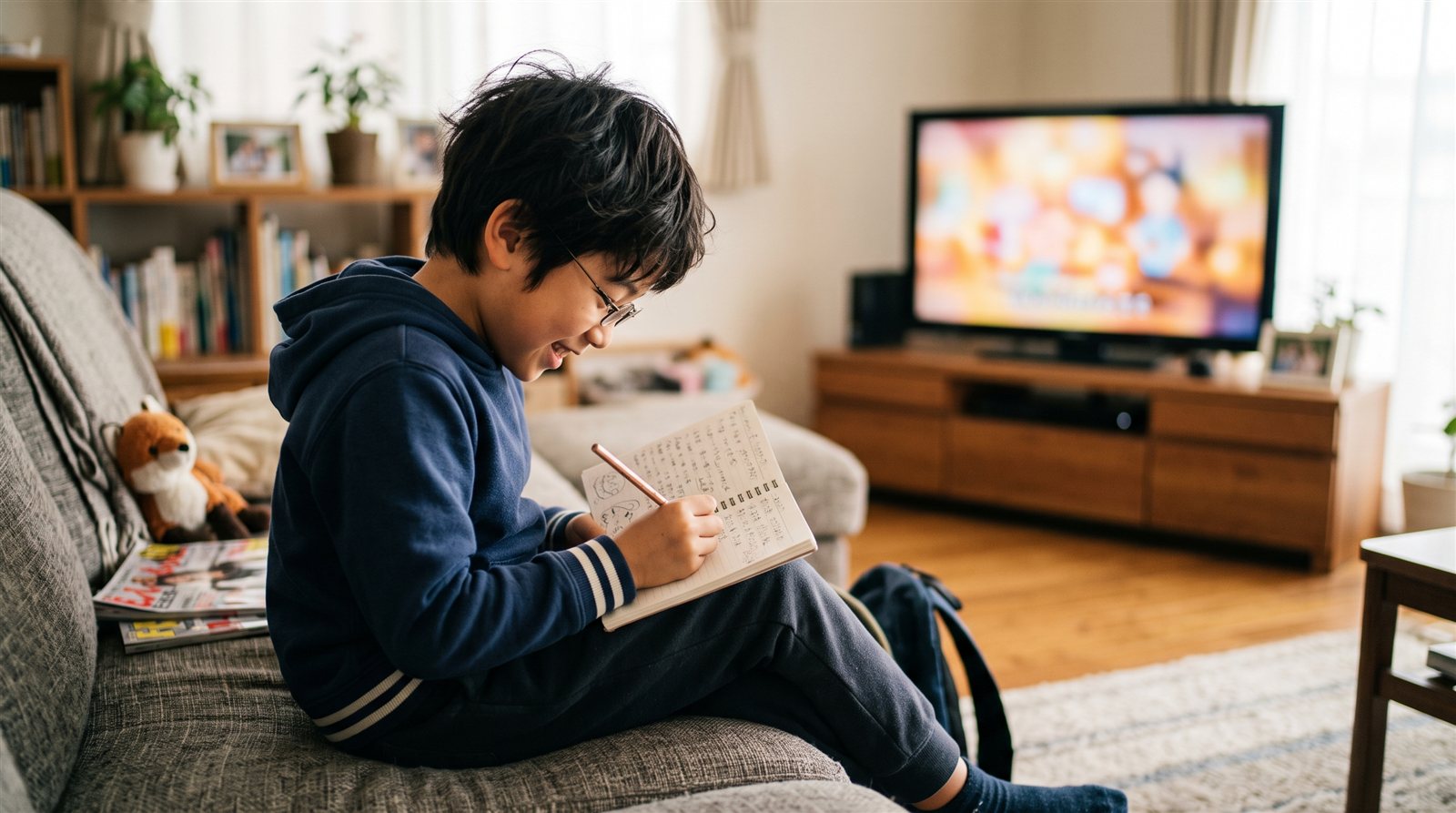
Want to go from quoting anime to actually talking with friends in Japan?
TOMODACHI JAPAN is an online Japanese school for children growing up outside Japan. They talk with peers their own age in Japan every day, taught by teachers working at Japanese schools, in small classes of 8.
🎁 Register and we’ll email you our School Guide (PDF, in English) straight away. You’ll also be first to hear about tuition, scholarships and opening dates.
Free · takes about 30 seconds
But watching alone won’t make them speak
This is the key point. Watching lots of anime trains the ear and builds vocabulary — that’s input, and it’s valuable. But the words a child understands and the words that come out of their own mouth are two different things. Language research consistently finds that fluency and the ability to respond on the spot are built by actually speaking (output) and by back-and-forth interaction with another person.

So the “sugoi!” and “daijoubu?” your child picked up from anime need somewhere to go. The difference-maker is whether there’s someone real to use them with. Watching alone, their turn to speak never comes. Anime is the perfect doorway — but to walk through it, a child needs people they actually want to speak Japanese with.
3 things that turn “loving it” into “speaking it”
- Talking with peers: Getting excited with friends who love the same shows (“that scene was insane!”) pulls Japanese out far more naturally than a one-on-one lesson with an adult.
- Connecting with kids in Japan: Real peers in Japan bring the living language — current words, real rhythm, the stuff textbooks don’t teach.
- A gentle, kids-only space: In a child-focused place where mistakes are fine, even shy kids start to want to try a word out loud.
How TOMODACHI JAPAN connects “anime love” to real Japanese
1. Small groups, so kids bond over the shows they love
TOMODACHI JAPAN isn’t one-on-one or self-study — it’s small groups. Talking with friends who like the same things turns “I know that!” straight into conversation. Because the teacher isn’t the only person to talk to, every child gets far more turns to speak.
2. Peers who live in Japan — living Japanese comes in
Kids connect with real peers who live in Japan, from our sister school NIJIN Academy (1,000+ students). Using a word they learned from anime and having a friend in Japan actually understand it — that experience sparks “I want to talk more.” Because they love it, they keep going; because they keep going, they learn to speak.
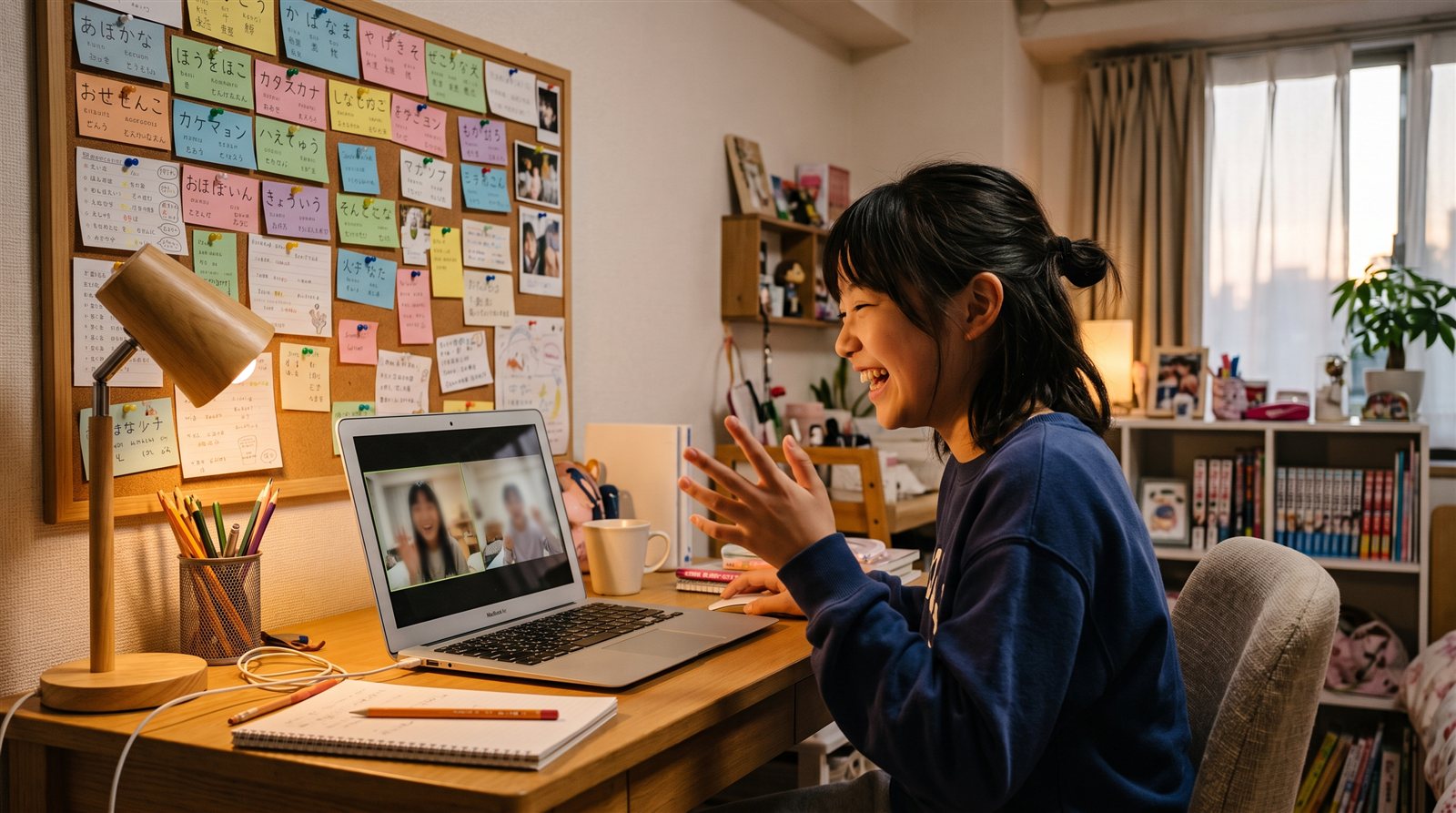
3. Built for kids and grouped by speaking level
Classes are grouped by conversation level, so a beginner who can’t yet read hiragana starts comfortably alongside peers at the same stage. Progress isn’t measured in test scores but in “How many friends did you make?” With unlimited monthly classes on one flat fee, kids can join as often as they like and rack up speaking time.

Frequently asked questions
Will my child learn Japanese just by watching anime?
Watching builds listening skills, but speaking requires actually using the language out loud. Combine anime for the ear with real chances to use those words with friends, and progress speeds up dramatically.
Could anime phrases sound rude?
Anime does include rough speech. The phrases in this article are gentle, everyday ones. The best way to learn what sounds natural in real life is to pick it up gradually through live conversation.
Is it okay if my child is a complete beginner?
Absolutely. A child who has “words they know” from anime is already standing at the doorway. They can start with a single “sugoi!” or “yatta!” alongside peers at a similar level. See also how long it takes to hold a conversation.