MENU
  • About
  • How it works
  • Teachers
  • Pricing
  • Parents’ Guide
  • FAQ
  • Join us
  • Get Updates
  • Contact
Make friends, in Japanese. An online Japanese school for kids.
TOMODACHI JAPAN | Online Japanese School for Kids
  • About
  • How it works
  • Teachers
  • Pricing
  • Parents’ Guide
  • FAQ
  • Join us
  • Get Updates
  • Contact
  • About
  • How it works
  • Teachers
  • Pricing
  • Parents’ Guide
  • FAQ
  • Join us
  • Get Updates
  • Contact
TOMODACHI JAPAN | Online Japanese School for Kids
  • About
  • How it works
  • Teachers
  • Pricing
  • Parents’ Guide
  • FAQ
  • Join us
  • Get Updates
  • Contact
  1. Home
  2. Learning Japanese
  3. How Much Japanese Should Kids Practice Each Week? A Realistic Guide

How Much Japanese Should Kids Practice Each Week? A Realistic Guide

2026 9/02
Learning Japanese Parents' Guide
2026年7月19日2026年9月2日
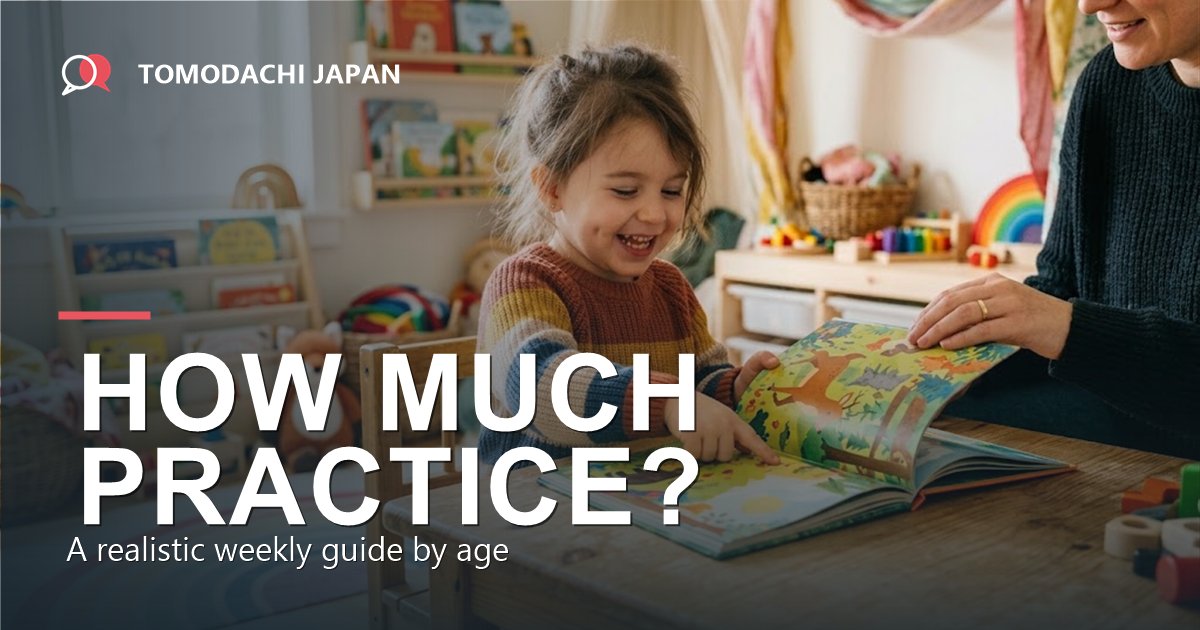
How much Japanese should kids practice each week? A realistic guide by age

It’s one of the most common questions parents ask about Japanese: how much practice does my child actually need? Somewhere between “a quick app streak” and “a full Saturday school,” there’s a realistic amount that keeps a child moving forward without burning them — or you — out. The honest answer isn’t a magic number of hours. It’s a rhythm. Here’s a practical guide by age and goal, and the one ingredient most schedules quietly miss.

TOC

The short answer: consistency beats intensity

If you remember one thing, make it this: a little, most days, beats a lot, once a week. Language lives in the brain through frequent, spaced contact — not in a weekly cram. A child who does 15 focused minutes five days a week will almost always outpace one who does a single two-hour session, even though the weekly total is similar. Short and frequent also protects the thing that matters most at these ages: that your child doesn’t come to dread it.
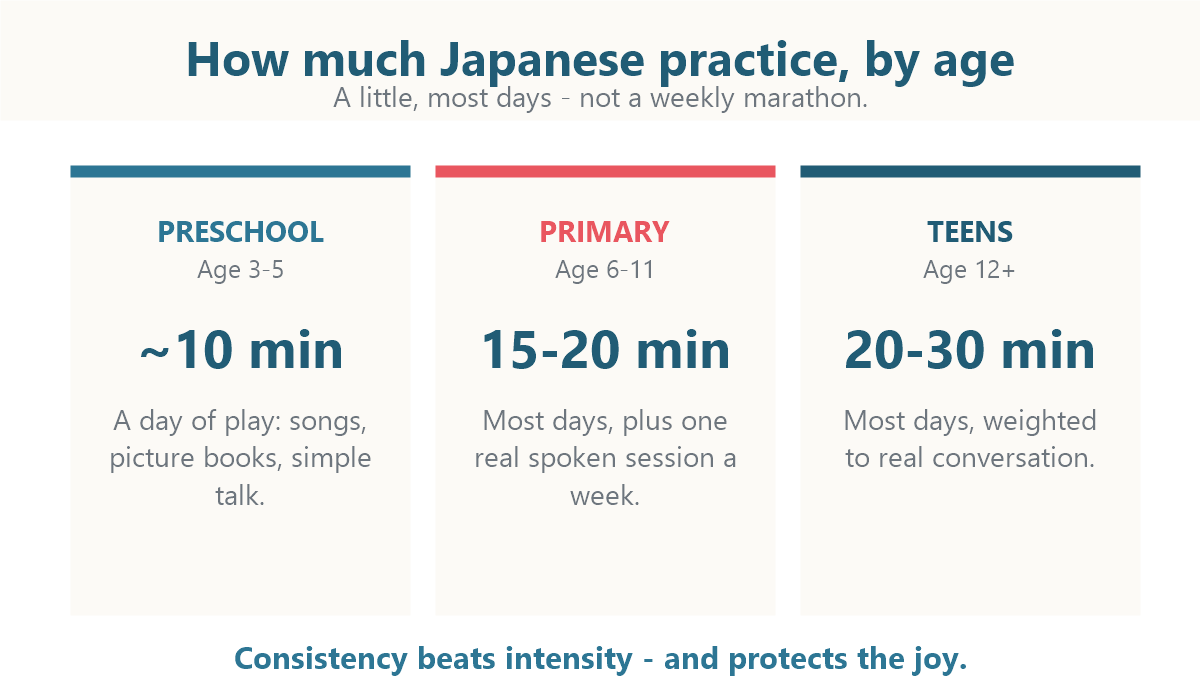
A realistic weekly Japanese practice guide by age: preschoolers 10 minutes a day of play, primary kids 15-20 minutes most days, teens 20-30 minutes plus real conversation
Opening December 2026 (pilot)

Looking for a way to keep Japanese going from abroad?

TOMODACHI JAPAN is an online Japanese school for children growing up outside Japan. They talk with peers their own age in Japan every day, taught by teachers working at Japanese schools, in small classes of 8.

🎁 Register and we’ll email you our School Guide (PDF, in English) straight away. You’ll also be first to hear about tuition, scholarships and opening dates.

    Free · takes about 30 seconds

    A realistic weekly guide by age

    • Preschool (3–5): aim for ~10 minutes a day of play — songs, picture books, simple back-and-forth talk. At this age it should never look like “study.” Exposure and warmth do the work.
    • Primary (6–11): 15–20 minutes most days, plus at least one longer, genuinely spoken session a week. This is the sweet spot for building both reading and the confidence to talk.
    • Teens (12+): 20–30 minutes most days, weighted toward real conversation and output rather than passive review — especially if an exam like HSC or VCE Japanese is on the horizon.

    These are targets to grow into, not rules to fail at. A tired week where you only manage three short sessions is still a good week. The goal is a habit your family can keep for years, because time — not intensity — is what ultimately produces a fluent child. (We dig into that long game in how long it really takes a child to speak Japanese.)
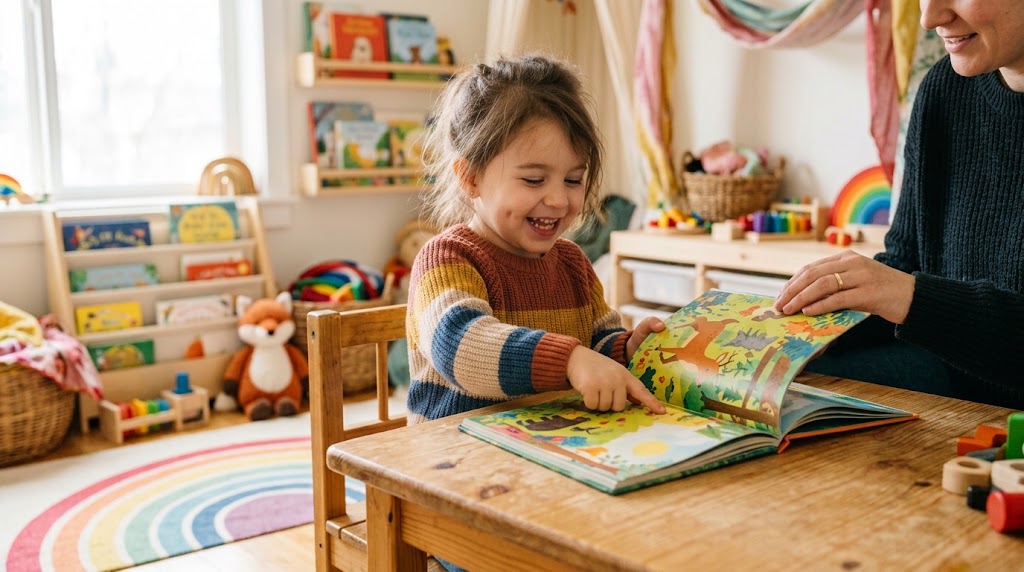
    A young child doing a short, relaxed Japanese practice session at home with a picture book and a parent nearby

    Why 15 minutes daily beats two hours weekly

    There’s real science behind the “little and often” rule. Memory strengthens through spaced repetition — the brain files away what it meets again before it fully forgets. A once-a-week session means six days of forgetting between contacts, so each session starts by re-climbing lost ground. Daily contact, even brief, keeps the language warm. It’s also gentler on motivation: 15 minutes rarely triggers resistance, while a two-hour block on a Saturday is exactly the sort of thing kids learn to dread.

    The ingredient most schedules miss: real conversation

    Here’s where a lot of well-meaning routines stall. Apps, flashcards and worksheets are all input — they build vocabulary and reading. But the research on bilingual children is blunt: input alone rarely produces a child who speaks. The deciding factor is output — actually using the language — ideally with peers their own age. The classic quiet failure is the child who understands everything and replies in English. No amount of solo practice fixes that; conversation does. So of your weekly rhythm, protect the part where your child talks to a real person — it’s worth more than any app streak.
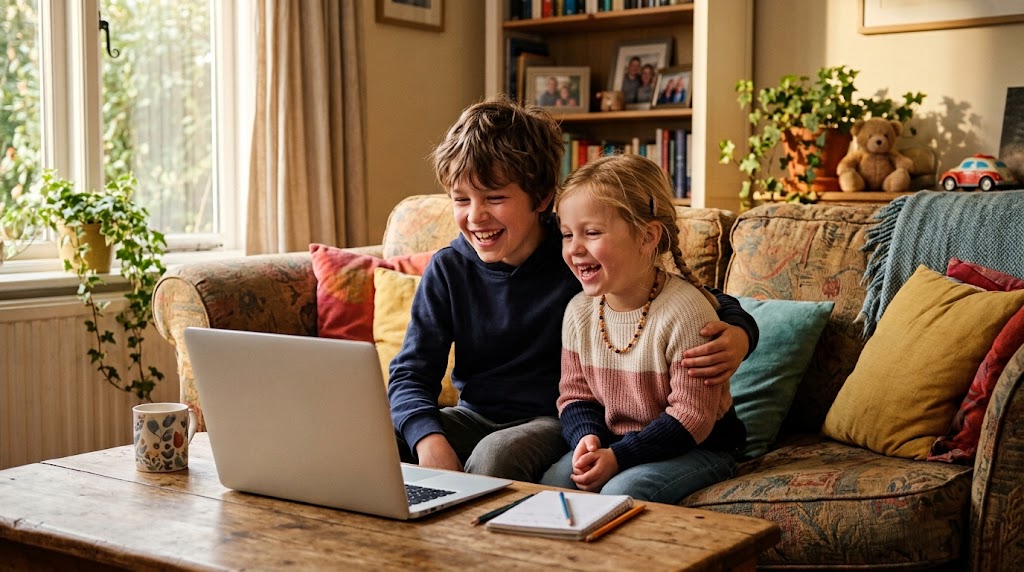
    Two children laughing during a Japanese video call, practising conversation together after school

    A sample week that actually sticks (primary age)

    • Mon–Fri: 15 minutes each — a picture book, a few kanji, or a favourite anime clip with a couple of new words written down.
    • Two or three afternoons: a real spoken session — ideally chatting with Japanese friends or a teacher, not reviewing alone.
    • Weekend: keep it light and fun — a Japanese film, cooking, a video call with family in Japan. Rest counts too.

    Notice the shape: short daily input, frequent real talking, and no heroic marathons. That’s a rhythm a family can actually sustain — and sustainable is what wins.
    A little, most days, beats a lot, once a week.

    FAQ

    How many hours a week should a child study Japanese?

    Think in daily minutes, not weekly hours. Roughly 10 minutes a day for preschoolers, 15–20 for primary-age children, and 20–30 for teens — spread across most days rather than crammed into one session. Consistency matters far more than the total.

    Is 15 minutes a day really enough?

    For steady progress at a young age, yes — provided it’s most days and includes some real speaking each week. Daily contact keeps the language warm through spaced repetition, and it’s far more sustainable than a weekly marathon.

    My child does an app every day but still can’t speak. Why?

    Apps build input — vocabulary and reading — but speaking is an output skill that only grows through real conversation, ideally with peers. Add a couple of genuinely spoken sessions a week and the gap usually closes.

    How does TOMODACHI JAPAN fit into a weekly routine?

    Because attendance is unlimited on one flat monthly fee (billed in yen; see the tuition page), your child can join as often as suits your rhythm — a short session most days, or a couple of longer ones — always talking with real Japanese teachers and same-age friends. That covers the “real conversation” part most home routines miss.


    Make friends, in Japanese.

    Tuition, scholarships and opening dates — we send them in our school guide when you register.

    Talk with peers in Japan, every dayQualified teachers from JapanSmall classes of 8

    Get the school guide (free) →See the school

    Opening December 2026 (pilot)

    Learning Japanese Parents' Guide
    Let's share this post !
    • What Does "Dattebayo" Mean? Naruto's Catchphrase Explained (by a Japanese Teacher)
    • Japanese Schools for Kids in Los Angeles (2026): Hoshuko, Heritage Classes, Fees & Online Compared

    関連記事

    • Gintama quotes in Japanese - eight lines and the slang inside them
      Gintama Quotes in Japanese: 8 Lines and the Slang Inside
      2026年9月16日
    • Japanese worksheets for kids guide
      Japanese Worksheets for Kids: Free and Paid Picks (2026)
      2026年9月16日
    • GCSE Japanese past papers guide
      GCSE Japanese Past Papers: Where They Are + a 6-Paper Plan
      2026年9月16日
    • Washington Japanese Language School tuition and the other Japanese school options in the DC area
      Washington Japanese Language School tuition: every 2026-27 fee, in English
      2026年9月16日
    • Manoa Japanese Language School tuition: the 2026 Honolulu guide
      Manoa Japanese Language School Tuition: What Honolulu Parents Pay
      2026年9月15日
    • Crunchyroll Japanese subtitles guide
      Crunchyroll Japanese Subtitles: What Actually Works in 2026
      2026年9月15日
    • Sydney Japanese International School fees for 2026-27, and the third-child discount that was removed
      Sydney Japanese International School fees 2026-27: the real first-year total
      2026年9月14日
    • Final Fantasy Japanese names - the spell ladder and nine heroes in katakana
      Final Fantasy Japanese Names: 9 Heroes and the Spell System
      2026年9月14日

    おすすめ動画

    RECOMMENDED VIDEOS

    タツロー校長 YouTube登録
    発達障害なら支援級に入れるべき?【発達障害なら支援級に入れるべき?】教育現場を知る不登校専門… やる気が出ない本当の理由【やる気が出ない本当の理由】「選択の科学」で読み解く無気力の… すべての動画を見る →
    NIJINアカデミー YouTube登録
    フリースクールを渡り歩いた先にフリースクールを渡り歩いた先に、たどり着いた場所|中3パケロ… よっちゃん先生に突撃インタビュー【神回】よっちゃん先生に突撃インタビューした結果…!【爆笑】 すべての動画を見る →

    NIJINグループのスクール・メディア

    NIJIN GROUP

    NIJINアカデミーオルタナティブスクール(小中一貫)› NIJIN GLOBAL ACADEMY脱偏差値オンライン・インター(姉妹校)› ニジ高(NIJIN高等学院)通信制高校サポート校› 放課後プロジェクトスクールオンライン探究スクール› にじいろ脱・学校の教育ガイド(教育メディア)› 授業てらす先生の授業力を磨く教員研修コミュニティ› 中学校てらす中学校の先生の学び・実践コミュニティ› 先生キャリアコーチ教員の転職・キャリアサポート› 星野起業塾教育で起業したい人のための起業塾›

    最近の投稿

    • Gintama Quotes in Japanese: 8 Lines and the Slang Inside
    • Japanese Worksheets for Kids: Free and Paid Picks (2026)
    • GCSE Japanese Past Papers: Where They Are + a 6-Paper Plan
    • Washington Japanese Language School tuition: every 2026-27 fee, in English
    • Manoa Japanese Language School Tuition: What Honolulu Parents Pay

    アーカイブ

    • September 2026
    • August 2026
    • July 2026
    • June 2026

    カテゴリー

    • Anime, Games & Loving Japan
    • Friends & Culture
    • Learning Japanese
    • Life in Japan
    • Parents' Guide
    • School Comparison
    • About
    • How it works
    • Teachers
    • Pricing
    • FAQ
    • Join us
    • Get Updates
    • Contact

    © TOMODACHI JAPAN | Online Japanese School for Kids.

    TOC

    NIJINグループの事業 ── 教育から、世界を照らす。
    新しい教育の創造
    NIJINアカデミーNIJIN高等学院(ニジ高)放課後プロジェクトスクールNIJIN GLOBAL ACADEMYALL HAPPY
    既存教育の変革
    授業てらす中学校てらす先生キャリアコーチ
    育成・メディア・運営
    星野起業塾不登校ポータル にじいろタツロー校長 YouTube株式会社NIJIN
    The NIJIN Group ── lighting the world through education
    New education
    NIJIN AcademyNIJIN High SchoolAfter-school Project SchoolNIJIN GLOBAL ACADEMYALL HAPPY
    Transforming education
    Jugyou TerasuChugakkou TerasuSensei Career Coach
    People, media & company
    Hoshino Entrepreneur SchoolNijiiro mediaTatsuro's YouTubeNIJIN Inc.
    /* ga-lead-v1 : fire GA4 generate_lead on CF7 submit */