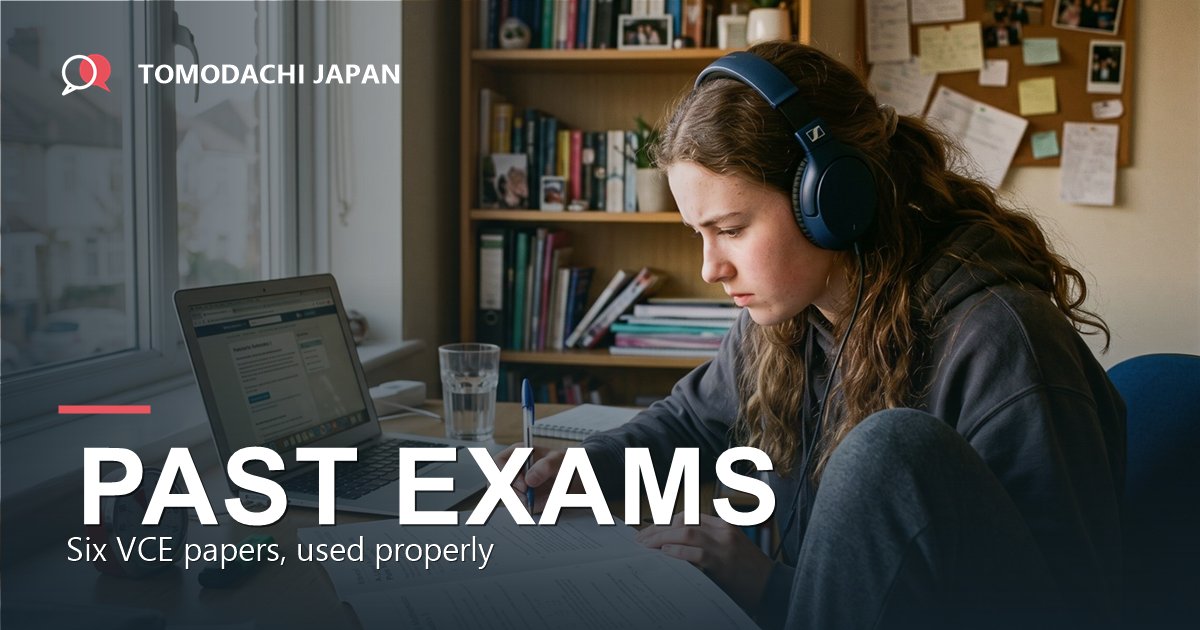
Most students meet VCE Japanese past exams the same way: download last year’s paper in October, do it once, mark it, feel bad. That wastes the single richest free resource VCAA publishes. The archive is far bigger than students realise — it includes the listening audio, plus the examiners’ own reports on what candidates got wrong — and used in the right order it is worth more than any commercial workbook.
What VCAA actually publishes
For VCE Japanese Second Language, each examination year in the archive typically comes as a package, not a single PDF:
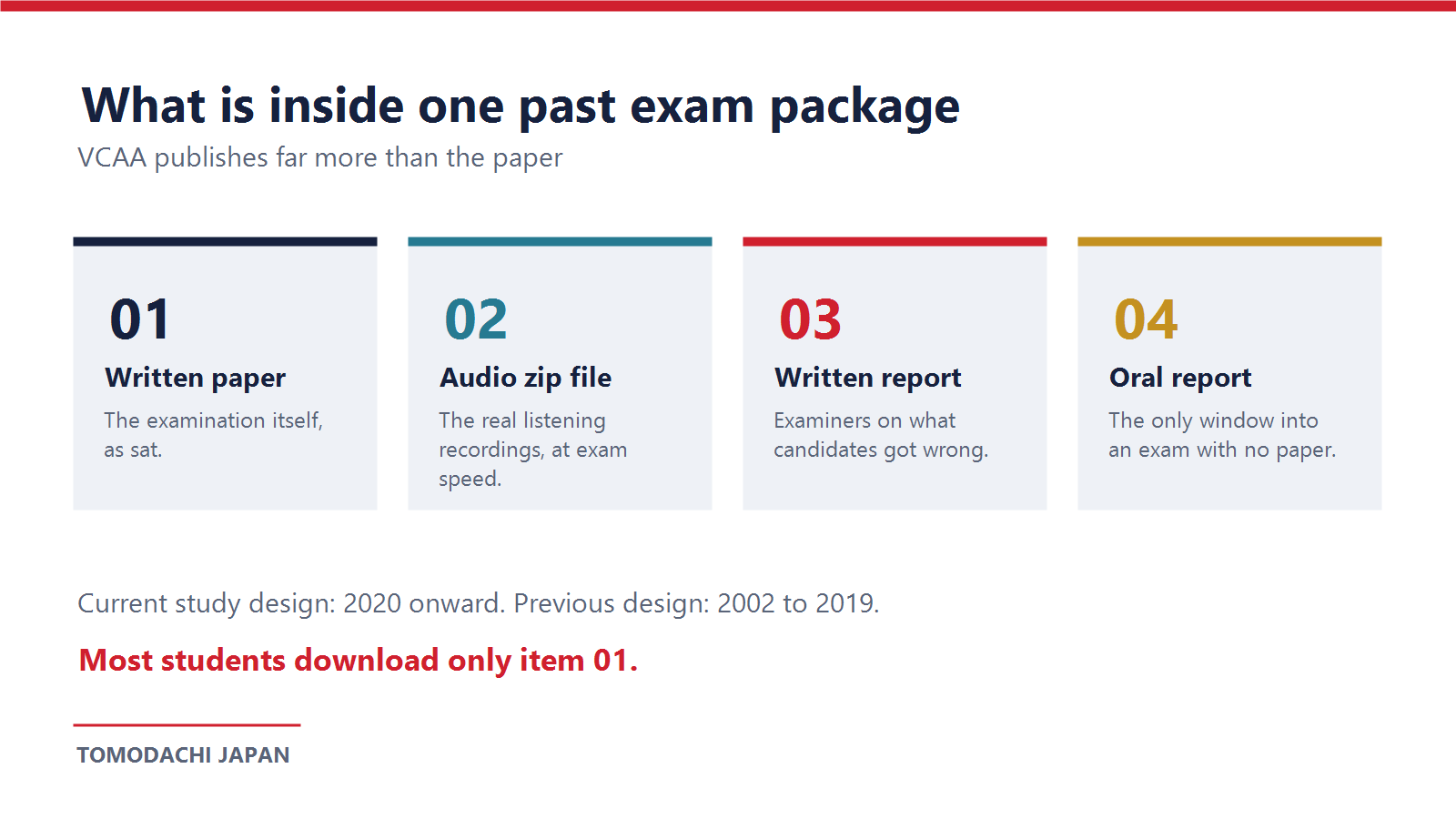
- The written examination paper itself.
- An audio zip file for the listening component — the same recordings candidates heard in the exam room.
- A written external assessment report, in which examiners describe how candidates performed question by question.
- An oral external assessment report, covering the oral examination — which has no paper at all, so this report is the only window into it.
Papers sit in two blocks. Exams from 2020 onward match the current study design. Exams from 2002 to 2019 belong to the previous study design — still usable, with one caution covered below. Alongside the papers, VCAA publishes examination specifications for the oral as well as the written exam, oral assessment criteria with descriptors, a sample written examination, plus videos explaining oral examination procedure.
Those last items matter. The assessment criteria document tells you, in the assessors’ own words, what separates a strong oral from an average one. It is public, free, and most candidates never open it.
Looking for a way to keep Japanese going from abroad?
TOMODACHI JAPAN is an online Japanese school for children growing up outside Japan. They talk with peers their own age in Japan every day, taught by teachers working at Japanese schools, in small classes of 8.
🎁 Register and we’ll email you our School Guide (PDF, in English) straight away. You’ll also be first to hear about tuition, scholarships and opening dates.
Free · takes about 30 seconds
The order to use them in
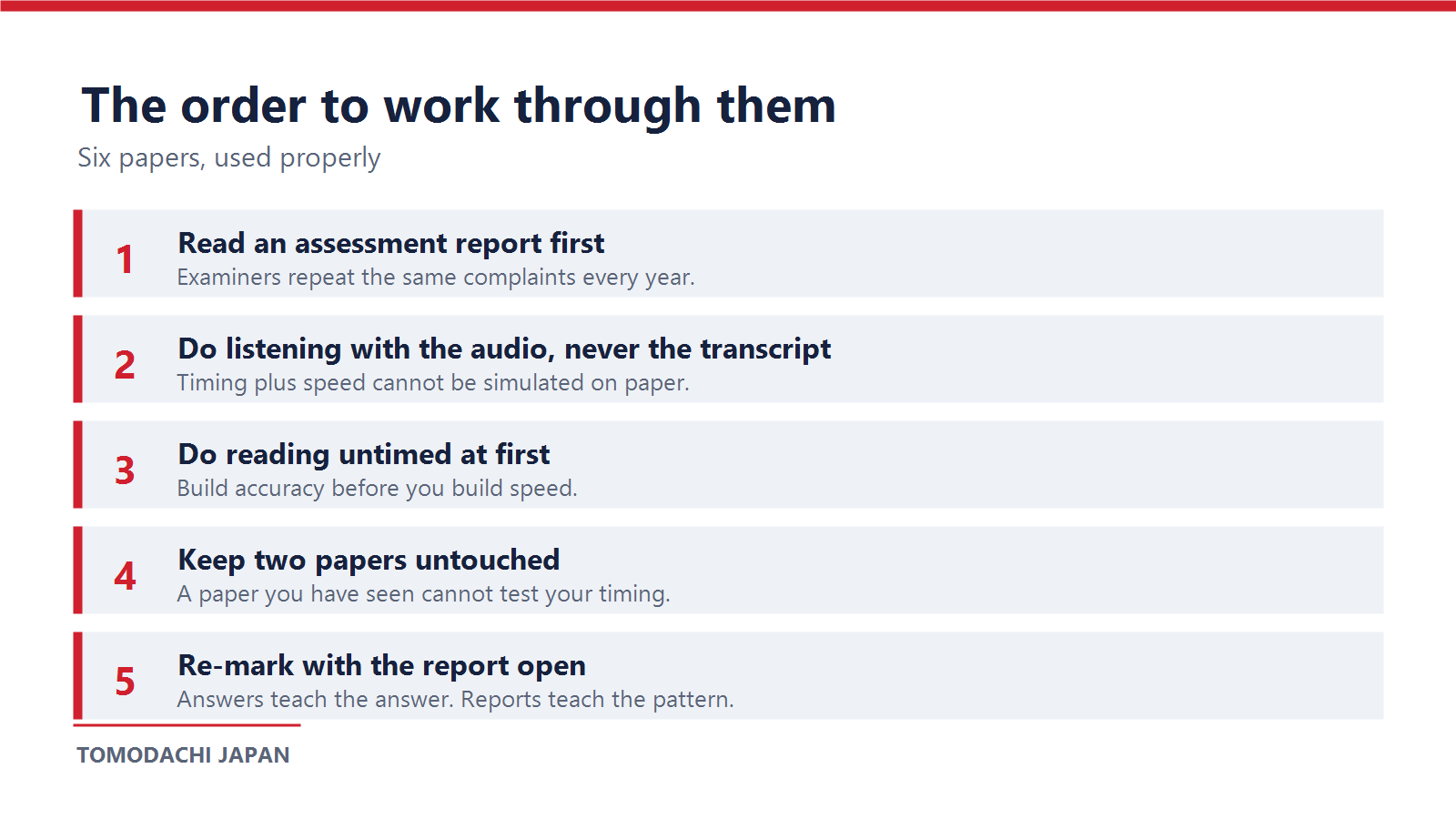
Six current-design papers exist. If you sit one per week from August you will run out before the exam, having learned little. Use this sequence instead.
- Read one assessment report first, before any paper. Examiners repeat the same complaints every year. Knowing them in advance converts a paper from a test into a checklist.
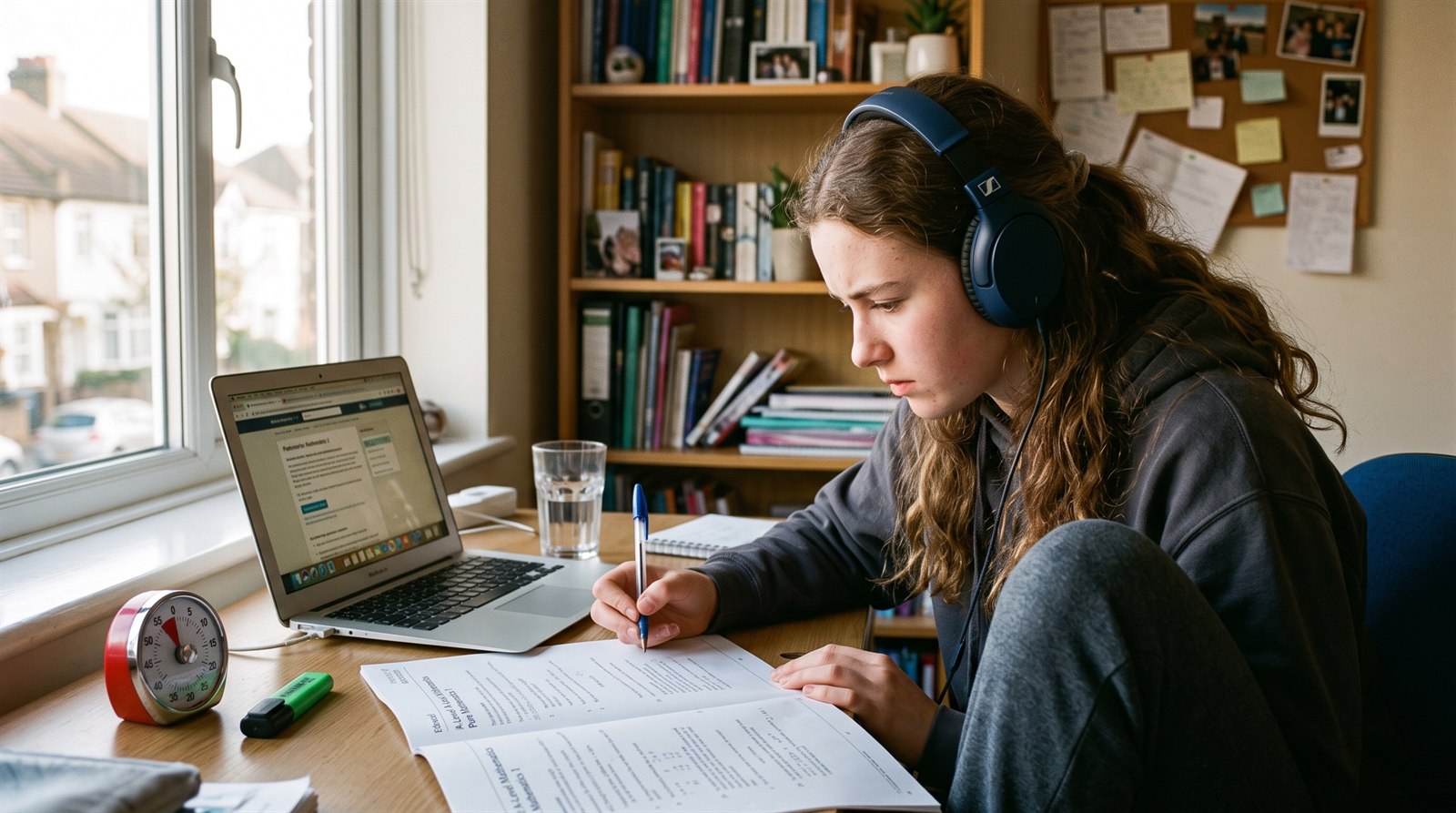
- Do listening sections separately, with the audio. Never read the transcript first. The audio zip is the whole point — timing, speed, plus the single-replay pressure cannot be simulated on paper.
- Do reading sections untimed at first. Reading and responding is where marks quietly disappear. Build accuracy before speed.
- Save two complete papers, untouched, for full timed runs in the final month. A paper you have already seen cannot tell you anything about your timing.
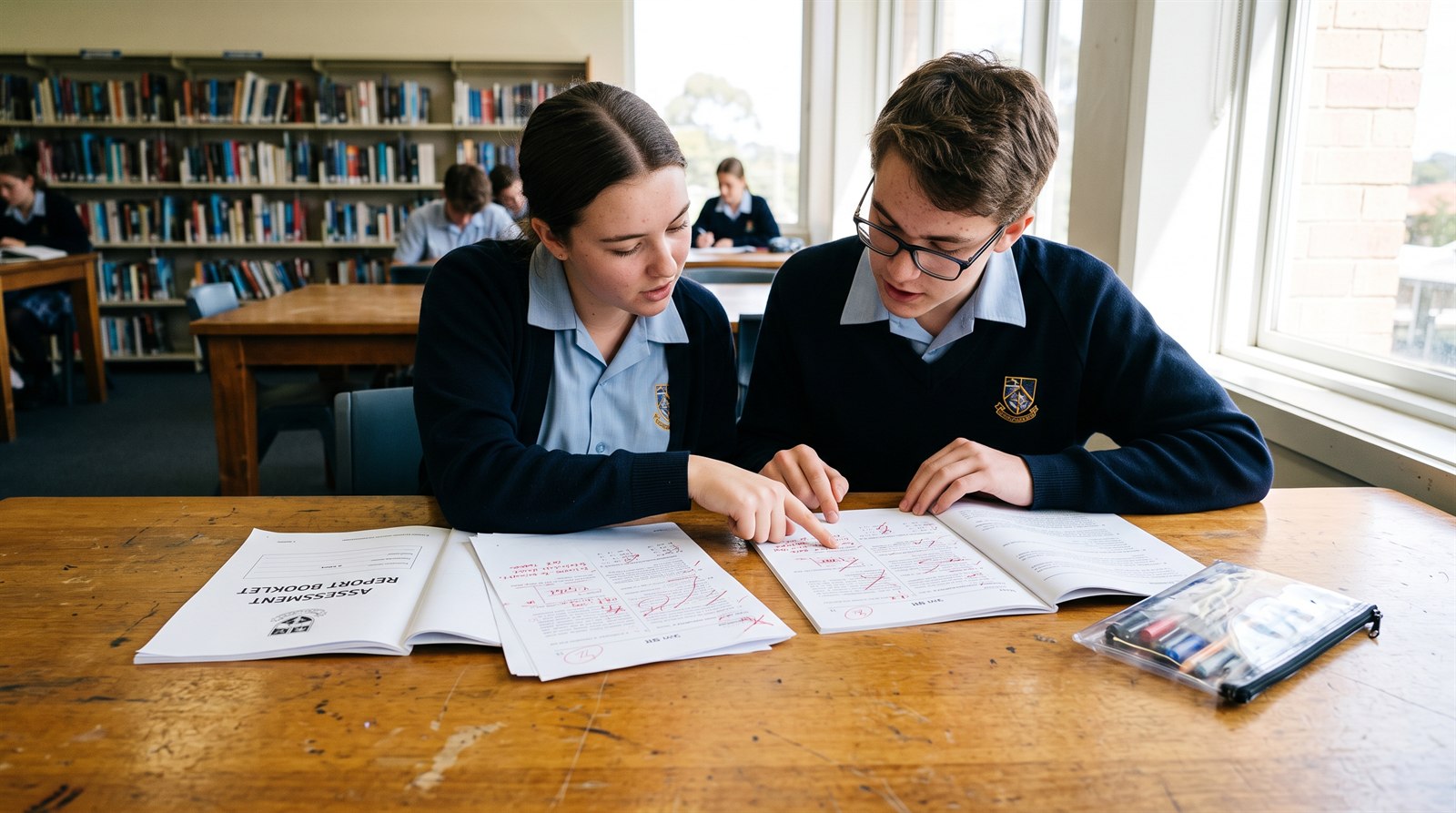
- Re-mark with the report open. Marking against an answer alone teaches you the answer. Marking against the examiners’ commentary teaches you the pattern.
Can you use pre-2020 papers?
Yes, with judgement. The older archive stretches back to 2002, which is a great deal of extra listening plus reading practice. What changed at the study design boundary is structure, not the language itself — so treat old papers as a skills gym, never as a rehearsal. Use them for extra listening passages or reading texts; do not use them to practise exam timing or section strategy, because those may not match the paper you will sit.
The half of the exam past papers cannot rehearse
Here is the structural problem with a paper-only revision plan. In VCE Japanese Second Language, School-assessed Coursework in Unit 3 contributes 25% of the study score, Unit 4 contributes another 25%, so the two examinations together carry the remaining 50% — of which the oral examination is 12.5% of your entire study score.
That 12.5% has no past paper. It is roughly fifteen minutes of live conversation: a general conversation of about seven minutes, then a discussion of your Detailed Study lasting about eight. You cannot download it, cannot mark it, cannot re-read it. The only preparation that transfers is talking — unrehearsed, with people who are not your classroom teacher.
| Preparation method | Helps the written paper | Helps the oral |
|---|---|---|
| Past papers plus assessment reports | Strongly | Barely |
| Vocabulary or kanji apps | Moderately | Barely |
| One-to-one tutoring by the hour | Strongly | Partly — one voice, charged per hour |
| Regular conversation with Japanese speakers your age | Indirectly | Directly |
TOMODACHI JAPAN sits in that bottom row. Classes are small groups led by teachers currently working in Japanese schools, with students in Japan of the same age in the room, so a VCE candidate hears unfamiliar voices, natural speed, plus real follow-up questions on an ordinary weekday — not once a term. Because it is unlimited attendance for one monthly fee, ramping up before October costs nothing extra.
Frequently asked questions
Where do I download VCE Japanese past exams?
From the VCAA site, on the Japanese Second Language examination page. Download from VCAA directly — mirrored copies on tutoring sites often omit the audio zip as well as the assessment reports, which are the most valuable parts.
Is there a past paper for the oral examination?
No. There is an assessment report, published specifications, plus criteria with descriptors, along with procedural videos. Read all of them, then practise by speaking. Our guide to the VCE Japanese oral exam walks through the fifteen minutes part by part.
How many papers should I complete?
Fewer than you think, mined harder than you think. Three papers worked through properly with the reports beats six rushed. Keep two untouched for timed runs.
What about NSW students?
NESA runs a separate archive with its own conventions. See how to use HSC Japanese past papers, plus the HSC and VCE Japanese hub for everything else.
Working through past papers is also the fastest way to find the characters you still cannot read at speed. Our VCE Japanese kanji list sets them out by theme, so you can close those gaps before you sit the next paper.
The 12.5% you cannot download
TOMODACHI JAPAN opens in December 2026. Tell us your exam year — we’ll send opening news, class times for your state, plus trial-session details first.