Maomao never raises her voice, and that is exactly why her lines are gold for learners. The Apothecary Diaries (薬屋のひとりごと, Kusuriya no Hitorigoto) is one of the hottest anime right now, with a new season on air, and its heroine speaks in two completely different voices: flawless, ice-cold palace politeness out loud, and blunt, sarcastic plain Japanese in her head. I teach Japanese, and below are ten Maomao quotes in Japanese — the original Japanese lines with rōmaji, a translation, and the grammar underneath — plus an honest note on which ones a real person could say, and which should stay inside the Rear Palace.
Can-you-use-it legend: ◎ = safe in real conversation · △ = fine in anime, odd in life · ✗ = don’t say this to a person.
Maomao quotes in Japanese
| Japanese | Rōmaji | English | Use it? |
|---|---|---|---|
| 私にとって壬氏さまは壬氏さまですから | Watashi ni totte Jinshi-sama wa Jinshi-sama desu kara | To me, Master Jinshi is simply Master Jinshi | ◎ Swap in any name |
| する、しないではなく、できるできないですから。 | Suru, shinai de wa naku, dekiru dekinai desu kara. | It’s not about whether I will or won’t — it’s whether I can or can’t. | ◎ Great pattern |
| 言いたいことははっきり言ってくれないとわからない。 | Iitai koto wa hakkiri itte kurenai to wakaranai. | If you don’t say clearly what you mean, I can’t understand. | ◎ Add です for adults |
| 何か起こってからでは遅い。 | Nani ka okotte kara de wa osoi. | Once something has happened, it’s too late. | ◎ Useful warning |
| 世の中は無知のふりをしていた方が立ち回りやすい。 | Yo no naka wa muchi no furi o shite ita hō ga tachimawari yasui. | In this world, it’s easier to get by if you play dumb. | △ Inner voice, cynical |
| 世には百、千の花がありますが牡丹と桔梗のどちらが美しいかは決めつけるものではないと思います | Yo ni wa hyaku, sen no hana ga arimasu ga botan to kikyō no dochira ga utsukushii ka wa kimetsukeru mono de wa nai to omoimasu | There are hundreds, thousands of flowers in the world, but I don’t think you should decide whether the peony or the bellflower is more beautiful. | ◎ Polite opinion |
| ごきげんよう。壬氏様。 | Gokigenyō. Jinshi-sama. | Good day, Master Jinshi. | △ Very formal |
| 下賤の者ゆえ、お手を触れないで頂けますか? | Gesen no mono yue, o-te o furenaide itadakemasu ka? | I am of lowly birth, so would you kindly not touch me? | △ Palace keigo |
| 恋が女を美しくするのであれば、それは一体どんな薬になるだろう | Koi ga onna o utsukushiku suru no de areba, sore wa ittai donna kusuri ni naru darō | If love makes a woman beautiful, what kind of medicine would that be? | △ Poetic |
| これ毒です | Kore doku desu | This is poison. | △ Her job, not a game |
Want to go from quoting anime to actually talking with friends in Japan?
TOMODACHI JAPAN is an online Japanese school for children growing up outside Japan. They talk with peers their own age in Japan every day, taught by teachers working at Japanese schools, in small classes of 8.
🎁 Register and we’ll email you our School Guide (PDF, in English) straight away. You’ll also be first to hear about tuition, scholarships and opening dates.
Free · takes about 30 seconds
The grammar underneath each line
私にとって壬氏さまは壬氏さまですから — にとって, さま, and the soft から
This is the line fans quote most from the second season, and it is a beautiful piece of grammar. 〜にとって means “for (someone), from (someone’s) point of view.” It is perfect for opinions and feelings: 私にとって日本語は楽しいです (“For me, Japanese is fun”), 弟にとってゲームは宝物です (“To my little brother, games are treasure”).
The sentence ends in ですから — “because it is so.” Nothing follows the から. Japanese speakers often stop right there and let the listener fill in the rest (“…so don’t worry about it”). It sounds gentle rather than unfinished. Notice too that Maomao repeats the name: “Jinshi is Jinshi.” The X は X です frame is how Japanese says “X is just X, nothing more, nothing less”: 友達は友達です, “a friend is a friend.”
する、しないではなく、できるできない — the ではなく contrast
Maomao says this to explain why a commoner like her has no real choice. The structure is A ではなく B: “not A, but B.” Each side is a pair of opposites with no particle at all — する・しない (do / not do), できる・できない (can / can’t). Putting a verb next to its own negative is a very natural way to say “whether or not”: 行く行かないは自由です, “going or not going is up to you.”
Teacher’s note: できる is the verb students should fall in love with. It turns する (“do”) into “can do,” and it combines with nouns: 料理ができる (“I can cook”), 日本語ができる (“I can speak Japanese”). The ではなく frame also appears in school writing: 量ではなく質です, “it’s quality, not quantity.”
下賤の者ゆえ、お手を触れないで頂けますか — palace politeness, layer by layer
Out loud to Jinshi, Maomao is a model of court manners. Every piece of this request lowers herself or raises him. 下賤の者 (gesen no mono) means “a person of low birth” — a humble word nobody uses today. ゆえ is an old, literary “because,” the stiff cousin of から and ので. お手 adds the honorific お to 手 (“hand”) because it is his hand. And 〜て頂けますか (“could I receive the favour of you doing…”) is one of the most polite request endings Japanese has.
The joke, of course, is that she is politely telling the most beautiful man in the palace to keep his hands off. Here is the same request at four levels of politeness:
| Japanese | Level | Who you’d say it to |
|---|---|---|
| 触らないで | casual | a sibling or close friend |
| 触らないでください | polite | a classmate, a shop clerk |
| 触らないでいただけますか | very polite | a teacher, a stranger |
| お手を触れないで頂けますか | formal keigo | museum signs, royalty in a period drama |
You will actually see お手を触れないでください on signs in Japanese museums and shops, so the top level is not only for palaces. Maomao’s other greeting, ごきげんよう, works the same way: an elegant “good day” that today sounds like a private girls’ school or a period drama. こんにちは is the everyday version.
壬氏様 and 壬氏さま — why 様 is everywhere in the palace
様 (sama) is the respectful big brother of さん. In the Rear Palace it is attached to anyone above you — Jinshi, the consorts, officials — and Maomao never forgets it, even while she is privately calling him a pest. You will see it written both in kanji (壬氏様) and in hiragana (壬氏さま); the hiragana spelling looks a little softer and friendlier on the page, but the sound is identical.
In modern life, 様 lives on in customer service (お客様, “dear customer”), letters (田中様) and a few fixed words like 神様. Calling a classmate 〇〇様 would sound like a joke. With friends your own age, 〇〇さん or 〇〇ちゃん/くん is the normal choice.
無知のふりをしていた方が — Maomao’s inner voice in plain form
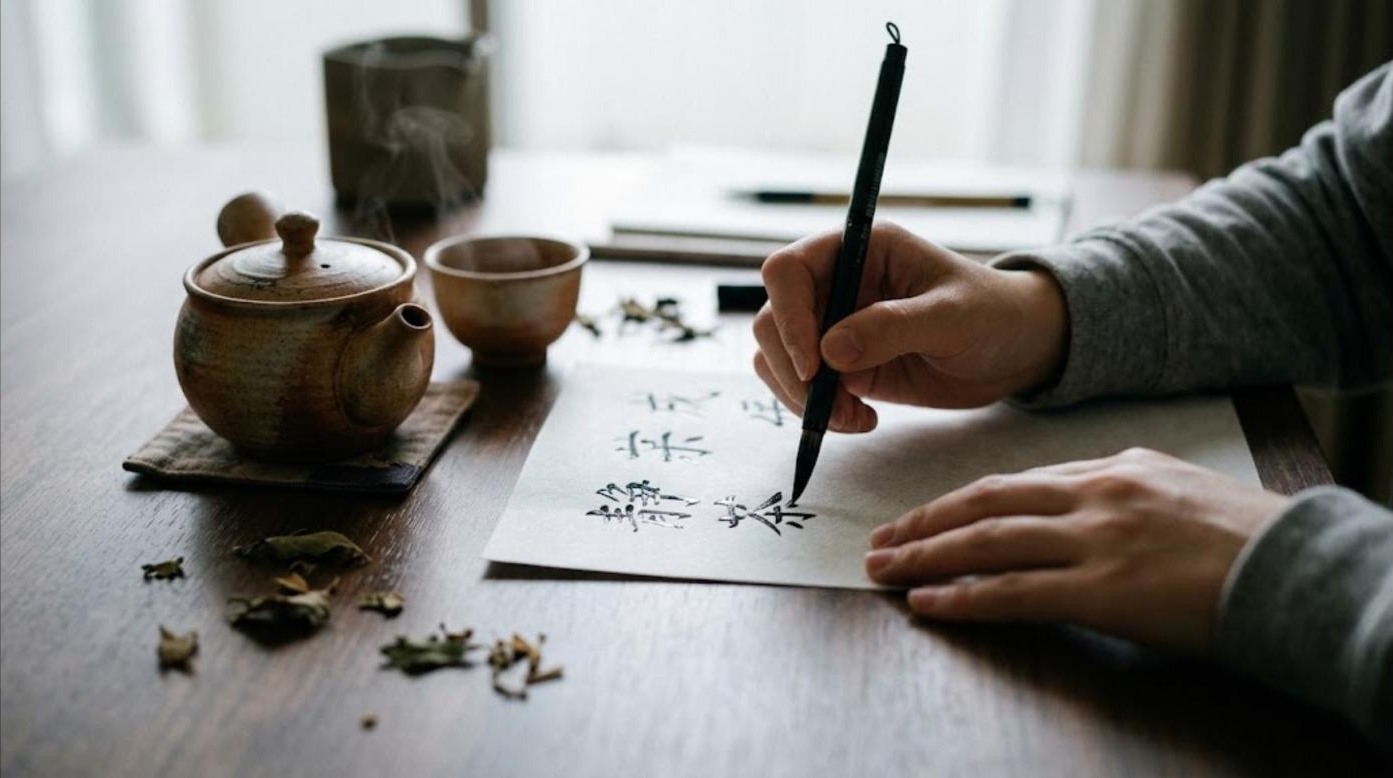
Now listen to the voice in her head. 世の中は無知のふりをしていた方が立ち回りやすい has no です, no ます — it is plain form, because nobody hears it but Maomao (and us). Two patterns are worth stealing. 〜ふりをする means “to pretend to”: 寝たふりをする (“pretend to be asleep”), 知らないふりをする (“pretend not to know”). 〜方が + adjective means “it is better/easier to…”: 早く寝た方がいい (“you’d better go to bed early”).
The ending 〜やすい (“easy to”) attaches to a verb stem: 立ち回る → 立ち回りやすい, “easy to manoeuvre.” The everyday version every kid can use: この本は読みやすい, “this book is easy to read.” Its opposite is 〜にくい: 読みにくい, “hard to read.”
言ってくれないとわからない — てくれる plus と
Here Maomao, tired of Jinshi hinting, wants him to just say it. 言ってくれる means “(someone) says it for me” — くれる shows the action comes toward the speaker as a favour. Make it negative and add と (“if”): 言ってくれないと, “if you don’t tell me.” The result comes last: わからない, “I won’t understand.”
This is a sentence you can really use. To a friend: 言ってくれないとわからないよ. To a teacher, polish it: 言っていただかないとわかりません. The same 〜ないと frame gives you 急がないと! (“we’ve got to hurry!”).
これ毒です — a simple sentence, and an important safety note
Grammatically, これ毒です is as simple as Japanese gets: これ (“this”) + noun + です, with the は dropped as people do in speech. これ辛いです (“this is spicy”), これ私のです (“this is mine”) — the pattern is endlessly useful.
Please note: Maomao is a trained apothecary and an official food taster in a fictional palace. Her love of poisons and medicines is a story device, not something to copy. Never taste, sniff or test unknown plants, mushrooms, medicines or chemicals to “be like Maomao” — ask an adult or call for help. That is the real lesson of 何か起こってからでは遅い: once something has happened, it is too late.
Is Maomao good for learning Japanese?
Surprisingly good — better than most action heroes. Maomao uses 私 for “I,” speaks polite です/ます to almost everyone, and only drops into rough, sarcastic plain form inside her own head. That split is exactly the split real Japanese speakers make between public speech and private thought. The catch is that her polite speech is palace polite: words like 下賤, ゆえ and ごきげんよう belong to period dramas, and you would sound like a time traveller using them at school.
The useful habit is to keep the pattern and change the clothes: 下賤の者ゆえ becomes すみませんが, ごきげんよう becomes こんにちは, and 壬氏様 becomes 〇〇さん. Reading Maomao dialogue in Japanese is a free masterclass in reading the room — and the fastest way to learn which version fits which person is to try them on people your own age. A real friend’s face tells you in one second what a quote list never will.
Keep going with the same method: if you like calm, understated heroines, our Frieren quotes in Japanese guide is the closest match to Maomao’s quiet voice, and Himmel quotes in Japanese shows a warm, open speaker for contrast. Every 様, さん and くん in this article is explained in Japanese honorifics in anime, and watching anime with Japanese subtitles is the best way to catch Maomao’s inner-voice lines on screen. If you are starting from zero, our guide to learning Japanese with anime sets out a weekly routine, and our tuition page explains how live classes with Japanese friends work.
FAQ
What is Maomao’s most famous quote in Japanese?
私にとって壬氏さまは壬氏さまですから (Watashi ni totte Jinshi-sama wa Jinshi-sama desu kara) — “To me, Master Jinshi is simply Master Jinshi.” She says it after Jinshi apologises to her in the second season, and fans treat it as the moment her true feelings show through the deadpan.
What does “Kusuriya no Hitorigoto” mean?
薬屋 (kusuriya) is an apothecary or pharmacist, and ひとりごと (独り言) means “talking to yourself.” So the title is literally “The Apothecary’s Mutterings” — a nod to Maomao’s sharp inner monologue, which is half the fun of the show.
Why does Maomao call him 壬氏様?
Jinshi is far above her in the palace, so 様 (sama), the most respectful everyday name ending, is required. Maomao’s comedy comes from the gap: her mouth says 壬氏様 with perfect manners, while her inner voice is anything but respectful.
Is Maomao’s Japanese polite?
Out loud, very — often more polite than modern Japanese needs. In her head, she uses short plain form and the occasional rude word. Learners can safely copy her です/ます sentences after swapping old-fashioned words for modern ones.
My child loves The Apothecary Diaries. How do they practise with real Japanese speakers?
Tomodachi Japan is an online Japanese school for children living outside Japan, taught by Japanese school teachers in small classes of eight, with classmates their own age in Japan. Parents don’t need to speak Japanese — we guide you in English. The free school guide below has the timetable, tuition and scholarship details.