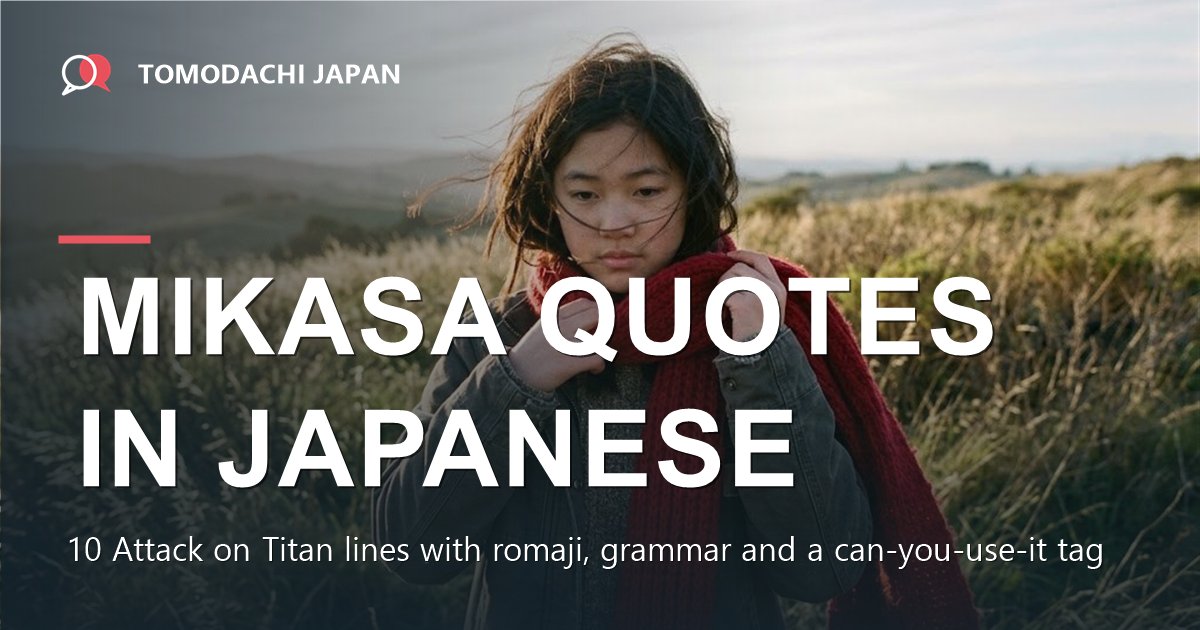
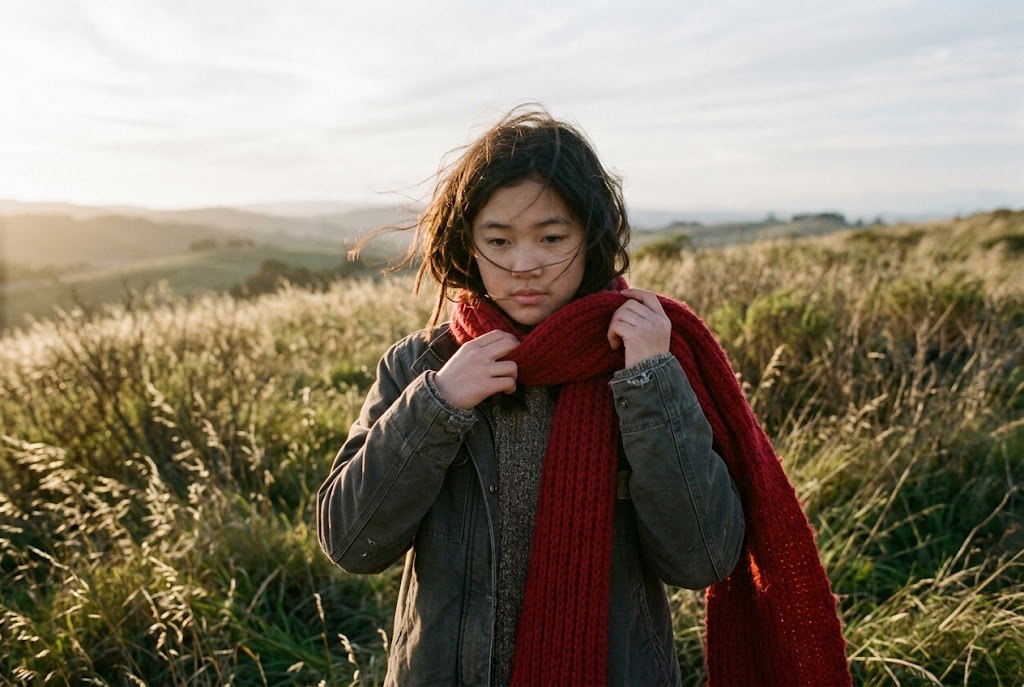
Mikasa Ackerman says far less than Eren, and almost every sentence she does say is either a promise, a thank-you or a warning. That makes her lines perfect for learners: short, calm and built from grammar you will use every week. I teach Japanese, and below are ten of the most-quoted Mikasa quotes in Japanese from Attack on Titan (進撃の巨人), in the original Japanese, with rōmaji, a translation and the grammar underneath — plus an honest note on which lines a real person could say, and which belong only on the battlefield.
Can-you-use-it legend: ◎ = safe in real conversation · △ = fine in anime, odd in life · ✗ = don’t say this to a person.
Mikasa quotes in Japanese
| Japanese | Rōmaji | English | Use it? |
|---|---|---|---|
| この世界は残酷だ…そして…とても美しい | Kono sekai wa zankoku da… soshite… totemo utsukushii | This world is cruel… and yet… so very beautiful | △ Poetic |
| 仕方無いでしょ?世界は残酷なんだから | Shikata nai desho? Sekai wa zankoku na n da kara | What else can we do? The world is cruel, after all | △ Heavy |
| 私にマフラーを巻いてくれてありがとう | Watashi ni mafurā o maite kurete arigatō | Thank you for wrapping this scarf around me | ◎ Great pattern |
| でも…勝てば生きる、戦わなければ勝てない | Demo… kateba ikiru, tatakawanakereba katenai | But… if we win, we live. If we don’t fight, we can’t win | △ Coaching only |
| 私は、強い。あなた達より、強い | Watashi wa, tsuyoi. Anata-tachi yori, tsuyoi | I am strong. Stronger than all of you | △ Sounds boastful |
| どうか、死なないで | Dōka, shinanaide | Please, don’t die | △ Too dramatic |
| 私はミカサ。あなたの…家族! | Watashi wa Mikasa. Anata no… kazoku! | I’m Mikasa. Your… family! | ◎ Self-intro pattern |
| じゃあ帰ろう、私達の家に | Jā kaerō, watashitachi no ie ni | So let’s go home, to our house | ◎ Everyday |
| いってらっしゃい…エレン | Itterasshai… Eren | Take care on your way… Eren | ◎ Daily greeting |
| あのチビは調子に乗りすぎた | Ano chibi wa chōshi ni nori sugita | That shorty got way too full of himself | ✗ Rude |
Want to go from quoting anime to actually talking with friends in Japan?
TOMODACHI JAPAN is an online Japanese school for children growing up outside Japan. They talk with peers their own age in Japan every day, taught by teachers working at Japanese schools, in small classes of 8.
🎁 Register and we’ll email you our School Guide (PDF, in English) straight away. You’ll also be first to hear about tuition, scholarships and opening dates.
Free · takes about 30 seconds
The grammar underneath each line
この世界は残酷だ…そして…とても美しい — two adjective types in one sentence
This is the line most fans know, and it is a tidy lesson in the two kinds of Japanese adjective. 残酷 (zankoku, “cruel”) is a na-adjective: it needs だ to finish a sentence, so 残酷だ. 美しい (utsukushii, “beautiful”) is an i-adjective: it already ends in い and stands on its own, so no だ is added. Students often write 美しいだ by mistake — Mikasa shows you the correct version.
そして means “and also” or “and next.” It links whole sentences, not nouns. You can borrow the shape for anything with two sides: 宿題は大変だ。そして、楽しい (“Homework is tough. And it’s fun”). Mikasa thinks this line to herself; spoken aloud to a friend it would sound like poetry, which is why it gets △.
仕方無いでしょ?世界は残酷なんだから — でしょ and the reason-at-the-end trick
仕方ない (shikata nai) literally means “there is no way of doing it” — in other words, “it can’t be helped.” It is one of the most common phrases in daily Japanese: 雨だから仕方ないね, “it’s raining, so nothing we can do.” Mikasa writes it with the kanji 無い, but most people type ない in hiragana.
でしょ is a casual form of でしょう, said with rising intonation to mean “right?” or “isn’t it obvious?” Next comes the reason, placed after the main point: 残酷なんだから, “because, you know, it’s cruel.” Japanese speakers often add the reason as an afterthought like this. Kids do it all the time: もう寝るよ、明日早いんだから (“I’m going to bed — I’ve got an early start tomorrow”).
マフラーを巻いてくれてありがとう — the most useful line Mikasa ever said
In her farewell speech to Eren, Mikasa thanks him three times, and every thank-you uses the same frame: verb in て form + くれて + ありがとう. 巻く (“to wrap”) → 巻いて → 巻いてくれて ありがとう: “thank you for wrapping (it) for me.” The verb くれる tells the listener that the kindness travelled toward the speaker. Here is how it sits next to its two cousins:
| Pattern | Direction | Example |
|---|---|---|
| 〜てくれる | someone does it for me | 友達が手伝ってくれた — my friend helped me |
| 〜てあげる | I do it for someone | 弟に本を読んであげた — I read a book to my little brother |
| 〜てもらう | I receive someone’s action | 先生に教えてもらった — I was taught by the teacher |
| 〜てくれてありがとう | thanking someone for it | 来てくれてありがとう — thanks for coming |
Teacher’s note: this is the single best pattern on this page for real life. 教えてくれてありがとう (“thanks for teaching me”), 待ってくれてありがとう (“thanks for waiting”) — a child who learns this one frame can thank anyone for anything. With a teacher or an adult, end with ございます: 教えてくださってありがとうございます.
私は、強い。あなた達より、強い — comparing with より
Mikasa says this to shake her panicking classmates into action. The grammar is the plain comparison: A は B より + adjective, “A is more ___ than B.” There is no separate word for “more” or “-er”; より (“than”) does all the work. 達 (-tachi) after あなた makes it plural: “all of you.”
The frame is completely everyday: 夏は冬より暑い (“summer is hotter than winter”), 姉は私より背が高い (“my sister is taller than me”). What you should not copy is the content — announcing that you are stronger than everyone sounds boastful in any language. In the same scene she adds でも…勝てば生きる、戦わなければ勝てない, echoing Eren’s childhood words to her; the ば conditional there is the same “general rule” form we unpack in the Eren article.
どうか、死なないで — asking someone NOT to do something
死なないで is the negative request: take the ない form of a verb (死なない, “not die”) and add で. The result is a soft “please don’t.” どうか in front makes it a heartfelt plea. The pattern itself is extremely common and gentle: 忘れないで (“don’t forget”), 心配しないで (“don’t worry”), 泣かないで (“don’t cry”). To a teacher, add ください: 心配しないでください.
いってらっしゃい and 帰ろう — the language of home
Mikasa’s gentlest lines are ones every Japanese family says daily. いってらっしゃい is the fixed phrase you say to someone leaving the house, and the person leaving answers いってきます (“I’m off”). Coming back, they say ただいま and the family answers おかえり. Fans know いってらっしゃい…エレン is so moving precisely because it is such an ordinary, homey phrase.
じゃあ帰ろう、私達の家に uses the volitional form: 帰る → 帰ろう, “let’s go home.” Any verb works the same way: 行こう (let’s go), 食べよう (let’s eat), 一緒に遊ぼう (let’s play together). Notice also the word sequence: the destination 私達の家に comes after the verb, tacked on for feeling. In a textbook you would write 私達の家に帰ろう; in speech, Mikasa’s version is perfectly natural.
あのチビは調子に乗りすぎた — 〜すぎる and an idiom about getting carried away
Mikasa says this about Captain Levi after he roughs up Eren. チビ is a blunt word for a short person — calling anyone that to their face is rude, so this line gets ✗. The useful parts are the idiom and the ending. 調子に乗る (chōshi ni noru, literally “ride the rhythm”) means “to get carried away” or “get cocky.” Next, 〜すぎる, attached to a verb stem, means “too much”: 乗りすぎた, “went too far.”
〜すぎる is one of the handiest endings in Japanese: 食べすぎた (“I ate too much”), ゲームをしすぎた (“I played too many games”), and with adjectives, 難しすぎる (“way too hard”). If you want a polite way to say someone overdid it, try ちょっと調子に乗っちゃった, “I got a bit carried away” — said about yourself, it is charming rather than rude.
Is Mikasa good for learning Japanese?
Honestly, she is one of the better models in the series. Mikasa uses 私 for “I” and あなた for “you,” which is neutral and safe for every learner, boy or girl. Her sentences are short and grammatically clean, and lines like 〜てくれてありがとう, いってらっしゃい and 帰ろう work unchanged in a real home. The catch is the topic: much of her Mikasa dialogue in Japanese is about death, revenge and protecting Eren, so a few lines (the cruel world, the threats in battle) are heavy for daily use, and あのチビ is plainly rude.
The habit to build is to keep the pattern and change the clothes: 死なないで becomes 忘れないで, あなた達より強い becomes 去年より上手になった (“I got better than last year”), 調子に乗りすぎた becomes 食べすぎた. The fastest way to learn which version fits which person is to try them on people your own age — a real friend’s smile tells you in one second what a quote list never will.
Keep going with the same method: our Attack on Titan quotes in Japanese guide explains what 進撃の巨人 actually means, and Eren quotes in Japanese shows the loud, rough voice that Mikasa spends the whole series answering. For the man she calls あのチビ, read Levi quotes in Japanese — flat, short and never shouted. If you are starting from zero, our guide to learning Japanese with anime sets out a weekly routine, and our tuition page explains how live classes with Japanese friends work.
FAQ
What is Mikasa’s most famous quote in Japanese?
この世界は残酷だ…そして…とても美しい (Kono sekai wa zankoku da… soshite… totemo utsukushii) — “This world is cruel… and yet so very beautiful.” She thinks it in the Battle of Trost, believing Eren is dead. Close behind is her farewell thank-you, 私にマフラーを巻いてくれてありがとう.
How do you say “thank you for the scarf” like Mikasa?
Mikasa’s version is マフラーを巻いてくれてありがとう, “thank you for wrapping the scarf (around me).” If someone simply gives you a scarf, say マフラーをくれてありがとう. To an adult, add ございます at the end.
What does “itterasshai” mean?
いってらっしゃい (itterasshai) is what you say to someone leaving home — roughly “see you, take care.” The person leaving replies いってきます. It is one of the first phrases children in Japan learn, and you can use it every single day.
Does Mikasa use 私 or something else for “I”?
She uses 私 (watashi), the neutral, polite-friendly “I” that works anywhere. That makes her lines much easier to borrow than Eren’s オレ or Levi’s blunt speech.
My child loves Attack on Titan. How do they practise with real Japanese speakers?
Tomodachi Japan is an online Japanese school for children living outside Japan, taught by Japanese school teachers in small classes of eight, with classmates their own age in Japan. Parents don’t need to speak Japanese — we guide you in English. The free school guide below has the timetable, tuition and scholarship details.