We don’t teach Japanese.
We help kids make friends in it.
Children growing up outside Japan keep their Japanese alive by becoming real friends with kids their own age in Japan. Here is what TOMODACHI JAPAN does, why we do it, and how — told honestly.
A school where kids become friends in Japanese.
No lecturing, no pressure, no tests. Every day, children talk and laugh with peers their own age in Japan and learn Japanese by making friends——an online Japanese school for children, run by NIJIN Inc.
Who it’s for
Ages 5 to 18. Grouped by speaking level, not by age
Format
Online, 8 kids per class, join as often as you like
Where from
Anywhere in the world. If the time zone works, you’re in
Opening & operator
Pilot opens December 2026 / run by NIJIN Inc.
Zero Japanese is perfectly fine — even if your child can’t read hiragana yet. Everyone is placed with classmates at a similar level, so nobody gets left behind and nobody gets bored.
Two worlds, one classroom.
Students enrolled to date at
NIJIN Academy, our sister school in Japan
Source: NIJIN Academy, cumulative enrollment
People learning Japanese outside Japan
(2024 — an all-time high)
Source: Japan Foundation, Survey on Japanese-Language Education Abroad
Four million people around the world want to speak Japanese. Meanwhile, a thousand children in Japan already meet every day in our metaverse campus, curious about the world beyond their classroom. Connect the two, and each becomes the other’s answer. What’s missing isn’t another grammar lesson — it’s a friend.
We don’t lecture. We don’t test. We talk, every single day.
We don’t lecture
Not “this is the particle wo,” but “what made you happy today?” The conversation itself is the textbook.
We don’t test
Not for a grade — but so your child has a place in Japan, friends in Japan, and a reason to love Japan.
We talk, every day
You can get it wrong and laugh about it, so kids keep coming back. NIJIN’s culture of warmth and dialogue, carried straight into Japanese.
We don’t measure growth in test scores. “How many friends did you make?”──that’s our report card.
Not a Saturday school. Not an app. Something else.
| Side by side | TOMODACHI JAPAN | Japanese Saturday school | 1-on-1 online (tutor / conversation) | Self-study apps & videos |
|---|---|---|---|---|
| Friends their own age in Japan | ◎ Made every day | △ Local families only | ✕ The teacher only | ✕ On their own |
| Easy to keep going | ◎ They stay because it’s fun | △ Driving, and Saturdays gone | △ Booking required | ✕ Easy to give up |
| Location & commute | ◎ Anywhere on earth, zero commute | ✕ Only if you live near one | ◎ Anywhere | ◎ Anywhere |
| How they learn | Dialogue and inquiry, 8 per class | Whole-class lessons | One-on-one | Videos and drills |
| Somewhere to be after class | ◎ An after-school space too | △ Class time only | ✕ None | ✕ None |
*A comparison of general tendencies. No option is right or wrong — only the one that fits your family. Plenty of our families also attend a Saturday school, and we’re all for it.
Not a boast. The evidence.
The bridge is the children of our sister school, NIJIN Academy (1,000+ students enrolled to date). Kids who learn every day in its metaverse campus welcome children growing up overseas, and children with Japanese roots, as friends of their own. If NIJIN Academy is a place to belong for children who struggle to attend school, TOMODACHI JAPAN is a place to belong for children on the other side of a language barrier, and for children who love Japan.
What a child needs isn’t a lesson. It’s a friend.
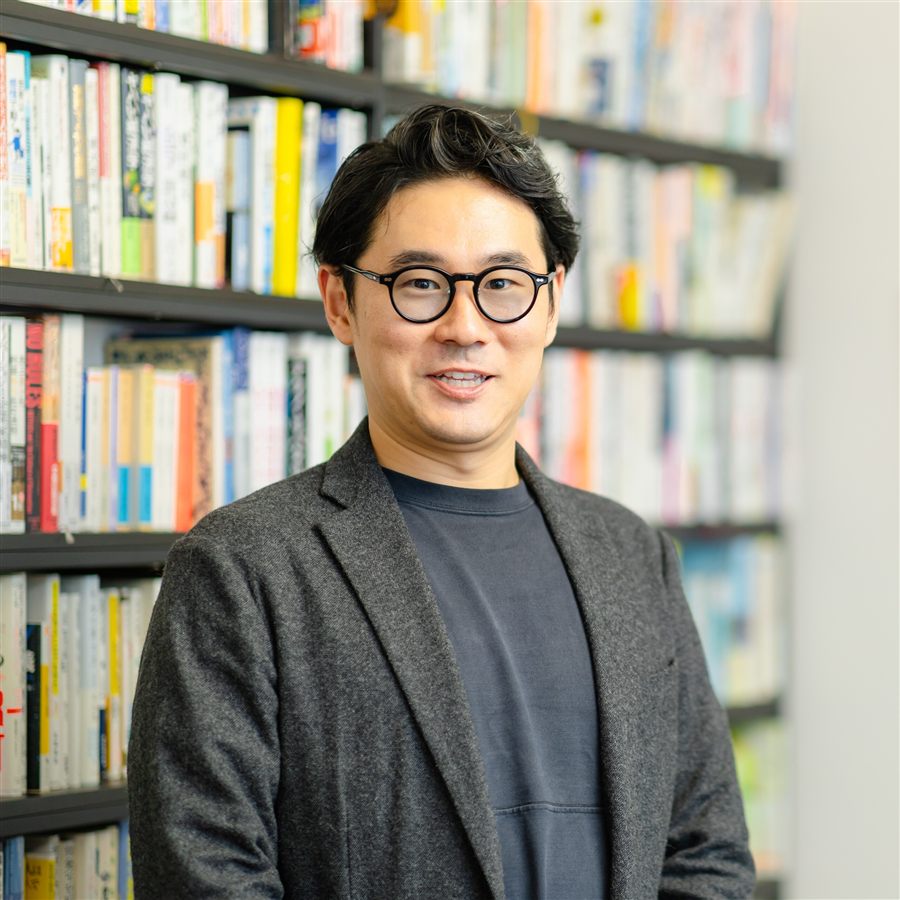
I studied education at Chiba University, volunteered in Guatemala with JICA, and then taught for seven years in Japanese public elementary schools. In every one of those places I found the same thing to be true: there is no such thing as a child who isn’t bright. When a child goes quiet, the child is never the problem — the system around them is. So in 2022 I left the classroom and founded NIJIN on one principle: never blame the person, build a better system.
Today, four million people are learning Japanese outside Japan, and countless children with Japanese roots are quietly losing the language at home. We don’t lecture. We don’t push. We don’t test. Children talk every day, laugh every day, and one morning they realise they love this language — and that friends are waiting for them on the other side of the world. We are building that school together with the children of Japan.
Tatsuro Hoshino Founder & CEO, NIJIN Inc.
Honestly, here’s who we’re for.
😊 You’ll probably love us if…
- ✓The moment your child truly connects in Japanese matters more to you than a score
- ✓You want lasting friendships with kids their own age in Japan
- ✓You want your child to keep going because it’s fun, not because you’re pushing
- ✓You want learning that survives a transfer, a move, or a return to Japan
🤔 Another option may suit you better if…
- –Passing a specific JLPT level fast is your single priority
- –You want your child graded and ranked strictly, every session
- –You’re looking only for one-on-one private tutoring
*Real Japanese ability absolutely grows here. But if “Japanese for the test” is the only goal, another option may serve you better.
First time here? Start with these.
What if my child speaks no Japanese at all?
That’s completely fine. Zero is a normal place to start, even if hiragana is still a mystery. Classes are grouped by speaking level, so nobody gets left behind.
Can we join from any country?
From anywhere in the world, as long as the time zone works. Australia and New Zealand are almost on Japan time, so classes land right after school. In the Americas, Saturday morning in Japan is Friday evening where you are. Tell us where you live and we’ll find a slot together.
We already attend a Japanese Saturday school. Can we do both?
Yes, and we’d encourage it. Many families join only after school or at weekends, adding time with friends in Japan without a single car ride.
What ages do you accept?
Mostly from around age 5 through the final year of high school. Speaking level matters more to us than age, so please just ask.
Start with the school guide.
Our pilot opens in December 2026. Sign up and you’ll be first to receive the school guide, opening news, and invitations to our trial sessions. Tuition, scholarships and the opening schedule are all covered in the guide.