Shikamaru Nara is the laziest genius in Naruto, and his favourite word is the most useful complaint in the Japanese language: めんどくせー, “what a drag.” I teach Japanese, and Shikamaru is my favourite character for one specific lesson — how real spoken Japanese bends its sounds. Below are ten Shikamaru quotes in Japanese, in the original Japanese with rōmaji, a translation, and the grammar underneath — plus an honest note on which lines a real person could say, and which should stay on the shogi board.
Can-you-use-it legend: ◎ = safe in real conversation · △ = fine in anime, odd in life · ✗ = don’t say this to a person.
Shikamaru quotes in Japanese
| Japanese | Rōmaji | English | Use it? |
|---|---|---|---|
| めんどくせぇ~ | Mendokusē~ | What a drag~ | △ Friends only |
| めんどくせーけどやるっきゃねー!! | Mendokusē kedo yarukkya nē!! | It’s a drag, but there’s nothing for it but to do it!! | ◎ Casual, very handy |
| まいった… ギブアップ! | Maitta… gibu appu! | I’m beaten… I give up! | ◎ Great in games |
| あーあ…雲はいいよなぁ…自由で…。 | Āa… kumo wa ii yo nā… jiyū de… | Ahh… clouds have it good… they’re so free… | ◎ Sighing to yourself |
| 次こそは…完ぺきにこなして見せます…! | Tsugi koso wa… kanpeki ni konashite misemasu…! | Next time… I’ll get it done perfectly…! | ◎ Polite already |
| 攻撃ってのは一手目が騙しのフェイク 二手目を当てるのが基本なんだよ | Kōgeki tte no wa hitoteme ga damashi no feiku, futateme o ateru no ga kihon na n da yo | In an attack, the first move is a fake to trick them. The basic idea is to land the second one. | △ Sports & games |
| カッコイイ大人にならねーと! | Kakkoii otona ni naranē to! | I’ve got to become a cool grown-up! | ◎ Swap ならねー for ならない |
| 託される側から託す側にならねーとよ。めんどくせーけどそうも言ってらんねェだろ。オレたちだっていつまでもガキのままじゃいられねェ。 | Takusareru gawa kara takusu gawa ni naranē to yo. Mendokusē kedo sō mo itte rannē daro. Oretachi datte itsu made mo gaki no mama ja irarenē. | We have to go from being the ones trusted with things to the ones who pass them on. It’s a drag, but we can’t keep saying that. We can’t stay kids forever. | △ Rough but wise |
| このまま逃げて、筋を通さねェまま生きていくような…そういうめんどくせー生き方もしたくねーんすよ。 | Kono mama nigete, suji o tōsanē mama ikite iku yō na… sō iu mendokusē ikikata mo shitakunē n su yo. | Running away now and living without doing the right thing… I don’t want that kind of troublesome life either. | △ Half-polite すよ |
| 木の葉をになうこれからの子供達…それが“玉”さ。 | Konoha o ninau korekara no kodomotachi… sore ga “gyoku” sa. | The children who will carry the Leaf Village in the future… they are the “king.” | △ Beautiful, but specific |
Want to go from quoting anime to actually talking with friends in Japan?
TOMODACHI JAPAN is an online Japanese school for children growing up outside Japan. They talk with peers their own age in Japan every day, taught by teachers working at Japanese schools, in small classes of 8.
🎁 Register and we’ll email you our School Guide (PDF, in English) straight away. You’ll also be first to hear about tuition, scholarships and opening dates.
Free · takes about 30 seconds
The grammar underneath each line
めんどくせぇ~ — how めんどくさい turns into めんどくせー
The dictionary word is 面倒くさい (mendōkusai): “troublesome, a hassle, too much effort.” In everyday speech the long ō is already shortened to めんどくさい. Shikamaru goes one step further and squashes the ending: the vowels a + i at the end of くさい melt into one long ē, giving めんどくせー (written めんどくせぇ or めんどくせえ in some panels).
This ai → ē sound change is the single most important key to rough, casual Japanese — mostly heard from boys and men in anime. Once you can hear it, half of Shikamaru’s lines decode themselves:
| Shikamaru says | Standard form | Sound change |
|---|---|---|
| めんどくせー | めんどくさい | sai → sē (ai → ē) |
| ならねー | ならない | nai → nē |
| したくねー | したくない | nai → nē |
| 言ってらんねェ | 言っていられない | い dropped, られ → らん, nai → nē |
| やるっきゃねー | やるしかない | しか → っきゃ, nai → nē |
| したくねーんすよ | したくないんですよ | です → す |
Teacher’s note: understand these forms, but speak the standard ones. めんどくさい is perfectly fine among friends (宿題、めんどくさい! — “homework is such a pain!”). めんどくせー sounds like a teenage boy slumped on a desk. Neither belongs in front of a teacher, who will hear “I can’t be bothered.”
やるっきゃねー — the 〜しかない pattern
This is the most useful Shikamaru line on the list, and it shows his whole personality in one breath: he complains, and next he gets to work. The grammar is dictionary form + しかない, “there is nothing but to…”: やるしかない = “I have no choice but to do it.” しか always pairs with a negative and means “only.”
In fast speech やるしかない becomes やるっきゃない, and with the ai → ē change, やるっきゃねー. A student can use the standard version every day: 明日テストだから、勉強するしかない (“the test is tomorrow, so I’ve just got to study”), 雨だけど、歩くしかないね (“it’s raining, but we’ll have to walk”). The 〜けど in めんどくせーけど is “but” — the casual cousin of けれども.
まいった… ギブアップ! — the polite way to lose
In the Chunin Exams, Shikamaru traps Temari with his shadow — and still surrenders, because he is out of chakra. まいった is the past form of 参る, and in this sense it means “I’m beaten” or “you got me.” It is the traditional word for conceding in martial arts and in shogi.
Kids use it all the time without any fighting: losing a card game, failing a riddle, or facing a hard maths problem — まいったなあ, “well, this has me stumped.” ギブアップ is simply English “give up” written in katakana, and Japanese children say it just like that.
雲はいいよなぁ — よなぁ for talking to yourself
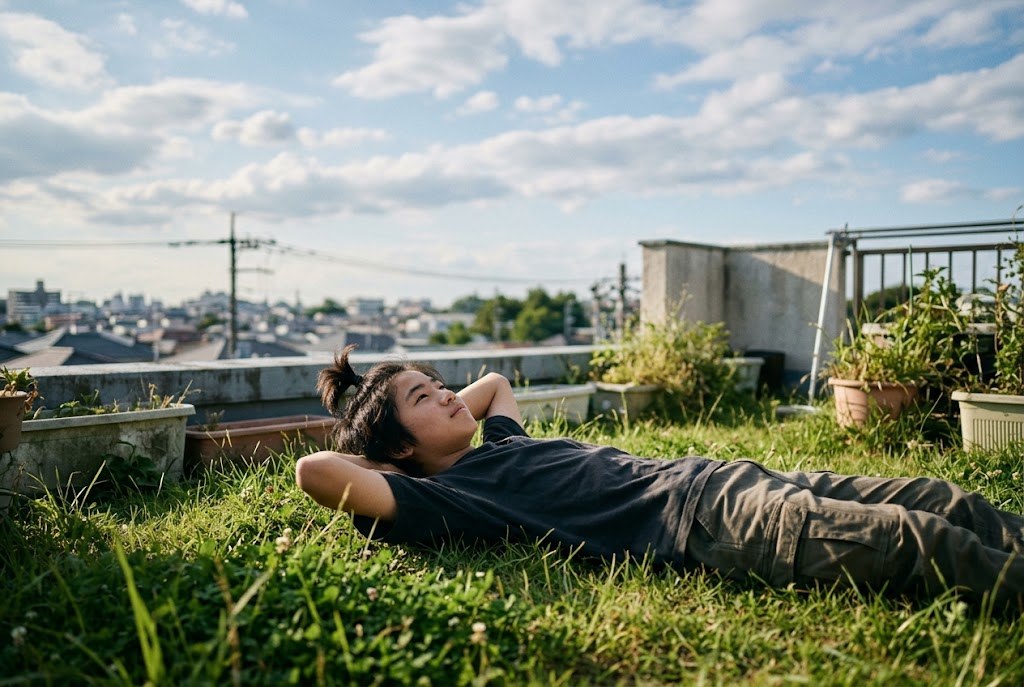
Shikamaru’s idea of a perfect afternoon is lying on a roof watching clouds. His sigh あーあ…雲はいいよなぁ…自由で… ends with よなぁ, a combination of よ and な(ぁ) that makes a sentence sound like private musing rather than a statement to someone. No listener is needed. It is how you say “must be nice…”
The final 自由で is the て-form of a な-adjective (自由だ → 自由で), used here as a reason: “because they’re free.” Try your own: 猫はいいよなぁ…一日中寝られて (“cats have it so good… they get to sleep all day”). That is a sentence a Japanese classmate will laugh at in the best way.
次こそは…完ぺきにこなして見せます — こそ and 〜てみせる
After the mission to bring Sasuke back fails and his teammates are badly hurt, Shikamaru, the mission leader, fights back tears and makes this promise.Notice it is in polite です/ます form — a sign of how seriously he means it. Two pieces are worth learning. こそ adds strong emphasis to the word before it: 次こそは = “next time, for sure.” 今度こそ勝つ! (“this time I’ll win for real!”) is a line every kid who plays games needs.
The ending 〜て見せる (often written 〜てみせる) means “I’ll do it and show you” — a determined promise. こなす means “to handle a task skilfully.” Put together, this is one of the rare anime quotes you can say almost unchanged to a coach or teacher after a bad day.
攻撃ってのは — ってのは, the casual “as for”
Shikamaru explains things like a strategist, and he opens with ってのは, which is the spoken form of というのは: “the thing called X is…” It introduces a definition. 友達ってのは… (“a friend is someone who…”) sounds casual; 友達というのは is the neutral version you would write in an essay.
Also notice the counter 手 (te, “move”) from board games: 一手目 is “the first move,” 二手目 “the second move.” Shikamaru thinks of fights as shogi, and the language shows it. The sentence ends with 〜のが基本なんだよ, “doing X is the basic rule, you know” — a pattern any sports coach could use.
それが“玉”さ — the shogi riddle
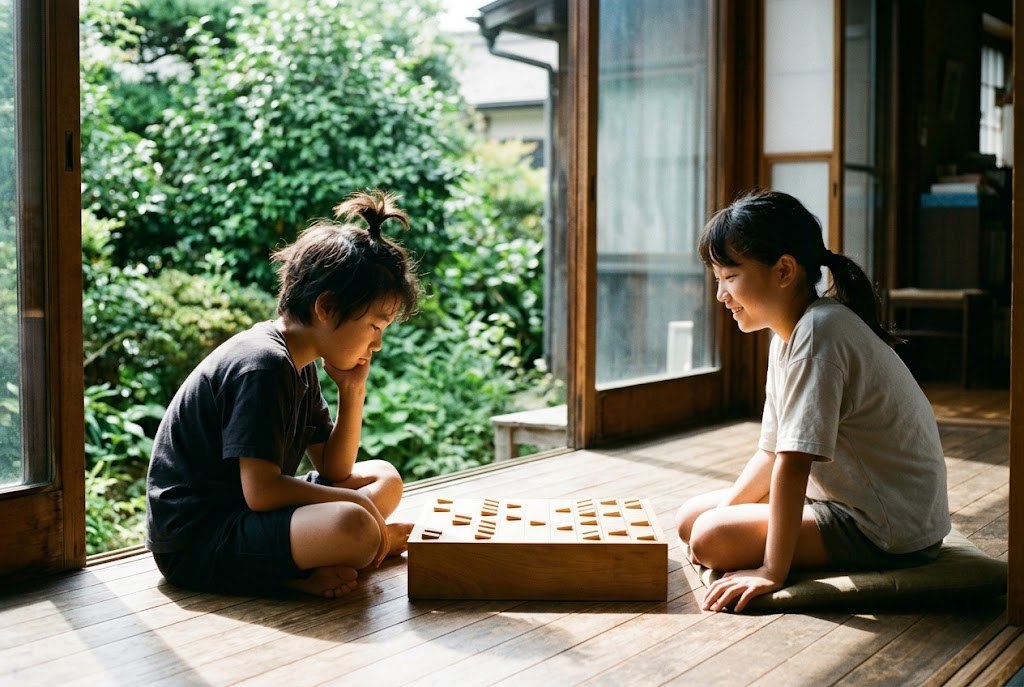
Shikamaru’s teacher Asuma once asked him what the “king” of the Leaf Village is. In shogi the king piece is 玉 (gyoku), and losing it means losing the game. Shikamaru’s answer: the children who will carry the village forward. 担う (ninau, here written になう) means “to shoulder, to carry a responsibility,” and これからの means “of the future, still to come.”
The final さ is a soft, slightly cool sentence ending, like a relaxed “y’know.” It connects to the 託される側から託す側 line: Shikamaru grows from someone who is trusted with things (passive 託される) to someone who passes them on (active 託す). The passive/active pair is a neat grammar lesson hidden inside a coming-of-age story.
Is Shikamaru good for learning Japanese?
For listening, he is one of the best teachers in anime. Shikamaru dialogue in Japanese is a catalogue of real casual sound changes — ねー for ない, らんねェ for られない, っきゃ for しか, す for です — and if you can follow him, you can follow most teenage boys in Japan. For speaking, be careful: his オレ, his ガキ (“brats”) and his constant めんどくせー make him sound lazy and a bit rude, which is exactly the point of the character.
Keep the pattern, change the clothes: めんどくせーけどやるっきゃねー becomes めんどくさいけど、やるしかない among friends, or 大変ですが、頑張ります with a teacher. The quickest way to feel the difference is to try both versions with people your own age — a real Japanese friend’s grin tells you instantly whether you sounded cool or just sleepy.
Keep going with the same method: our Naruto quotes in Japanese guide covers the main characters plus the famous だってばよ, and Jiraiya quotes in Japanese shows another teacher figure who hides wisdom behind jokes. For a calm, adult voice to compare with Shikamaru’s slang, read Kakashi quotes in Japanese, and Shikamaru’s オレ is compared with 僕 and 私 in Ore vs Boku vs Watashi. If you are starting from zero, our guide to learning Japanese with anime sets out a weekly routine, and our tuition page explains how live classes with Japanese friends work.
FAQ
What is Shikamaru’s most famous quote in Japanese?
His catchphrase めんどくせー (mendokusē), “what a drag,” is by far the best known. Among longer lines, fans often pick 次こそは…完ぺきにこなして見せます…! (“Next time… I’ll get it done perfectly…!”), his promise after the failed mission to bring Sasuke back.
What does “mendokusai” mean?
めんどくさい (from 面倒くさい) means “troublesome” or “too much hassle.” It describes a task, not a person, in normal use: 掃除はめんどくさい, “cleaning is a pain.” Calling a person めんどくさい (“you’re so annoying to deal with”) is hurtful, so avoid that.
Why does Shikamaru say ねー instead of ない?
In rough casual speech, the vowel pair ai often merges into a long ē: ない → ねー, すごい → すげー, うまい → うめー. It sounds tough, relaxed and very masculine. Japanese people understand it instantly, but it is not used in polite conversation or in writing.
Can I learn Japanese just by watching Naruto?
You can pick up vocabulary, rhythm and a lot of casual grammar, especially with Japanese subtitles on. What anime can’t give you is feedback. Speaking skills come from saying sentences to real people and noticing how they react.
My child loves Naruto. How do they practise with real Japanese speakers?
Tomodachi Japan is an online Japanese school for children living outside Japan, taught by Japanese school teachers in small classes of eight, with classmates their own age in Japan. Parents don’t need to speak Japanese — we guide you in English. The free school guide below has the timetable, tuition and scholarship details.